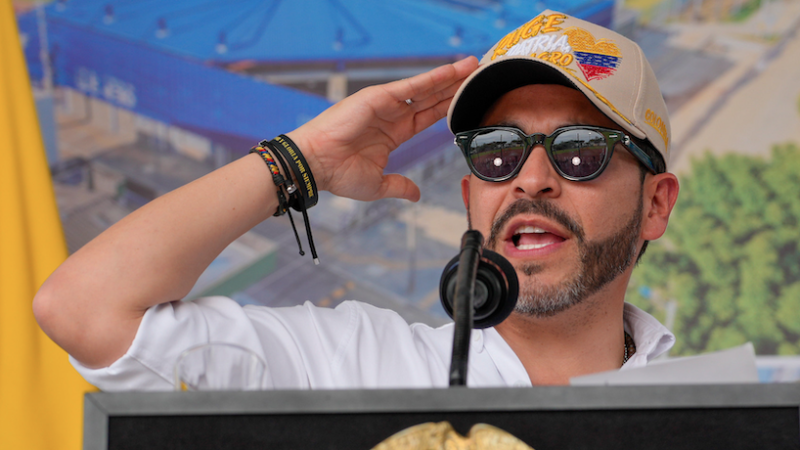

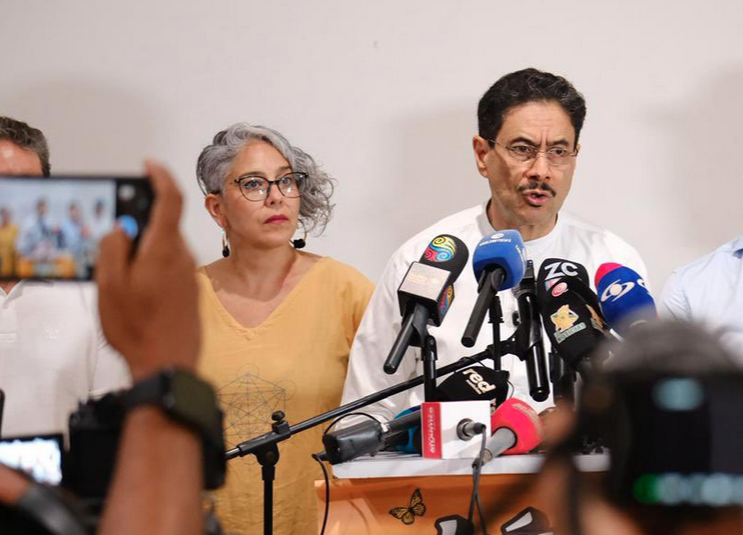
Colombia’s Vice President-elect José Manuel Restrepo on Wednesday condemned opposition senator Iván Cepeda for calling on supporters to engage in “peaceful civil disobedience” unless President-elect Abelardo de la Espriella renounces his U.S. citizenship before taking office, describing the move as “an anti-democratic tantrum” and an attack on the country’s democratic institutions.
The confrontation marks a further escalation in tensions during Colombia’s increasingly acrimonious presidential transition, less than six weeks before De la Espriella is scheduled to be inaugurated on Aug. 7.
Speaking to Blu Radio, Restrepo urged Colombians to reject what he described as attempts to undermine the constitutional transfer of power.
“Declaring civil disobedience is a disgrace. It is a disgrace against democracy, an attack on our institutions. That is the conduct of someone who is not a democrat,” Restrepo said.
Cepeda announced Tuesday that he would promote a campaign of “peaceful civil disobedience” if several demands are not met before De la Espriella takes office. Chief among them is that the president-elect formally renounce his U.S. citizenship, arguing that dual nationality would create an unacceptable conflict of loyalty between Colombia and the United States.
Cepeda also demanded that De la Espriella disclose whether he has collaborated with U.S. security agencies, abandon any effort to seek the extradition of outgoing President Gustavo Petro, halt what he described as judicial persecution of political opponents, and clarify allegations regarding past professional associations.
In a public statement, Cepeda argued that De la Espriella’s inauguration would be “illegal and illegitimate” unless those issues are resolved beforehand.
However, Colombia’s Constitution does not prohibit a Colombian president from holding dual nationality. Legal experts have noted that no constitutional provision requires a president to renounce a second citizenship before assuming office.
The constitutional reality is underscored by recent precedent. President Gustavo Petro himself held dual Colombian and Italian nationality when he was inaugurated on Aug. 7, 2022, and continues to possess both citizenships through his Italian ancestry without constitutional challenge.
Cepeda nevertheless argued that De la Espriella’s case differs because his U.S. citizenship was acquired through naturalization, which requires an oath of allegiance to the United States. According to Cepeda, that oath raises questions about where the president-elect’s loyalty would lie in the event of a conflict between the two countries.
He also accused U.S. President Donald Trump of interfering in Colombia’s June 21 presidential election and alleged that De la Espriella’s proposal to align Colombia with the so-called “Shield of the Americas” security initiative would subordinate Colombia’s national interests to those of Washington.
Restrepo rejected Cepeda’s arguments outright, saying political disagreements must be resolved through Colombia’s constitutional institutions rather than campaigns encouraging civil disobedience against a democratically elected government.
The dispute illustrates the increasingly polarized atmosphere surrounding Colombia’s transfer of power, with relations between the outgoing Petro administration and the incoming government deteriorating amid disputes over the transition process and the legitimacy of the election.