
In Bogotá, the past is never fully at rest. It lingers in courtyards and stairwells, in shuttered colonial mansions and dimly lit gardens, whispering through cracked adobe walls. Nowhere is this spectral presence more palpable than in the city’s oldest quarters, where the cobblestones have absorbed centuries of triumphs, tragedies, and the uncanny footprints of the dead.
Nowhere does this intertwining of history and haunting feel more present than in the Cementerio Central. Established in 1836, the cemetery presides over the city like a vast stone archive of its most storied families, presidents, poets, generals, and unnamed souls. Here, at approximately 1:30 in the morning, caretakers say a figure in white drifts along the main gate — a woman, perhaps, or what remains of one. Even the most fearless night guards warn visitors against lingering after sundown. They speak of metallic echoes reverberating from a hidden stairwell leading to crypts of unmarked graves, as if something still climbs, still searches, still refuses to descend forever.
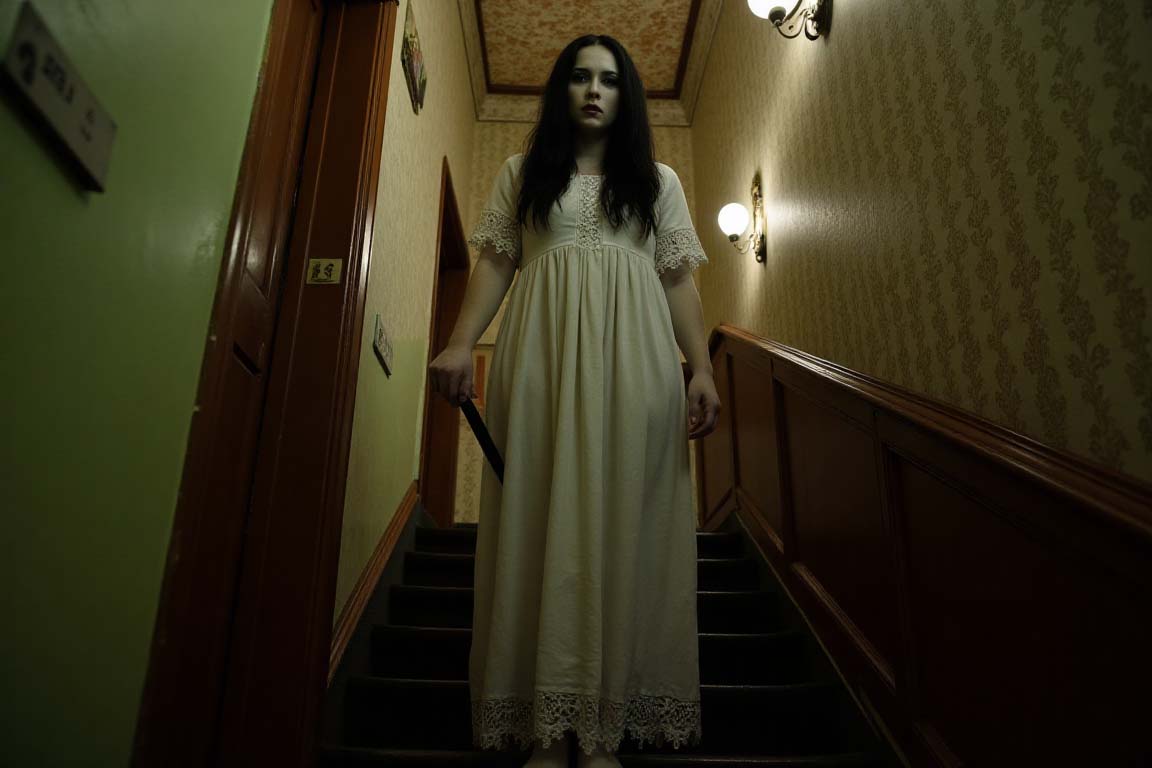
If the cemetery embodies the solemn quiet of death, Hotel Dorantes carries the spectral melancholy of a bygone era. Once a grand mansion transformed into a Chelsea-like bohemian refuge in the 1960s, it sought to rival the city’s famed Continental Hotel. Time, however, had other plans. The Dorantes stands today as a modest boarding house, its faded glamour visible in the carved banisters and creaking wooden staircase – a place where past ambitions linger like perfume. Guests have long spoken of a ghostly woman gliding up the steps, pausing to knock gently at their doors. She never stays long, but she never leaves for good, a loyal remnant of Bogotá’s vanished aristocratic age.
In La Candelaria — Bogotá’s colonial heart and cradle of its earliest myths – such stories multiply like shadows at dusk. On the corner of Calle 10 and Carrera 3 stands the Casa de los Siete Balcones, a pristine snapshot of the 17th century. Yet not all is tranquil. Residents claim that the figure of a woman ascends the central stairwell at night, her footsteps quick, her breath sharp and furious. Sometimes, the screams rise high above the tiled rooftops, scattering pigeons and sending echoes rippling down narrow streets.
La Candelaria’s houses, many over two centuries old, seem almost designed to trap memories — the beautiful and the horrific alike. Before dedicated cemeteries existed, Bogotá’s dead were often buried at home, beneath gardens, patios, or even floorboards. When 400-year-old human remains were discovered under the San Vitorio Di Torino Hotel, guests who had reported paranormal activity felt grimly vindicated. The walls remember what the city has forgotten.
In Casa Sámano, now the Museo de Bogotá (Cra 4 No.10-18) more unsettling echoes reportedly persist. Once home to Viceroy Juan de Sámano — a man as feared as he was powerful — the mansion is said to creak and murmur with footsteps when no one is there. Night guards tell of lights flickering violently, doors slamming, and a presence watching them from the upper balcony, as though the old viceroy still patrols the corridors of his dominion.
Just a few blocks away, the Casa de la Poesía José Asunción Silva, former home of the beloved poet who took his own life in 1896, trembles with a softer kind of haunting. Visitors describe a heavy sadness that wraps around them upon entering, as if Silva’s final despair saturates the air. Some employees swear they hear whispering — faint, fragile, like someone reciting lines to the darkness.
But perhaps no modern haunting in Bogotá is as chilling as that of Calle del Sol. The narrow street conceals what was once the headquarters of Colombia’s intelligence service during the mid-20th century, a place where political prisoners were interrogated, beaten, and broken. Today, the building houses apartments, yet residents report hearing tortured moans at night, footsteps thudding on empty staircases, and fog creeping inexplicably through the hallways. History rarely leaves quietly.
Among La Candelaria’s most disturbing legends is that of La Emparedada – the Walled-In Woman. The story tells of a beautiful maid whose mistress, consumed by jealousy, subjected her to unspeakable torment before sealing her alive within the walls of their home. Guides say her spirit remains entombed there, furious, restless, and still clawing for release.
Not all spirits are vengeful. The story of the Cuervo brothers – sons of a celebrated linguist – offers a gentler encounter. Working tirelessly to finance a dream journey to Paris to publish their dictionary, they received an unexpected visitor: a ghost in viceroy’s attire who knocked three times on their door, led them upstairs, and pointed to a wall. Behind it, they found gold. The ghost left, and with him, the brothers’ financial burdens.
Yet for pure terror, few places rival the abandoned house at Cra 2A Nº 10-39, known as the Casa del Bandido, once home to Dr. José Raimundo Russi, executed for murder in 1851. At dawn, neighbors swear they hear stabbing sounds and the screams of his victim, Manuelito Ferro. Russi is said to wander the stairwell at sunrise, eternally reenacting the crime that condemned him.
In Bogotá, where history and haunting intertwine, the past does not fade — it sighs, flickers, and steps softly behind you. And nowhere does it cling more stubbornly than in La Candelaria, where ghostly apparitions linger around every corner.