
Bogotá’s mayor has called for a major expansion of the city’s police force following a deadly knife attack on a television production set and a separate killing at a public transport station, as authorities warn of shifting patterns of urban crime in Colombia’s capital.
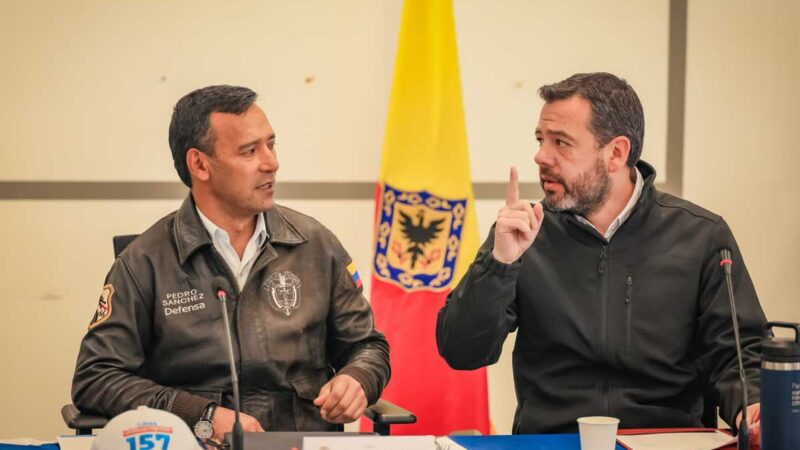
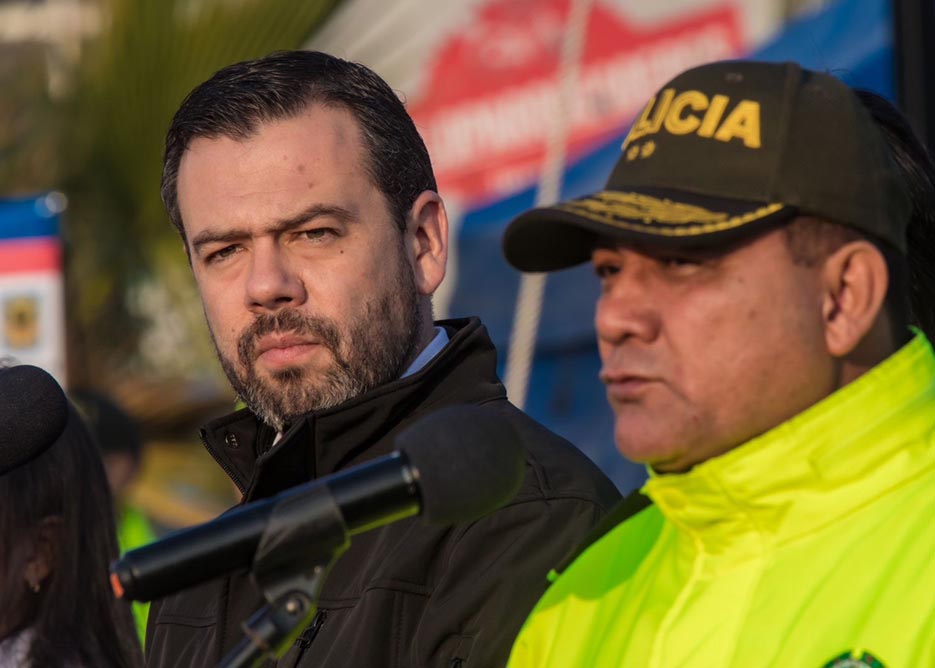
Carlos Fernando Galán said the city requires at least 8,000 additional police officers to effectively confront rising insecurity, after convening an extraordinary security council on Monday with senior officials from law enforcement, the military and prosecutors.
The move follows a shocking outbreak of violence on April 18 during the filming of the television series Sin senos sí hay paraíso in the central Santa Fe locality — an incident that left three people dead and several others injured.
“This is an extremely serious and senseless act of violence that hurts all of Bogotá,” Galán said, expressing solidarity with the victims’ families and the country’s audiovisual sector. “To respond effectively, we must strengthen the police, improve investigations, expand technological capabilities and increase personnel.”
The attack unfolded at approximately 3:30 p.m. in the Los Laches neighborhood, near the eastern edge of Parque Nacional, where a production crew had been filming in a public street close to the Instituto Roosevelt.
According to preliminary findings, a man not affiliated with the production approached the set and, without any prior interaction, attacked a crew member with a sharp weapon.
The sudden assault triggered panic and a rapid escalation of violence. Witnesses said several people at the scene intervened in an attempt to stop the attacker, leading to a chaotic street fight in which multiple individuals were stabbed.
In the ensuing struggle, the assailant managed to inflict severe injuries on several people before being subdued. Three individuals — including the attacker and two members of the production team — were transported to Hospital La Samaritana, where they later died from their wounds.
A fourth person injured in the confrontation was taken to Hospital Universitario San Ignacio. Authorities have not released further details regarding that individual’s condition.
The victims from the audiovisual team were identified as Henry Alberto Benavides Cárdenas, 45, and Nicolás Francisco Perdomo Corrales, 18.
Officials have stressed that the attack does not appear to be linked to robbery or organized crime. Instead, investigators are examining the background of the alleged assailant, who had previously been reported for threats and is believed to have a history of mental health issues — factors now under review by judicial and medical authorities.
The case has rattled Colombia’s cultural sector, which have grown steadily in recent years as Bogotá has positioned itself as a regional hub for film and television production. For many in the sector, the attack represents a deeply unsettling breach of safety for the industry.
Monday’s security meeting also addressed a separate killing that occurred in the city’s public transport system. A 19-year-old man, identified as Freddy Santiago Guzmán, died after being attacked during a robbery at the Minuto de Dios TransMilenio station.
Galán said the two incidents, while distinct, highlight the need for a more robust and coordinated security strategy across the capital. He called on the national government to provide greater support in terms of funding, personnel and institutional backing.
“We will not step back in the fight against crime,” he said. “But Bogotá cannot face this challenge alone.”
Security Secretary César Restrepo warned of what he described as a structural weakness in controlling the circulation of weapons, particularly knives and other bladed instruments.
“More than 10,000 bladed weapons have been seized so far this year,” Restrepo said, adding that the continued flow of such weapons into the city remains a critical concern for authorities.
Officials also pointed to evolving criminal dynamics that are complicating law enforcement efforts. Galán described the emergence of more fluid and decentralized forms of criminal activity, in which individuals come together temporarily to commit specific acts before dispersing.
“We are seeing a kind of ‘freelance’ crime,” he said. “This creates new challenges for intelligence work and policing.”
The extraordinary security council brought together representatives from the police, the army’s 13th Brigade of the Colombian Army and the Fiscalía General de la Nación, as authorities seek to strengthen coordination in response to recent violence.
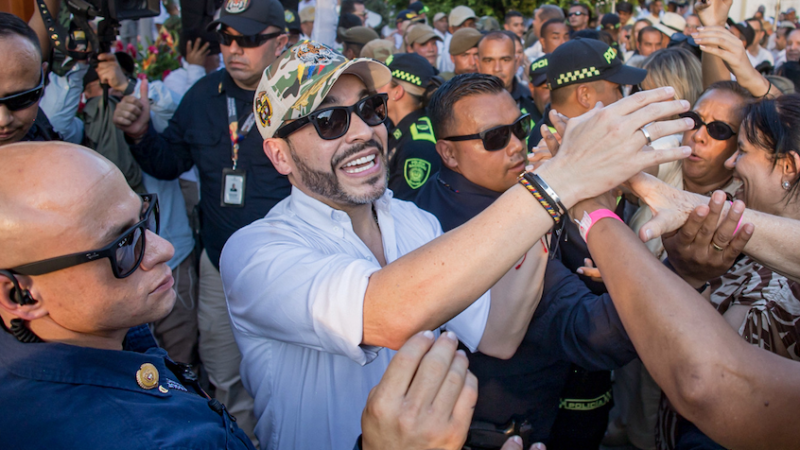
Police commander Giovanni Cristancho Zambrano said officers had recovered eight stolen vehicles in the past week and urged citizens to report suspicious behaviour, particularly involving occupants of private vehicles, to support preventive action.
The rash of incidents during one weekend in the capital have sharpened concerns over public safety, especially in central districts where commercial, residential and cultural life converge in densely populated areas.
For the city’s growing audiovisual sector, the killings have raised urgent questions about security protocols for productions operating in open urban environments. Messages of mourning circulated widely among industry professionals, reflecting both grief and frustration over the circumstances surrounding the attack.
While city authorities have pledged to reinforce measures across key areas, Galán’s call for thousands more officers reveals the scale of Bogotá’s security needs as it grapples with entrenched crime from micro-trafficking groups and rapidly evolving new forms of urban violence.
Investigations into both incidents remain ongoing, with authorities working to establish the full sequence of events and any underlying factors that may have contributed to the attacks.