
I remember perfectly the morning of November 6, 1985. I was 18 years old, a high school conscript serving in the Presidential Guard Battalion. Chaos reigned. Commanders shouted orders as we deployed in trucks and on foot – not only toward Plaza de Bolívar, but to different corners of Bogotá. No one knew where the attack was centered: the Supreme Court, the Capitol, or even the Casa de Nariño itself. Our mission was to cordon off buildings, block streets, maintain presence – in short, to show force. The government could not fall.
By afternoon, the Cavalry arrived with tanks. Within hours, darkness fell and the flames illuminating the Palace of Justice painted the city in horror. We stayed on alert, patrolling, conducting searches and raids that night and many others. I remember wandering through the streets of Fontibón and southern Bogotá like a sleepwalker, exhausted, searching for weapons and explosives, surviving on barely any sleep.
I had completed only three months of basic training. We were poorly prepared and scantly equipped soldiers, wearing ragged uniforms handed down from previous contingents, carrying old, battered rifles that jammed often. The few shooting drills we had done used .22 caliber ammunition – the smallest and cheapest – and only ten cartridges per session because there was no money for more.
It was the era of President Belisario Betancur’s peace process, a time when the state had weakened its armed forces in the name of reconciliation. By sidelining and underfunding the military, the government reduced its operational capacity to near paralysis. The result was predictable: an emboldened M-19 that seized the moment and launched the worst urban attack in Colombia’s history, killing 98 people. Betancur’s ill-fated peace initiative collapsed in the flames of the Palace of Justice.
Fearing a coup disguised as a political trial, the president reacted with fury. Instead of attempting a negotiated rescue, he ordered tanks through the main doors of Colombia’s Supreme Court. It was not a military decision – it was a presidential one, taken by the Conservative leader himself in a desperate attempt to ensure his own survival. In doing so, he guaranteed tragedy. Worse still, four years later, the M-19 was granted amnesty with complete impunity. I could never have imagined that the majority of my army commanders would one day be prosecuted and imprisoned, while the aggressors would walk free – and even go on to hold high positions in government.
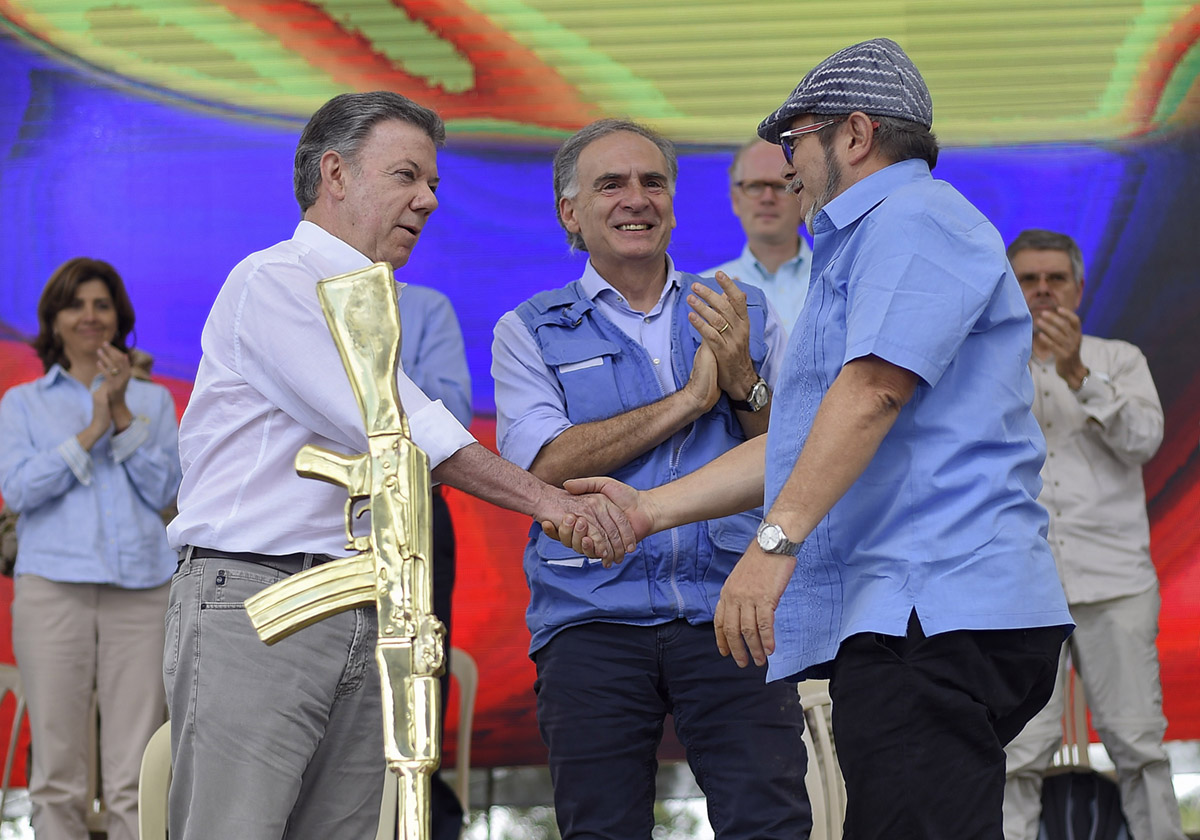
Years later, we failed to learn from that experience. The Caguán peace process under President Andrés Pastrana created a vast demilitarized zone, which the Revolutionary Armed Forces of Colombia (FARC) guerrilla exploited to enrich themselves, commit crimes, and deceive Colombians once again. And then came the Havana Accords – negotiated under President Juan Manuel Santos and rejected in a national referendum – only to be imposed anyway, deepening public mistrust in the very idea of peace.
Forty years and four failed peace processes later – Betancur, Barco, Pastrana, and Santos – what do we have to show for it? Have we achieved peace? No. What we have is a weakened state and a patchwork of armed groups – some old, many new – spreading across the country.
As if a lasting peace is not enough, we have a president and former member of the M-19, who, in his quest for “Total Peace”, is once again weakening the armed forces and glorifying criminals. Today, Colombia has lost control of more than a third of its municipalities and roughly 70 percent of its territory. Coca cultivation now exceeds 250,000 hectares – an all-time high – and our soldiers and police are demoralized, led by a Commander-in-Chief who has spent his life antagonizing them.
What a paradox. Forty years after the Palace of Justice siege, Colombia is worse off. The brief period of progress between 2002 and 2010 – when security brought investment, jobs, and growth – was squandered as later governments reversed those gains in the name of ‘peace’.
President Gustavo Petro will leave office in nine months, and he will leave behind a country fractured and insecure. Colombia cannot afford to keep yielding to those who wield violence as a political tool. Either we change course – or we will one day awaken to find we no longer have a country at all.
This next year’s presidential election is not complicated: either we restore security to Colombia, or we lose it forever.
About the author: Luis Guillermo Plata is a Colombian economist, former Minister of Commerce, and Ambassador to Spain. He has served in various public and private leadership roles and writes on security, economic policy, and governance in Latin America.