
For a country that has spent decades trying to strengthen its democratic institutions, Colombia finds itself confronting an uncomfortable question ahead of the June 21 presidential runoff: If Iván Cepeda loses, will his political movement accept defeat?
It is a question that would have seemed unthinkable only a generation ago. Yet it has become increasingly difficult to dismiss.
Within hours of the first-round results, President Gustavo Petro publicly questioned the electoral process without presenting evidence of systemic fraud. Cepeda, the candidate of the governing Pacto Histórico coalition, also echoed the same concerns as the final count was taking place on May 31. In a healthy democracy, candidates have every right to seek transparency. But when leaders cast doubt on elections without substantiating their claims, they risk eroding confidence in the very institutions that brought them to power.
The problem for Cepeda is that he has failed to convince many Colombians that he represents a departure from the Petro administration. Rather than positioning himself as a corrective to a government criticized for economic uncertainty, legislative paralysis and deteriorating security conditions, he has remained politically inseparable from the president.
Abelardo de la Espriella has taken a different approach.
A polarizing figure in his own right, the criminal defense attorney has increasingly emphasized the role of his vice-presidential running mate, José Manuel Restrepo. The contrast between the two vice-presidential candidates is difficult to ignore.
Restrepo is a former minister of commerce and finance, a respected economist with postgraduate degrees and years of experience in public administration. He has outlined detailed proposals for managing fiscal policy, restructuring government and addressing immediate governance challenges during a potential transition.
Aída Quilcué brings a markedly different narrative to the campaign.
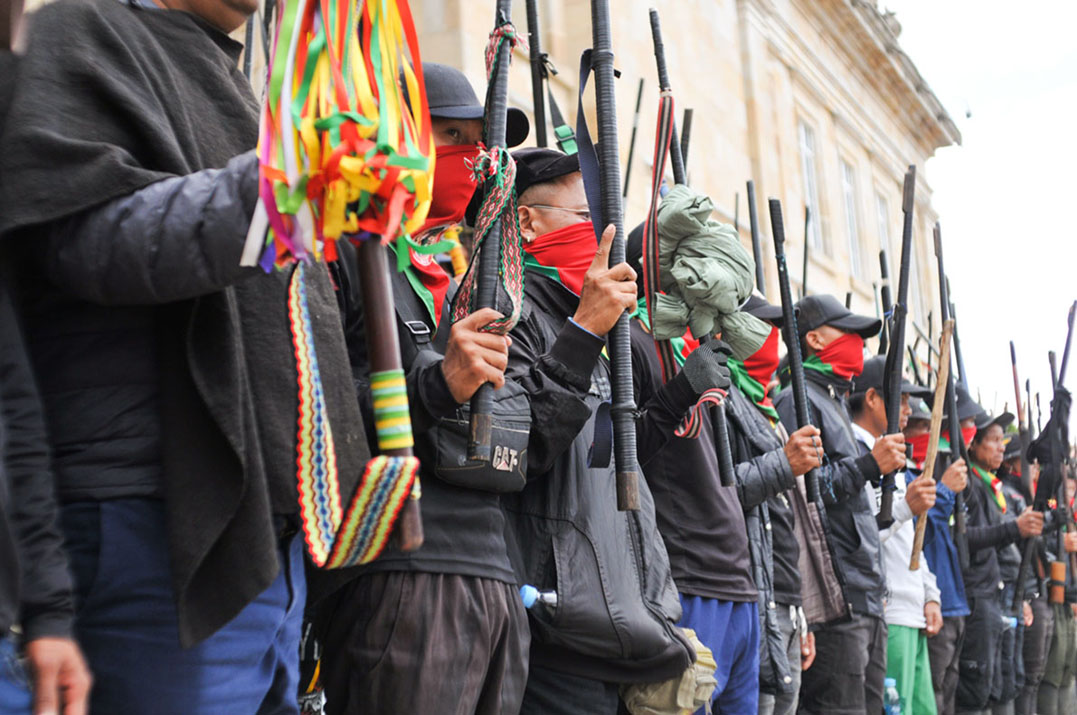
An Indigenous activist, Quilcué has dedicated much of her public life to advocating for Indigenous rights and territorial autonomy. Her supporters view her as a symbol of representation for communities historically excluded from political power. But representation alone is not governance. The social leader from Cauca also counts with the support of the Indigenous Guard, movement that has participated in road blockades and mobilizations to disrupt commerce and challenge the authority of the state’s Armed Forces.
Quilcué’s limited high school education, has become a relevant question as Colombians assess who might assume the presidency in the event of unforeseen circumstances. Critics have also questioned her reluctance to engage in sustained public debates with Restrepo, depriving voters of the opportunity to evaluate the competing visions embodied by the two tickets.
Colombia’s democracy must remain open to individuals from all backgrounds. The issue at stake is preparedness. A presidency and vice presidency are not symbolic offices – they demand administrative competence, strategic judgment and ability to navigate crises affecting more than 50 million citizens. Petro’s four year term is hardly a resumé Cepeda can count on.
Equally concerning is the increasingly militant tone emerging from sectors of the pro-government coalition following Cepeda’s first-round defeat.
Pacto Histórico supporters describe the protests, university mobilizations and digital campaigns now unfolding across the country as “legitimate expressions” of democratic participation. Yet Colombians have reasons to be wary of terms that recall the “social explosion” of a National Strike.
Promoted by then Senator Gustavo Petro, the 2021 Paro Nacional demonstrated how quickly mass mobilizations descended int prolonged blockades, disruptions to food supply chains and acts of vandalism that disproportionately affected working families. The economic and psychological scars of that period remain fresh among De La Espriella supporters.
Independent oservers to the electoral process fear that the line between so-called “activism” and “intimidation” may once again become blurred.
Those concerns extend beyond urban protests. Colombia continues to struggle with the presence of illegal armed groups in several regions of the country, where electoral processes have historically been vulnerable to coercion and intimidation. While there is no evidence of a coordinated effort on behalf of any presidential campaign, the state’s inability to guarantee equal political conditions in every municipality remains a serious challenge for democratic legitimacy.
The burden of responsibility therefore rests heavily on political leaders.
If Cepeda loses, he and President Petro will face a defining test. They can reinforce democratic norms by unequivocally accepting the result and urging supporters to pursue change through constitutional means. Or they can continue cultivating narratives of institutional distrust that deepen polarization and uncertainty.
Should De la Espriella prevail, he would need a large margin of victory – more than one million votes – to start his first term with a clear mandate. But he will face a nation with deep social challenges and ideological agitation.
But before Colombia can begin addressing those problems, it must first answer a more basic question: Are elections still accepted as the ultimate expression of popular sovereignty?
Democracy does not require citizens to agree with election outcomes. It requires political leaders to respect them.
As Colombians prepare to cast their ballots, they are choosing between competing visions for the country’s future. Yet the most important decision may ultimately belong to those who lose.