
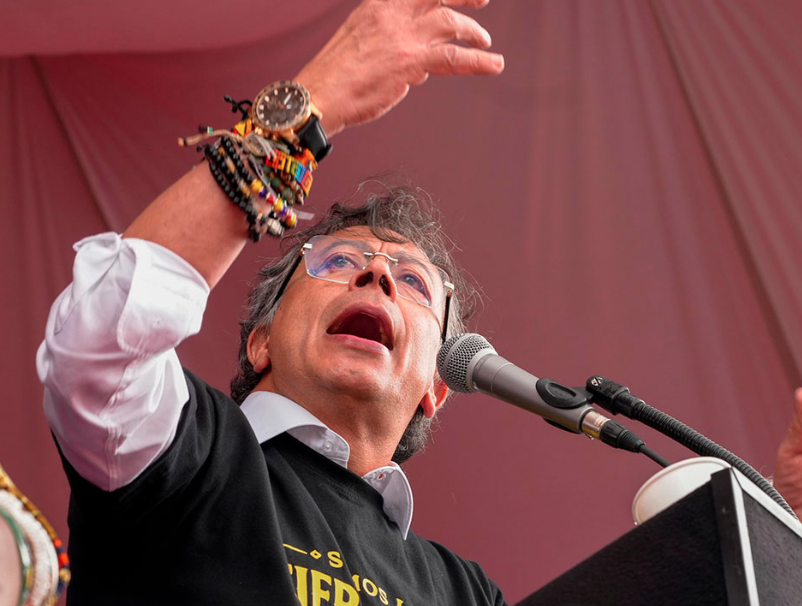
Outgoing Colombian President Gustavo Petro used his final Independence Day address to Congress on Monday to question the legitimacy of Colombia’s presidential election, accuse the United States of imposing the country’s next leader and urge supporters to prepare mass protests if the incoming government reverses his reforms.
The speech, delivered less than three weeks before Petro leaves office, underscored the deep political divisions surrounding the transfer of power to President-elect Abelardo de la Espriella, who defeated government-backed candidate Iván Cepeda in the June 21 election.
Petro repeated allegations that the election was tainted by foreign interference, arguing that public support expressed by U.S. President Donald Trump for De la Espriella invalidated the result. “The mere introduction of foreign support into the recent election is grounds for nullifying it and, above all, renders the next government illegitimate,” Petro told lawmakers.
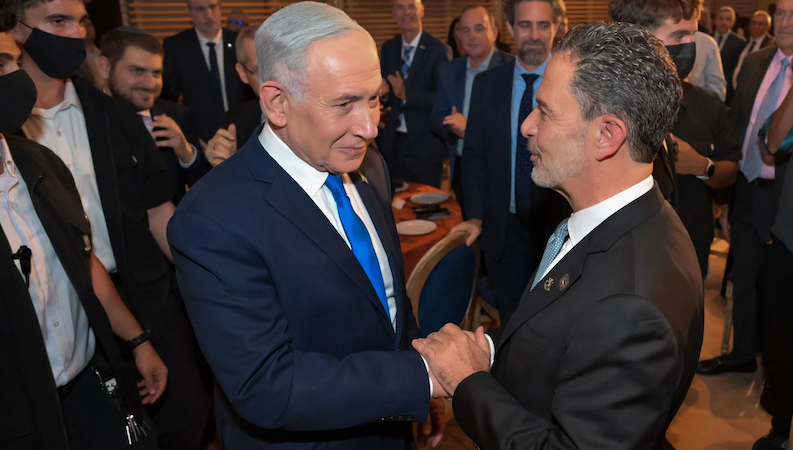
He again alleged that Israeli technology had been used to manipulate vote-counting software and said he would present evidence supporting the claim. Colombia’s electoral authorities have certified De la Espriella’s victory and rejected allegations of electoral fraud.
Petro escalated his criticism by asserting that Colombia would surrender its sovereignty after De la Espriella takes office on Aug. 7. “Colombia loses its national sovereignty from Aug. 7 onward. It returns to being a viceroyalty,” he said.
In one of the speech’s strongest attacks on Washington, Petro said Colombia’s next government would answer to the United States rather than Colombian voters. “Colombia’s government will no longer belong to Colombia. Donald Trump or Marco Rubio will give orders to the person they imposed as Colombia’s president,” Petro said. “The next president will be a servant of the rulers of the United States.”
Invoking the anniversary of Colombia’s independence from Spain, Petro called for what he described as “a second cry of independence,” urging supporters to defend the country’s sovereignty and “shout freedom and resistance.”
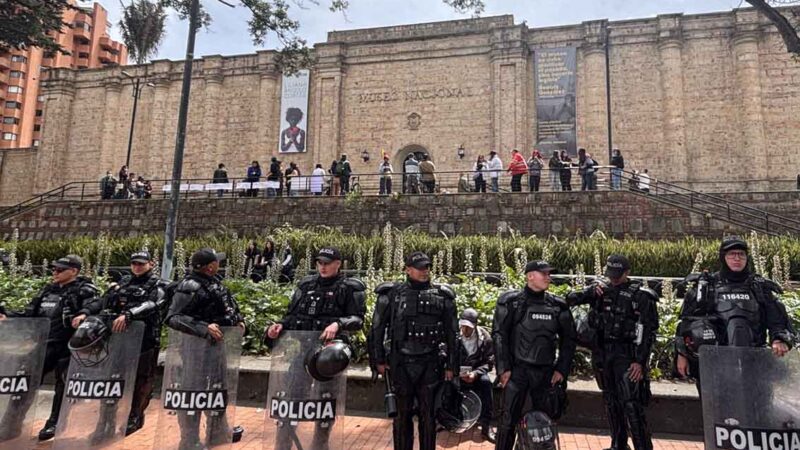
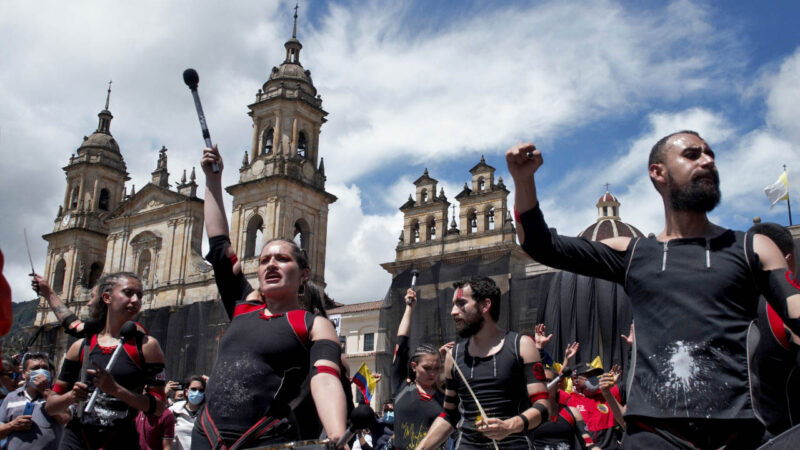
Petro also warned that his supporters should respond with nationwide demonstrations if the incoming administration dismantles his labor, education or agrarian reforms. He said a general strike should be considered if Congress reverses legislation approved during his administration that strengthened worker protections and increased overtime pay. “We must exercise our opposition in the streets, and resist peacefully … but in an overwhelming manner,” Petro said.
The remarks came as Colombia’s political balance shifted further toward the conservative opposition.
On Monday night during the opening a new legislature, Senator Honorio Henríquez of former President Álvaro Uribe’s Centro Democrático party was elected president of the Senate, giving conservatives greater influence in Congress ahead of the Aug. 7 inauguration.
De la Espriella, a criminal defense lawyer who entered politics after practicing law in Florida, has pledged to reduce government spending by up to 40%, cut business taxes, rewrite labor laws to allow more flexible hiring and suspend peace negotiations with leftist guerrilla groups.
He has also promised to strengthen ties with Washington after relations cooled during Petro’s presidency.
During a visit to Washington this week, Defense Minister-designate retired General Jorge Mora announced discussions with senior U.S. officials on a new bilateral security initiative known as “Plan Patriota 2.0,” aimed at expanding military cooperation, counternarcotics operations and intelligence sharing.
Hours before Petro’s combative address to lawmakers, De la Espriella’s office disclosed intelligence warning of an alleged assassination plot involving the National Liberation Army (ELN) and dissident factions of the former Revolutionary Armed Forces of Colombia (FARC).
According to a statement from the president-elect’s transition team, intelligence services warned that criminal groups could be offering up to 3 billion pesos ($920,000) to carry out an attack before the Aug. 7 inauguration. The statement also warned of possible attempts to infiltrate press conferences and public events as part of an assassination attempt, prompting tighter security around the president-elect.
Although Petro is constitutionally barred from seeking another term, he indicated Monday that he intends to remain politically active after leaving office, suggesting he could lead his Historic Pact coalition from the opposition.
His speech offered a characteric closure to four years disruptive years in office, casting doubt – yet again – on the legitimacy of the incoming government while urging supporters to mobilize on the streets against a new government that has pledged to dismantle Petro’s failed “total peace” agenda and regain control of security with the help of the country’s governors and mayors.