
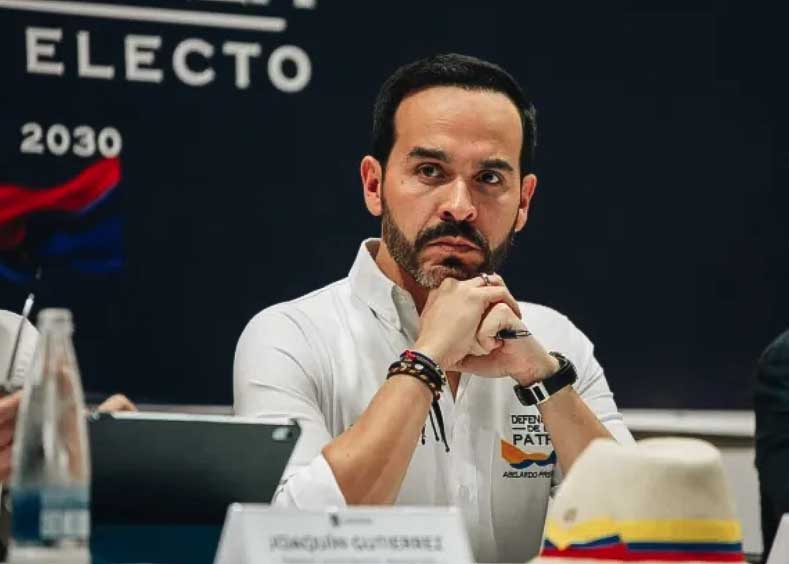
In one of the most symbolic breaks with Colombia’s republican traditions in modern history, President-elect Abelardo de la Espriella announced Monday that he intends to be sworn into office on August 7 at a military garrison in southern Colombia rather than Bogotá’s iconic Plaza de Bolívar, where every democratically elected Colombian president in recent decades has formally assumed office.
The announcement marks another dramatic departure by the conservative leader, whose election victory last month signaled a decisive shift away from the policies of outgoing President Gustavo Petro.
Addressing the nation through his social media channels, De la Espriella said the ceremony would proceed “despite the opposition of the disastrous and delusional outgoing government,” describing the move as a tribute to Colombia’s armed forces.
“Colombians can be certain that I will keep my promise,” he declared. “I will take office in the south of the country, at a military garrison, to pay solemn tribute to the heroes of our nation and to the men and women in uniform who protect democracy, freedom and our institutions.”
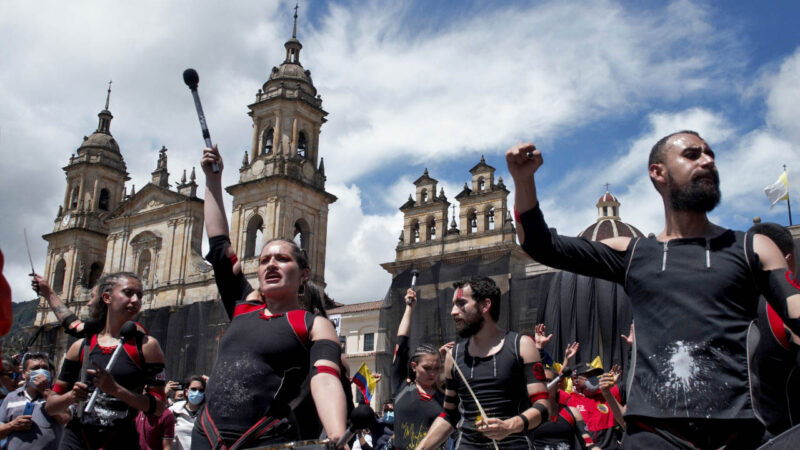
The decision would replace one of Colombia’s most enduring democratic rituals. Traditionally, incoming presidents take the constitutional oath before Congress at the Capitol building on Plaza de Bolívar before thousands of invited guests, foreign dignitaries and members of the public gathered in the historic square.
While De la Espriella had previously stated he would not be inaugurated in Plaza de Bolívar, Monday’s address marked the first time he confirmed the ceremony would be held at a military installation in southern Colombia. He declined to identify the specific location.
Whether the unprecedented relocation can legally occur remains uncertain.
Under Colombia’s constitutional procedures, Congress must authorize any change to the venue for the presidential inauguration. The issue is expected to be debated after the new legislature convenes on July 20.
De la Espriella appealed directly to lawmakers to approve the proposal.
“I make a direct and patriotic appeal to the new Congress of the Republic to make the correct decision on July 20 in order to fulfill the mandate of the Colombian people,” he said.
He also sought to reassure legislators that his administration would work closely with Congress and the judiciary.
“I will work hand in hand with the new Congress, just as we have begun doing with the Judicial Branch. Harmonious collaboration among the institutions of our ‘Miracle Nation’ is a demand of the Colombian people.”
Petro has firmly opposed the proposal claiming that only Congress possesses the constitutional authority to authorize a change in venue. He later reinforced that position on “X” stating that no military installation could host a presidential inauguration while he remains Commander-in-Chief of Colombia’s Armed Forces.
The disagreement has injected an unusual constitutional dispute into the weeks leading up to the transfer of power.
The planned venue underscores one of the defining themes of De la Espriella’s incoming administration: restoring the prominence of Colombia’s military and security forces after years of defunding by the country’s first leftist government.
By choosing a military base rather than Colombia’s principal civic square, De la Espriella is sending an unmistakable political message that security and the armed forces will occupy a central role in his presidency.
The president-elect has repeatedly pledged to abandon negotiations with illegal armed groups in favor of an aggressive security strategy inspired in part by the policies of El Salvador’s President Nayib Bukele.
During the same national address, De la Espriella unveiled a sweeping overhaul of the Presidency designed to reduce bureaucracy and redirect government spending.
He announced that approximately 229 positions within the Presidential administration will be eliminated, generating annual savings of roughly COP 10 billion (about US$2.5 million), funds he said would instead finance social programs.
“I will transform the Presidency into an executive coordination center with a staff free of unnecessary political appointments and positions created to repay political favors,” he said.
Several presidential advisory offices, agencies and councils will be abolished, with many of their responsibilities transferred to existing ministries and state institutions to eliminate overlapping functions and strengthen accountability. “The Presidency will become an austere, efficient structure focused on results,” he highlighted.
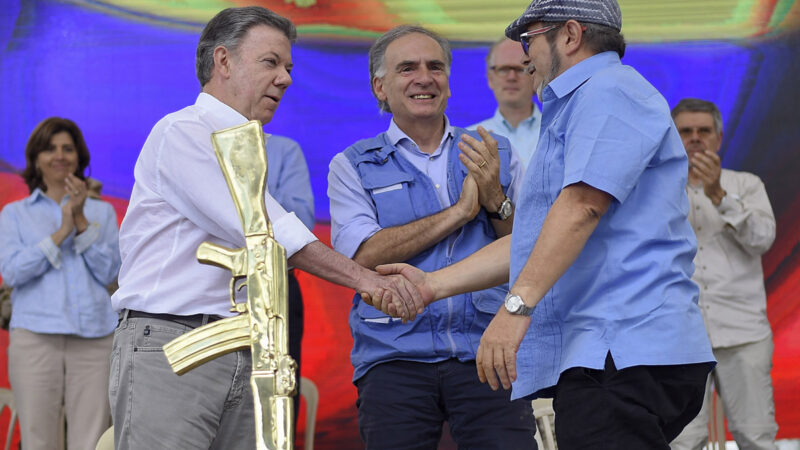
Among the most politically significant changes is the elimination of the Office of the High Commissioner for Peace, the capstone of Petro’s negotiations with illegal armed groups, ELN guerrilla and narco-trafficking cartel Gulf Clan.
Instead, De la Espriella said the office will be replaced by a High Commissioner for Security, reflecting his administration’s rejection of what he described as “false peace” processes.
The restructuring represents one of the first concrete policy initiatives unveiled by the incoming administration ahead of its August 7 inauguration and reinforces De la Espriella’s campaign pledge to shrink government bureaucracy while redirecting public resources toward security and social investment.
If Congress approves the relocation of the inauguration, Colombia will witness an unprecedented transfer of presidential power outside Bogotá’s historic political heart – event that symbolizes the dramatic political realignment voters endorsed with the June 21 election.