

For the better part of a year, Colombians endured a presidential campaign in which a crowded field of hopefuls traded accusations, unveiled ambitious manifestos and promised to rescue a nation exhausted by polarization, economic uncertainty and a growing sense of institutional drift. When the dust settled, one candidate had consistently risen above the political cacophony: Abelardo De La Espriella.
His first-round victory on May 31 was not built on celebrity or “costeño” novelty alone. It was built on discipline. While opponents lurched from one political controversy to the next, De La Espriella maintained a remarkably coherent message centered on restoring public security, reviving economic confidence and reaffirming the authority of the Colombian state. He campaigned with confidence, directness and an unmistakable sense of patriotism that resonated with voters looking for certainty after years of political turbulence.
Winning an election, however, is infinitely easier than governing Colombia.
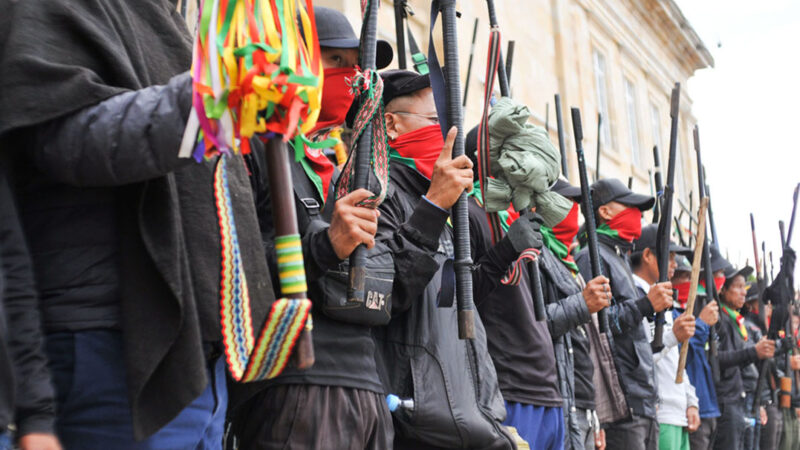
The next administration will inherit a country burdened by profound structural challenges. Criminal organizations continue to dominate territories where the state remains weak. Extortion, illegal mining and narcotics trafficking have become entrenched features of local economies in many regions. Businesses remain cautious as uncertainty surrounds fiscal policy, taxation and investment. Confidence – perhaps Colombia’s most valuable political currency – has become increasingly scarce.
Entire ministries – from Education to Equality – have swollen into “white elephants” to bureaucracy, nepotism and patronage, measuring their limited successes by bloating budgets, squandering payrolls and finger-pointing contracts to “activists”.
The health system is buckling under the weight of improvisation and ideological disdain of doctors, nurses and patients, while uncertainty over energy policy has chilled investment in one of Colombia’s most strategic sectors. Look no further than the state-owned RTVC, to see a revolving-door of click-farm “journalists” and social media “hacks” spewing propaganda from their mics.
Fiscal discipline must be restored without suffocating growth. These are not campaign talking points. They are the governing realities awaiting Colombia’s next president.
Security, however, stands above every other challenge.
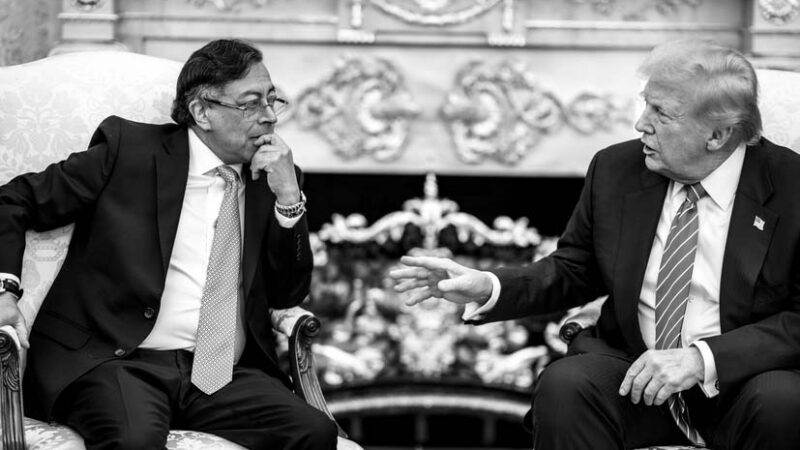
For many Colombians, President Gustavo Petro’s “Total Peace” policy failed to deliver the improvements in public safety that had been promised. Negotiations with armed groups coincided with continued violence, extortion and territorial expansion by criminal organizations. Whether one accepts that assessment in whole or in part, the next administration will face intense pressure to demonstrate measurable improvements in public security and state presence.
De La Espriella has promised an approach centered on strengthening institutions, enforcing the law and protecting citizens. Those promises will ultimately be judged not by speeches or symbolism, but by results.
One decision during the campaign deserves particular attention: the selection of José Manuel Restrepo as the vice-presidential candidate.
Successful presidencies are rarely built upon personality alone. They require capable governing teams. In choosing Restrepo, De La Espriella signaled that economic competence would occupy a central place in his administration.
Restrepo belongs to a tradition of public servants whose reputation rests on technical expertise rather than political performance. An accomplished economist with experience in academia and government, he has earned respect across business, academic and policy circles for his analytical rigor and measured temperament. Soft-spoken without being timid, intellectually confident without pretension, he projects the calm authority of someone more interested in solving problems than winning headlines.
At a time when politics increasingly rewards outrage and spectacle, that is a valuable quality.
The partnership also reflects an intriguing political balance. De La Espriella, a hardline Barranquila-based attorney known for his forceful public presence, is complemented by Restrepo, the thoughtful Bogotano whose strength lies in economic management and institutional credibility. Together they project both political leadership and technocratic competence.
If elected, they will need both. When sworn-in on August 7, this “dream team” will rise to the moment.
The challenges awaiting the next government cannot be resolved through rhetoric alone. Restoring investor confidence while balancing the national budget, strengthening security while preserving democratic institutions, improving public services while maintaining fiscal responsibility, and rebuilding confidence among international allies will require discipline, pragmatism and sustained political leadership.
History offers a useful reminder. Colombians have repeatedly invested enormous hope in newly elected presidents, only to discover that structural problems rarely yield to campaign promises alone. Governing demands persistence long after electoral enthusiasm has faded.
That is why De La Espriella’s greatest achievement may not ultimately be his campaign, impressive though it has been. It will be whether he succeeds in restoring confidence in the Colombian state itself: confidence that laws will be enforced fairly, institutions will function effectively, economic policy will provide stability, and government will be judged by competence rather than ideology.
Campaigns are designed to inspire. Governments are judged by what they accomplish.
The applause of victory fades quickly. Colombians will soon demand something far more consequential than compelling speeches or patriotic symbolism. They will expect safer communities, stronger institutions, sound public finances and a government capable of addressing the country’s most pressing challenges.
History rarely remembers impeccable campaigns. It remembers successful governments. On June 21 every vote counts. And despite the roiling threats from the hard-left to “burn down” one of Latin America’s oldest democracies, The City Paper is proud to endorse Abelardo De La Espriella for President and José Manuel Restrepo for Vice President of Colombia.