
In a country where the morning chorus can include more bird species than anywhere else on Earth, the arrival of one tiny chick carries an outsized significance.
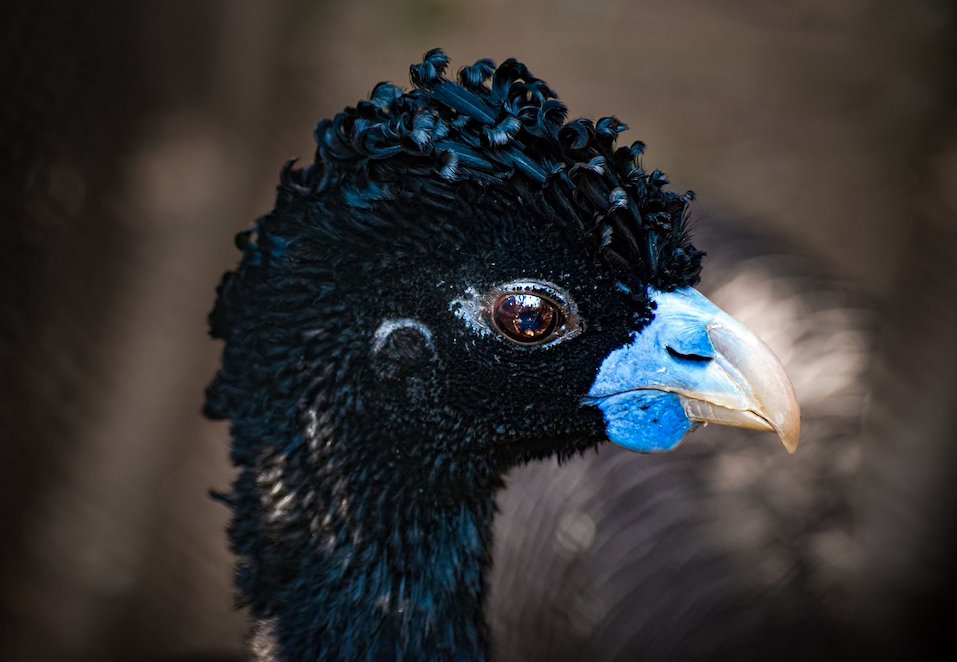
Named Milagro, or “Miracle,” the newly hatched blue-billed curassow (Crax alberti) represents more than a successful breeding effort. The female chick is a rare new generation of a species found nowhere else on the planet—and one that scientists warn could vanish from the wild within decades.
The chick was born at Barranquilla Zoo, which has been working to conserve the critically endangered blue-billed curassow since 2018. The institution began successfully breeding the species in 2023 and is only the second Colombian institution known to have achieved captive reproduction.
For Colombia, the timing is significant. The country is preparing to hand over the presidency of the UN Biodiversity Conference, COP17, when the conference takes place in Armenia this October. Milagro’s birth is being presented by the Environment Ministry as the first major milestone on Colombia’s road to that meeting—and a symbol of a broader shift in how the country approaches biodiversity conservation.
Colombia is home to more than 1,900 registered bird species, making it the world’s most bird-diverse nation. Yet its extraordinary biological wealth is under growing pressure from habitat loss, agriculture, infrastructure development and other human activities.
The blue-billed curassow illustrates the scale of that challenge.
Endemic to Colombia, the large forest bird is estimated to have only about 1,085 adult individuals remaining in the wild. Over the past 25 years, it has lost an estimated 92.8 percent of its viable habitat. Without urgent intervention, conservation authorities warn that the species could disappear from the wild entirely by 2050.
Its story is therefore not simply about saving individual birds. It is about whether enough habitat – and enough genetic diversity – can be restored to give an entire population a future.
“The recovery plan for the blue-billed curassow, along with its management plan, will be launched in the coming weeks,” stated the country’s new Environment Minister Fabio Arjona during a visit to the Barranquilla Zoo. He also noted that the strategy would bring together researchers involved in bird conservation, guided by Colombia’s ABC strategy of Water, Biodiversity and Communities.
“Conservation cannot exist without science, without citizen participation, and above all, without communities,” Arjona said.
That emphasis reflects a larger evolution in Colombian conservation policy: moving from protecting threatened species in isolated areas toward actively rebuilding populations in the wild.
The approach aligns with Target 4 of the Kunming-Montreal Global Biodiversity Framework, which calls for urgent action to halt human-induced extinctions and recover threatened species while maintaining and restoring genetic diversity. It also supports the framework’s Goal A, which seeks to halt human-induced extinction of known threatened species by 2050.
For the blue-billed curassow, one possible future lies in the forests of Montes de María, where conservationists hope eventually to establish a reintroduction program.
Barranquilla Zoo has searched the region for the species since 2018. Finding wild birds and achieving reproduction in captivity have proved difficult. So far, only two Colombian institutions have successfully bred the curassow, with eight chicks born at Barranquilla Zoo.
“Milagro’s birth—a female—is a new step toward developing a reintroduction program for the species in Montes de María,” said Farah Ajami Peralta, executive director of Barranquilla Zoo.
The road from a zoo enclosure to a self-sustaining wild population, however, is long. It requires suitable forests, protection from hunting and habitat destruction, scientific monitoring and the involvement of communities living alongside the remaining birds.
That is why Milagro matters.
She is one small bird, but her survival embodies a much larger question confronting Colombia as it prepares for COP17: whether a country celebrated for the abundance of its wildlife can turn that natural wealth into lasting protection.
In a nation where biodiversity is measured in thousands of species, saving one may seem like a small victory. And for the blue-billed curassow, it could be the beginning of a second chance.