
Colombia’s inauguration of its Embassy in Jerusalem on Wednesday marked a dramatic reversal of former president Gustavo Petro’s ideologically-biased international relations, restoring a diplomatic relationship that had been severed over Israel’s invasion in Gaza following the October 7 terrorist attack. The formal opening of the Embassy fulfilled a campaign promise by President Abelardo de la Espriella and signals a new direction for Bogotá’s relations with a key ally in the Middle East, including renewed cooperation in security, trade and technology.
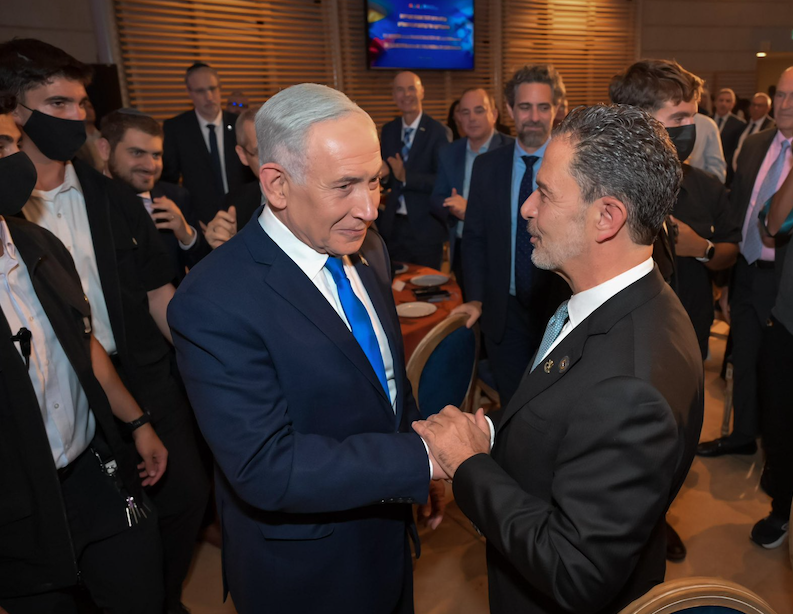
The ceremony in Jerusalem, attended by Colombian Foreign Minister Omar Bula and his Israeli counterpart, Gideon Sa’ar, was followed by an official reception featuring Prime Minister Benjamin Netanyahu. The Israeli leader welcomed Colombia’s return as a diplomatic partner, while de la Espriella used a video message to underline the political significance of the decision. “We are not simply talking about a diplomatic headquarters; we are opening a new door for Colombia and Israel to be closer,” highlighted the Colombian leader.
Netanyahu, who has sought to strengthen Israel’s relationships with governments across Latin America, offered an emphatic response to Bogotá’s change of direction. “Colombia stands with us,” he declared at the reception, thanking the Colombian government for its support. “We stand firm for civilization, for life, for hope, and we will combat the barbarians, and we thank those who stand with us, and Colombia stands with us,” he said.
His remarks captured the political dimension of the inauguration. For Israel, Colombia’s decision represents more than the restoration of diplomatic relations: it is a public endorsement from a country that, under Petro, had become one of the region’s most outspoken critics of the Israeli leadership and military campaign in the Gaza Strip.
Netanyahu also praised de la Espriella’s decision to choose Jerusalem, describing the Colombian president as “a leader with courage and vision”. The Israeli Prime Minister’s welcome reflected the significance Israel attaches to Jerusalem, and Colombia becoming the tenth country to have an embassy in the contested city, joining the United States, Fiji, Guatemala, Honduras, Kosovo, Nauru, Papua New Guinea, Paraguay and Somaliland.
The reception, organized by Israel’s Ministry of Foreign Affairs, brought together Netanyahu, Sa’ar, Bula Escobar, Colombian ambassador to Israel Tania Gilinski and Israeli ambassador to Colombia Vivian Aisen, alongside other diplomatic representatives.
For Bula, the inauguration was an opportunity to establish a new foundation for bilateral cooperation after the rupture of 2024. “Today, we are taking a concrete step towards restoring diplomatic relations between our countries, relations that should never have been broken,” the foreign minister said. “Israel is a strategic partner. It always has been, and from now on, it will be an even stronger one.”
In his official address, Bula described the Embassy as “a visible expression of our determination to restore dialogue, strengthen mutual trust and build an agenda that delivers tangible benefits to our citizens.”
He said the diplomatic mission would serve Colombia’s national interests, provide assistance to Colombian citizens and promote a practical programme of cooperation. Areas identified by the government include security and defence, the fight against transnational crime, cybersecurity, artificial intelligence, technological innovation and investment.
The economic reset had already begun before the inauguration. Colombia and Israel restored their free trade agreement on Tuesday, adding a commercial dimension to the diplomatic rapprochement. The government is also seeking to expand opportunities for Colombian exports, including agricultural products, flowers, coffee and manufactured goods, while attracting Israeli investment in technology and innovation.
The Embassy’s location, however, carries implications beyond bilateral commerce. Despite Jerusalem being the state capital of Israel, most countries maintain diplomatic missions in Tel Aviv. In 1980, Colombia withdrew their embassy from Jerusalem due to a non-binding UN resolution, and which the U.S. described as non-mandatory.
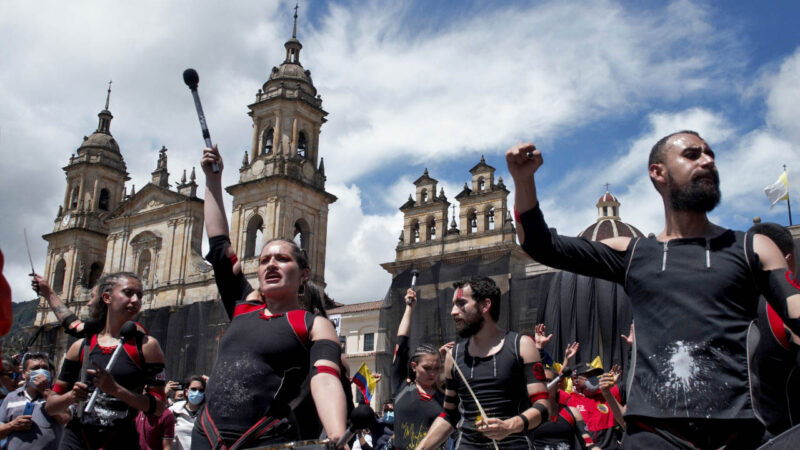
The shift stands in sharp contrast to Petro’s presidency. In May 2024, his government severed all diplomatic relations with Israel and summoned anti-Israel protests in Bogotá’s historic Plaza de Bolívar. He relentlessly labeled Netanyahu a “war criminal” which also strained an already tense relationship with U.S President Donald Trump.
The political consequences of the rupture were visible in Colombia on Wednesday, when approximately 8,000 demonstrators took to the streets of Bogotá in an anti-government rally with a cameo appearance by the ex-President. Heavy rain and hail battered the capital’s historic centre as trade unionists and other protesters voiced opposition to the new administration.
Palestinian flags and pro-Palestinian chants provided a striking counterpoint to the on-going celebrations in Jerusalem. While Colombian officials presented the Embassy as a step towards renewed strategic cooperation, the demonstration in Bogotá, quickly dissipated with the inclement weather, leaving many observers to question why there were more Palestinian flags among attendees than the Colombian tri-color.
The two events reflect Colombia’s place in the world depending on the deep political divide. De la Espriella’s administration is seeking to rebuild alliances that deteriorated under his predecessor, placing security cooperation, trade and commercial interests and closer relations with Israel at the centre of a new foreign policy. Petro and his supporters will continue to champion a more radical different approach, one that placed opposition to Israel’s military campaign in Gaza at the forefront of Colombia’s foreign policy narratives.
With the embassy now open and return of coal shipments to Israel, the diplomatic reversal has moved from political promise to institutional reality. The challenge for President Abelardo de la Espriella will be to translate the renewed relationship into measurable economic and security benefits for Colombians and new administration that must also contend with Petro’s return to the streets.