
Nine years after Colombia signed its historic peace agreement with the Revolutionary Armed Forces of Colombia (FARC), one of the central political promises of the Final Accord has run out of road. Comunes, the party formed by the last FARC Secretariat and guerrilla warlords, has lost its legal status after failing to secure sufficient support in the 2026 congressional elections. Meanwhile, the Special Jurisdiction for Peace (JEP), the post-conflict tribunal created to investigate crimes against humanity, faces a budget dispute, a looming deadline and increasingly pointed criticism over its pace of delivering justice.
The coincidence is difficult to ignore. The political vehicle created to bring the FARC into the democratic fold has failed to establish a durable electoral constituency. The judicial institution designed to hold perpetrators accountable is under pressure to demonstrate that its exceptional powers can produce meaningful results before its mandate expires.
Neither development invalidates the peace agreement, however. But both raise a fundamental question: after years of institutional guarantees, hefty public expenditure and political polarization over impunity, can Colombia show that the promises made back in 2016 have translated into lasting political legitimacy and timely justice for victims?
For one of FARC’s most high-profile hostages, Ingrid Betancourt, JEP should now be “shut down.” In a social media post, the former presidential candidate claims, that the tribunal “was created as a business to enrich many in exchange for guaranteeing impunity to FARC”. She then goes on to state that ‘ending JEP is an opportunity to do what was promised to us and never fulfilled: to finally guarantee the victims’ right to truth, justice, reparation, and non-repetition.”
The end of Comunes
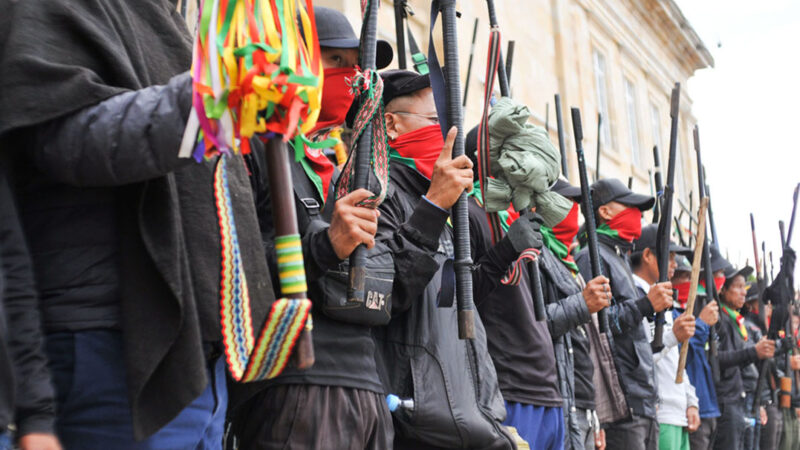
This week Colombia’s National Electoral Council (CNE) also confirmed the loss of Comunes’ legal status through Resolution 4006. The decision followed the March congressional elections, in which the party secured some 114,000 Senate votes, falling far short of the constitutional threshold of 3% of valid votes. The ex-FARC commander Sandra Ramírez, known by her alias “Griselda Lobo Silva” and a former senator who was seeking re-election, received just 10,505 votes.
As stipulated in the Final Accord, over two legislative terms, from 2018 to 2026, the former guerrilla movement would benefit from having a political voice, with five seats in the Senate and five in the House of Representatives. Those arrangements were transitional by design. They were intended to give a former armed group an opportunity to establish itself within Colombia’s democratic system, and not to provide permanent parliamentary representation regardless of electoral performance.
That distinction matters. The end of Comunes’ legal status is not the expulsion of former combatants from democratic politics. Nor does it mean that the peace agreement has been formally repudiated. It is evidence, however, that the political project born from the Havana accord failed to build even the most marginal support among a 40 million-strong electorate to sustain its institutional existence.
The ballot box on March 8 delivered its verdict on Comunes as a party. Its former representatives are now free to pursue lawful political participation through other arrangements, but the exceptional guarantees that once secured their presence in Congress have ended.
Justice cannot remain perpetual
The more consequential test may lie with the JEP. Established as part of the agreement’s transitional justice system, the tribunal was tasked with investigating serious crimes committed during the armed conflict, including kidnappings, forced disappearances, sexual violence and extrajudicial executions. Its purpose was not simply to process cases, but to establish the truth, determine responsibility, provide justice to victims and help prevent renewed violence.
The need for such a mechanism was undeniable. Colombia’s conflict claimed more than 260,000 lives, displaced millions and left communities across the country enduring decades of violence. A negotiated settlement was a historic milestone, and the decision to bring the FARC into civilian politics represented a significant departure from a conflict that had resisted military and political solutions for generations.
But a historic mandate cannot become an excuse for indefinite delay.
The JEP issued its first sentences in 2025, years after the agreement was signed. Its major investigations, known as macro-cases, concern crimes committed on a scale that demands painstaking evidence-gathering and complex judicial proceedings. The gravity of those crimes justifies rigorous investigations. It does not remove the obligation to deliver decisions within a credible timeframe.
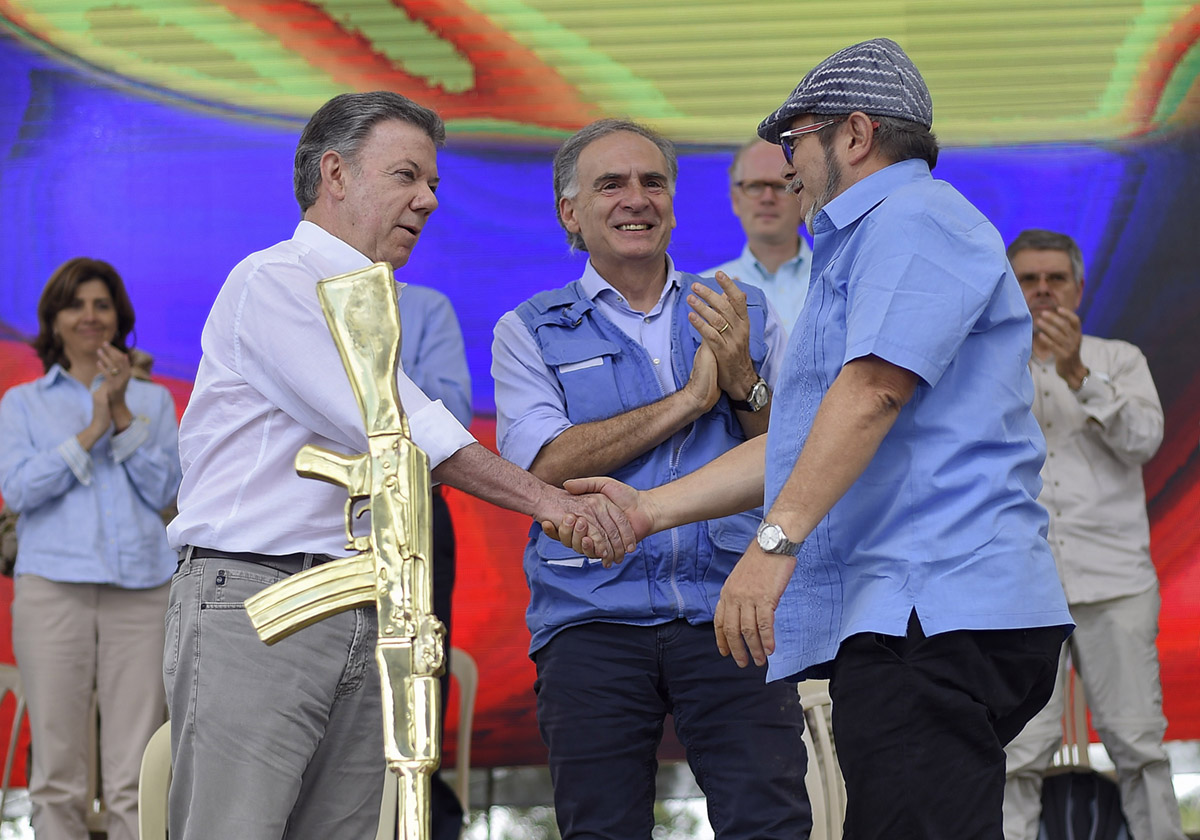
On October 1, former president Juan Manuel Santos, the architect of the peace agreement and Nobel Peace Prize laureate, said critics of the tribunal’s slowness had considerable justification. He called on the JEP to accelerate its work and said it should fulfil its mandate by 2028, preferably earlier.
Santos’ intervention is significant precisely because it comes from the man who negotiated the settlement and defended its institutional design. His criticism cannot easily be dismissed as hostility to the peace process. It reflects a problem at the heart of the agreement: transitional justice must eventually transition from investigation to accountability.
Santos subsequently clarified that the tribunal’s budget should be guaranteed through 2033, consistent with the longer period contemplated for its judicial work. His position is therefore not a demand to abandon the JEP, but a call to make it deliver within the agreed framework.
The cost of unfinished justice
The budget dispute has sharpened the confrontation. A proposed reduction of COP 170 billion in the JEP’s 2027 allocation has drawn warnings from the tribunal that the cuts could seriously disrupt its operations and prevent it from completing much of its work before the March 2028 deadline.
The government of President Abelardo de la Espriella argues that public resources must also address the weaknesses of the ordinary justice system. That is a legitimate policy concern. Colombia’s conventional courts face serious problems of capacity, delay and access to justice, and the victims of crimes outside the JEP’s jurisdiction have no less claim on the state.
Yet cutting a transitional tribunal’s resources while demanding that it accelerate its work risks producing precisely the outcome its critics condemn: more delay, fewer completed cases and greater frustration among victims.
The alternative is not to give the JEP an unlimited budget or an open-ended mandate. Public institutions must justify their expenditure, explain their delays and demonstrate results. A tribunal created to deliver accountability should be subject to scrutiny, particularly when its work involves extraordinary arrangements for those responsible for grave crimes.
But accountability cannot be measured solely by the number of years elapsed or the money spent. The relevant test is whether the process produces credible findings, meaningful consequences and tangible outcomes for victims. If the JEP cannot meet that test, it must explain why.
Even Humberto de la Calle, Colombia’s former High Commissioner for Peace and chief peace negotiator with FARC, acknowledges that JEP has “made mistakes” and will have to face the budget cuts announced by De la Espriella. De la Calle pointed out that the “challenge now will be for JEP to deliver results”.
The peace agreement was never meant to be an end in itself. Its success – or failure – depends on what follows: a political system in which former combatants compete without special guarantees, a justice system that establishes responsibility without endless delay, and a government that can deliver for victims rather than asking them to wait indefinitely.
The disappearance of Comunes is one marker of that transition. JEP’s approaching deadline is another. The question now is whether Colombia can complete the work of peace before public confidence erodes even further.