
With just over a month to go before Colombia’s May 31 presidential election, a new Invamer poll suggests the race has narrowed to three viable contenders, as left-wing senator Iván Cepeda strengthens his lead and two right-wing rivals battle for a place in the runoff.
The survey, conducted for Noticias Caracol and Blu Radio, shows Cepeda commanding 44.3% of voting intention, a significant jump from 37.1% in February. The Pacto Histórico candidate has not only consolidated support among core voters but expanded his appeal across all regions, with particularly strong gains among younger voters aged 20 to 30.
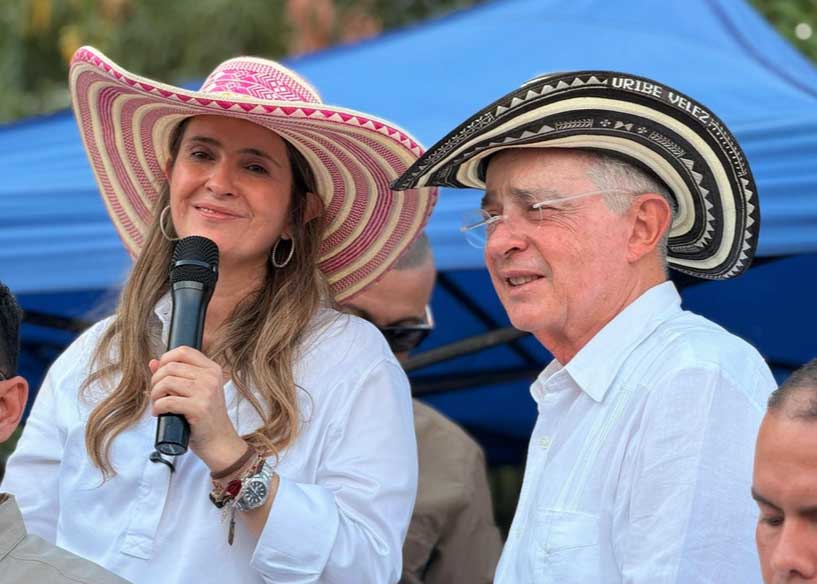
Trailing behind, but still within striking distance of a second-round berth, are Abelardo de la Espriella with 21.5% and Paloma Valencia with 19.8%. While De la Espriella has posted modest gains since February, Valencia has emerged as the fastest-rising candidate, nearly doubling her support from 10% in the previous poll.
The data underscores a central dynamic shaping the race: a fragmented right competing for a single runoff slot, even as the left coalesces behind a dominant frontrunner. According to the data, as long as the right remains divided, any division among the pro-Uribe camps will continue to benefit Cepeda. Unless there is a clear consolidation after May 31, the numbers suggest the second round will be a contest over who faces the hard-leftist and not whether he gets to the final run-off.
The collapse of Colombia’s political center has been equally striking. Former Bogotá mayor Claudia López has seen her support plunge from 11.7% to 3.6%, while former Medellín mayor Sergio Fajardo has dropped from 6.6% to just 2.5%. Both candidates have lost more than half of their previous backing and now poll well below the 4% threshold required for state reimbursement of campaign expenses.
López’s decline appears particularly acute in urban constituencies, where she previously drew strong support, including among progressive and LGBTQ voters, pointing to a broader erosion of her core base. Fajardo, meanwhile, continues to struggle to regain traction, reflecting persistent voter dissatisfaction with centrist alternatives.
Analysts are also seeing how centrist voters are shifting toward Valencia, whose ticket includes former DANE statistics chief Juan Daniel Oviedo as the vice-presidential option. Oviedo appears to be decisive in broadening Valencia’s appeal beyond the Centro Democrático base.
Despite Cepeda’s commanding first-round lead, runoff scenarios suggest a more competitive contest – particularly if Valencia secures the second spot. In a hypothetical second round between Cepeda and De la Espriella, the left-wing candidate would win with 54.6% against 42.6%. However, against Valencia, the margin narrows significantly to 51.2% versus 46.6%.
That tightening gap reflects Valencia’s growing ability to attract support beyond her base, including voters from the political center and segments of the undecided electorate. According to the poll, she outperforms De la Espriella in capturing second-choice preferences, positioning her as the more competitive challenger in a potential runoff.
When respondents were asked who they would support if their first-choice candidate failed to advance, Cepeda led with 26.7%, followed closely by Valencia at 25.7%, with De la Espriella trailing at 19.8%. López and Fajardo lagged further behind, reinforcing their diminished relevance in the race.
Cepeda’s dominance, however, is not without warning signs. While he continues to lead comfortably, his projected runoff margins have narrowed compared to earlier surveys, particularly against Valencia. The erosion suggests that while his base remains solid, opposition voters may be coalescing more effectively than before.
For now, the trajectory is clear. Cepeda has gained ground nationally despite a worsening security situation and poll conducted before the terrorist bomb on Saturday, April 25 by FARC dissidents along the Pan-American highway in which 20 persons were killed.
With less than a month until Colombians head to the polls, the race appears increasingly defined not by a crowded field, but by a three-way struggle – one frontrunner and two challengers vying for the chance to stop him.