Mayor Carlos Fernando Galán’s administration is reintroducing nighttime motorcycle restrictions and deploying more than 400 District personnel as the capital prepares for Halloween, days after two men were sentenced for the killing of the 20-year-old university student in Chapinero.
As Bogotá prepares for another Halloween weekend, the death of university student Jaime Esteban Moreno casts a shadow over the celebrations. Nearly a year after the 20-year-old was beaten to death following a Halloween event in central Chapinero, the District government is reinforcing security and mobility measures intended to reduce road fatalities, prevent violent confrontations and protect residents during one of the capital’s busiest nights of the year.
The renewed measures come days after a Bogotá court sentenced Juan Carlos Suárez and Ricardo Rafael González to 37 years and six months in prison for aggravated homicide in Moreno’s death. The first-instance ruling, announced on October 19, has brought the case back into the national spotlight as the anniversary of the killing approaches.
For Moreno’s family, the sentence represents a significant development in a case that shocked Bogotá and raised questions about violence surrounding nightlife. For the city, the approaching anniversary is also a reminder of the consequences that a seemingly ordinary night out can have when confrontations escalate into fatal attacks.
A Halloween night that ended in tragedy
Moreno, a student at Universidad de los Andes, was attacked in the early hours of October 31, 2025, after leaving the ‘Before Club’ in Chapinero, where he had attended a costume party. According to evidence presented during the investigation, he and a friend were pursued along the street before Moreno was knocked to the ground and savagely beaten.
Security-camera footage, witness testimony and forensic evidence formed part of the prosecution’s case against the two aggressors. The student suffered severe head injuries and died on November 1.
The court’s decision came shortly before the first anniversary of the attack. The sentence was imposed for aggravated homicide, with the prosecution presenting evidence that the victim was left defenceless during the assault. The case has also drawn attention to a third person, Kaleidymar Paola Fernández Sulbarán, who has been accused by prosecutors of instigating the attack and remains sought by authorities, according to published reports. Her alleged role remains a separate matter from the convictions of the two men.
The circumstances of Moreno’s death have given this year’s Halloween preparations added significance. While the District’s announced measures address broader concerns about traffic safety and public order, the case illustrates the potentially devastating consequences of violence in and around nightlife venues.
Motorcycle restrictions return
In its October 27 announcement, Bogotá’s Mobility Secretariat confirmed that temporary restrictions on motorcycles will apply over five consecutive nights, from October 29 through November 2, extending into the early hours of November 3.
Motorcycles carrying a passenger will be prohibited from circulating between 6 p.m. and 6 a.m. the following morning during the designated period. A separate restriction will prohibit motorcycle circulation between 8 p.m. and 4 a.m. on 19 major road corridors, including the Autopista Norte, Autopista Sur, NQS, Avenida Boyacá, Avenida Ciudad de Cali, Avenida Suba, Calle 26, Calle 80 and Carrera Séptima.
Violations carry a reported fine of COP 633,200. Exemptions apply to specified emergency and public-service vehicles, security personnel on duty, vehicles transporting people with disabilities and certain authorised delivery and assistance services, subject to identification and other requirements.
The District says the measures are intended to reduce road deaths and serious collisions while supporting public order. Between 2022 and 2024, an average of 15 people died during Halloween weekends each year, with motorcyclists accounting for 80 per cent of fatalities, according to the Mobility Secretariat.
The administration also cited the results of restrictions implemented during Halloween 2025. Compared with the corresponding period in 2024, fatal traffic incidents fell by 75 per cent, incidents involving injuries declined by 50 per cent and the total number of serious crashes decreased by 52 per cent, according to the District’s figures.
Those figures concern road safety and should not be confused with evidence that motorcycle restrictions prevent assaults outside bars or clubs. Nevertheless, they provide the administration with a stated rationale for repeating the restrictions this year.
More security in nightlife districts
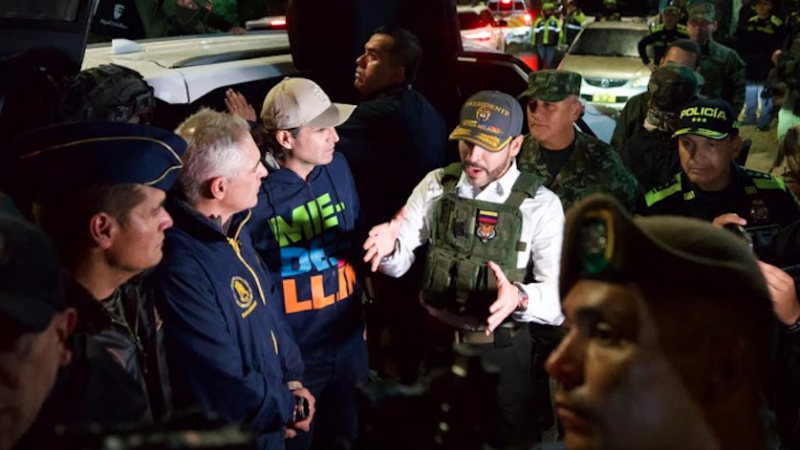
The mobility measures form part of a wider security and prevention plan involving more than 400 District personnel working with local administrations, the Bogotá Metropolitan Police and other authorities.
Operations will include mixed patrols, inspections of commercial establishments and preventive interventions in nightlife areas, parks, major roads and other places expected to attract large crowds. Chapinero is among the localities identified for particular attention, alongside Suba, Bosa, Fontibón, Usme, Puente Aranda, Teusaquillo, Tunjuelito and Kennedy.
District teams will also conduct inspections to verify compliance with regulations and deploy social-dialogue and human-rights personnel in crowded areas to encourage peaceful conflict resolution. Public-awareness campaigns will address violence, responsible alcohol consumption and the protection of children and adolescents.
The city’s message is straightforward: Halloween celebrations should not come at the expense of public safety. Yet the effectiveness of the plan will depend not only on the number of officers and inspectors deployed, but also on how consistently the rules are enforced and how nightlife businesses manage risks to customers inside and outside their premises.
Beyond traffic controls
The restrictions announced by Galán’s administration offer a framework for managing movement and strengthening the District’s presence during the festivities. But Moreno’s death raises a broader question about how authorities, venue operators and the public respond when an argument becomes a physical confrontation.
The measures are part of a wider strategy to reduce traffic fatalities, strengthen security and prevent disorder during Halloween. The timing, however, places them against the backdrop of a case that remains painfully relevant to the city.
For families preparing to send their children out to Halloween parties, and for young people heading into Bogotá’s nightlife districts, the objective is more immediate than the language of policy announcements: return home safely.
Moreno’s death cannot be undone by a restriction on motorcycles or an additional patrol. But the approaching festive season provides a compelling reason to examine whether the city is doing enough to prevent senseless violence, ensure responsible security practices and intervene before confrontations become family tragedies.