
Five years ago, the Torres Cuervo brothers were searching for a place to sell their home-brewed beer. Much of Bogotá felt wrong. Some neighborhoods were defined by high-end restaurants and customers dressed in designer jackets and handbags. Others were frenetic, crowded, and uninviting.
Chapinero offered something else.
“There were places where you could come in pajamas or a leather jacket,” said Misaac Torres Cuervo, laughing as he recalled the neighborhood as it was when he and his brothers, Alejandro and Kiro, first arrived. “You feel free here.”
At the time, Chapinero remained largely off the radar for entrepreneurs. A few established names—Mini+Mal and Salvo Patria among them—had already staked a claim, but much of the area consisted of quiet residential streets, red-brick houses and a sense of social openness that felt increasingly rare in the city. That atmosphere, marked by tolerance and a lack of pretension, drew the brothers to a spot on Calle 54, where they would soon build Statua Rota, a beer bar and restaurant.
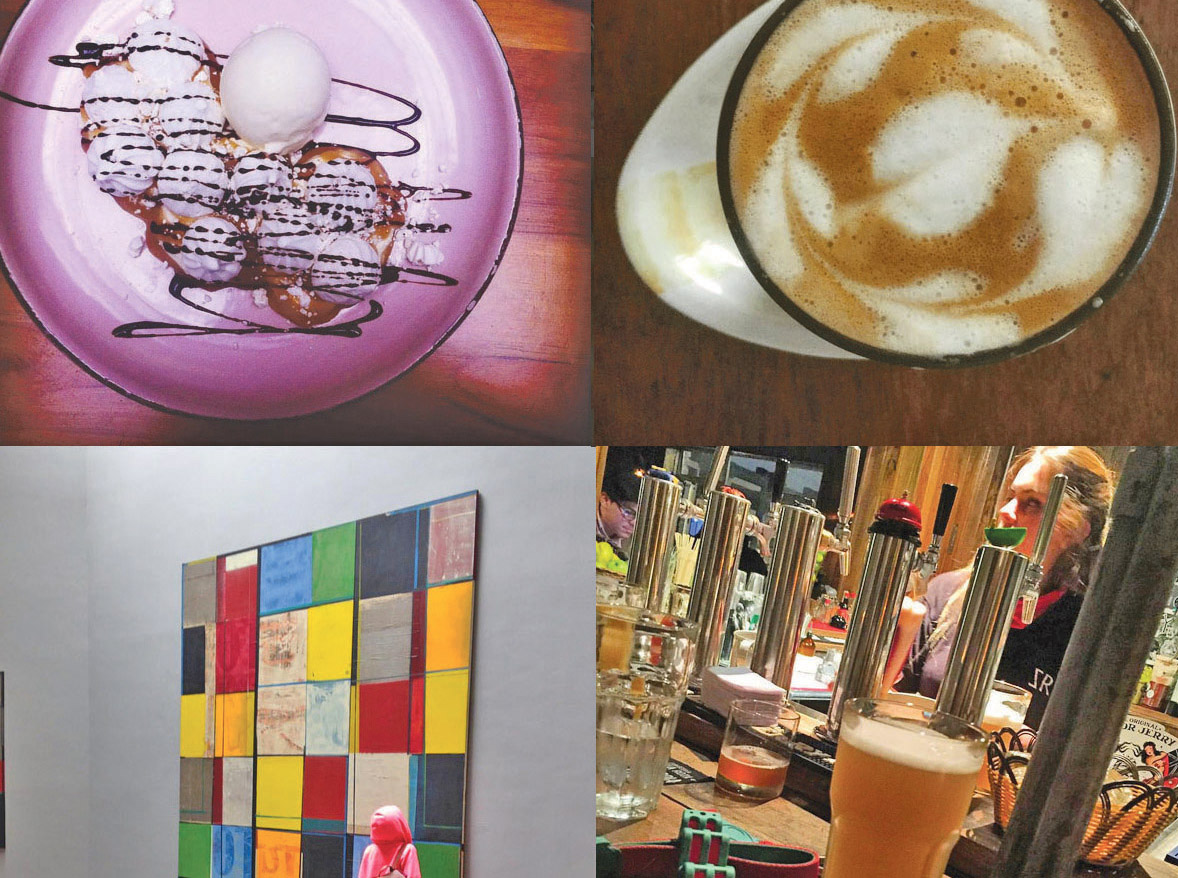
Inside, dark wooden tables and paneled walls give the space a subdued warmth. Punk music—an homage to Alejandro, who plays in a local band—fills the room. On some evenings, the brothers fire up a large outdoor grill, and the smell of barbecue drifts toward Carrera Séptima, stopping pedestrians in their tracks.
The bar nods to Brooklyn without trying to imitate it. Its beers incorporate Colombian fruits, and one of its most popular sauces is a fiery maracuyá. It is, unmistakably, a local place.
Statua Rota is now part of a growing constellation of restaurants, shops and galleries that have begun reshaping Chapinero’s streetscape, drawing visitors from across Bogotá. On Calle 57, Mistral, a French bakery, turns out croissants that could pass for Parisian. Nearby, Doméstica occupies another renovated brick house, offering baguettes, cinnamon rolls and a rotating lunch menu built around vegetarian dishes, curries and French stews made with Colombian ingredients. A small book selection, curated by Adriana Rojas, invites customers to linger over coffee.
Traditional pastelerías coexist with newer ventures. Pizzerias like Tomy Tomato and Indio cater to a young crowd drawn by stone-oven pies, tropical cocktails and lounge music. At Indio, diners can sit in the main room of a Bauhaus-style building or on a crescent-shaped terrace that opens to the night sky.
Around the corner from Salvo Patria, a modest bar called El Mono Bandido has added an indoor garden to the mix. Dim lighting, hanging ferns and even a swing lend the space a playful intimacy that has made it popular with younger patrons.
Farther north, on Calle 65, La Fama leans into an American barbecue aesthetic. Servers wear red trucker hats, and each table is stocked with ketchup and barbecue sauce, a visual shorthand that contrasts sharply with the neighborhood’s older storefronts and antique shops.
Chapinero’s transformation has not been limited to food and drink. Joyce Lamassonne, an artist and longtime Bogotá resident, opened her gallery, LamaZone, three years ago after purchasing and renovating a house in Chapinero Alto. Designed by her nephew, the gallery features an industrial aesthetic, with imposing iron doors and a sculpture that anchors the entrance.
“Chapinero was very calm. It was very secure,” Ms. Lamassonne said, explaining her decision to move there.
She was among the first to open a gallery in that part of the neighborhood, but others have followed. Art magazine Arteria now organizes monthly tours that allow families to visit galleries and museums for free, an effort to make contemporary art more accessible to the public.
As Chapinero continues to evolve, both Ms. Lamassonne and Mr. Torres Cuervo worry about who will benefit from its success. For Ms. Lamassonne, the future depends on public investment. Government funding, she said, could help galleries educate residents about Colombia’s artistic heritage. “People aren’t familiar with our art history background,” she said.
For Mr. Torres Cuervo, the concern is more immediate. Rising rents, he fears, could turn Chapinero into a place that excludes the very people who gave it its character. He wants good beer and good food to remain within reach.
“I’m not keen to stay here if it becomes that,” he said. “I want Chapinero to be trendy for everyone.”