The temporary deployment of the Army in Norte de Santander’s capital follows the assassination of a former senior municipal official and a series of bomb attacks, as the government confronts expanding criminal networks along the Venezuelan border.
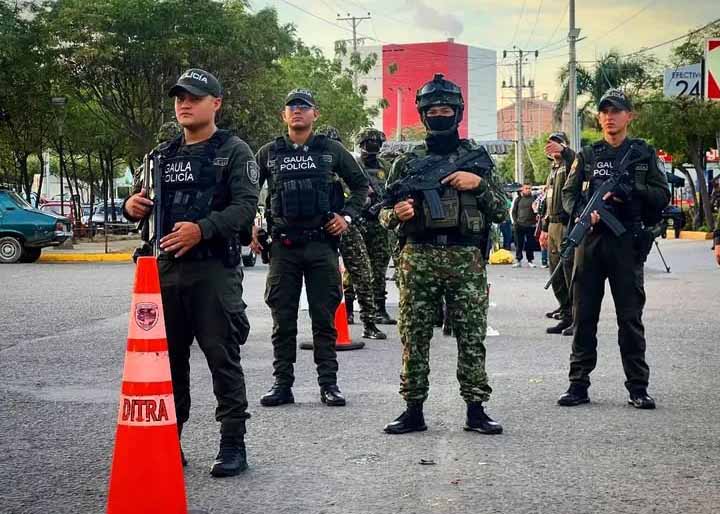
President Abelardo de la Espriella has ordered the temporary militarization of Cúcuta, the capital of Norte de Santander, in one of the most significant security interventions of his administration as Colombia approaches the first 100 days of his presidency.
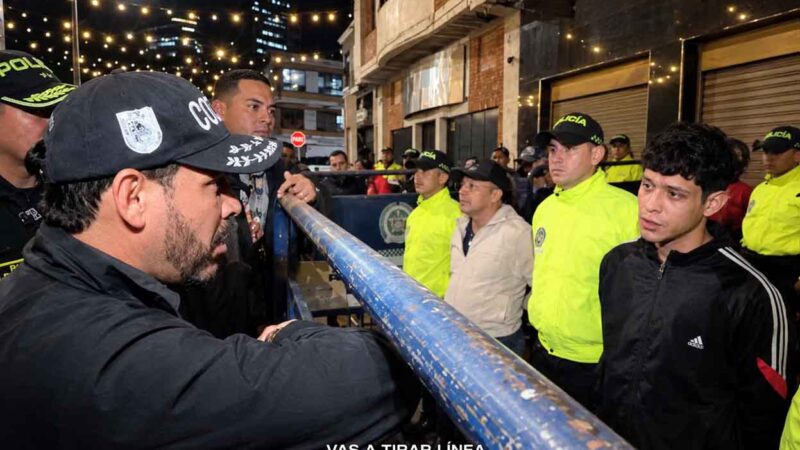
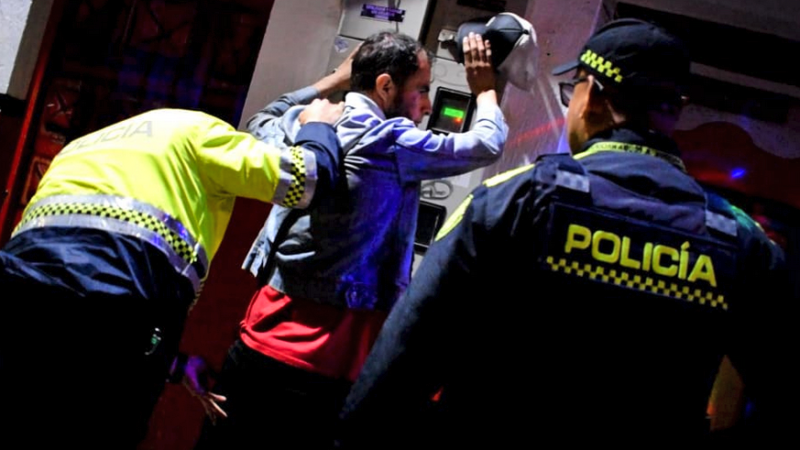
Announced on Thursday, October 29, the decision will see the Colombian Army reinforce its presence across the border city in coordination with the National Police, with the stated objective of restoring territorial control and confronting the armed organisations responsible for a growing wave of violence.
The presidential order follows a particularly violent week in which Miguel Castellanos Serrano, a former Cúcuta secretary of Government and aspiring mayoral candidate, was assassinated on Monday while travelling with his son. Castellanos, a retired police major, had previously been involved in municipal security and efforts to combat organised crime.
The following day, an explosive device detonated near the facilities of Colombia’s National Tax and Customs Directorate (DIAN), close to the international crossing connecting Cúcuta with Venezuela. The explosion injured civilians and police officers, further exposing the vulnerability of a city that has long struggled with the presence of illegal armed groups and cross-border criminal networks.
For De la Espriella, the developments represent a direct challenge to the authority of the Colombian state in one of its most strategically important border regions.
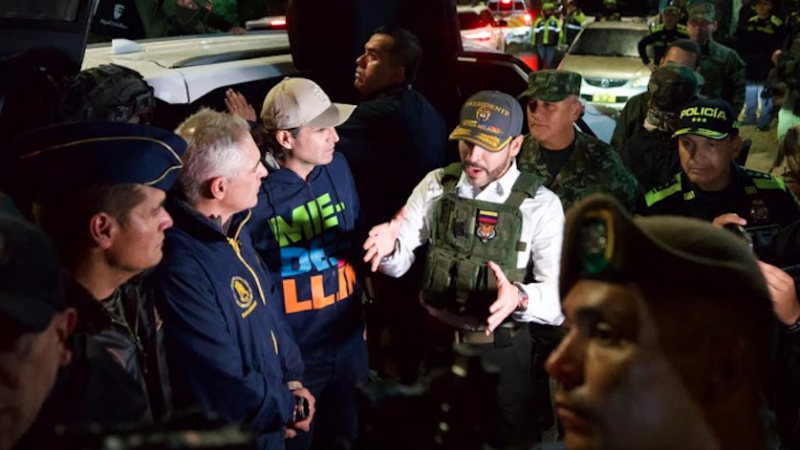
“I have ordered the immediate militarisation of Cúcuta. This measure will be temporary, while we stabilise public order,” the president declared, instructing the Defence Ministry and senior military commanders to coordinate an expanded security operation.
The intervention will be reinforced from November 3 by the deployment of the military and police campaign Esparta and the Urban Security Operations Bloc (BOSUR). Both initiatives are intended to intensify operations against criminal organisations, dismantle their financial structures and pursue those responsible for attacks against civilians and public institutions.
Norte de Santander has become one of Colombia’s most complex security regions. Its extensive 1.100-km long border with Venezuela, combined with the strategic importance of the mountainous Catatumbo region, has created conditions in which guerrilla organizations, narcotics traffickers and smaller criminal networks compete for control of illicit economies.
The National Liberation Army (ELN) maintains a significant presence in the region, alongside dissident factions of the former Revolutionary Armed Forces of Colombia (FARC). The Gulf Clan, also known as the Ejército Gaitanista de Colombia, has expanded its criminal influence, while local extortion networks, illegal mining interests and drug-trafficking organisations continue to undermine security.
The confrontation between the ELN and FARC dissidents in Catatumbo has already produced a devastating humanitarian toll, displacing more than 100,000 people since the beginning of 2025. The violence has also contributed to the expansion of criminal activity in municipalities surrounding Cúcuta, placing additional pressure on local authorities and security institutions.
The government argues that a stronger military presence is necessary to prevent criminal armed groups from consolidating their influence in urban areas and using the international border as an operational and logistical advantage.
Cúcuta is not the first Colombian city to face such an intervention under De la Espriella. In September, the administration ordered a temporary military deployment in Santa Marta following attacks attributed to the self-defense forces – Autodefensas Conquistadoras de la Sierra Nevada (ACSN) – operating along the Caribbean coast. The president has also raised the possibility on Wednesday of expanding military operations into parts of southern Bogotá, particularly Usme and Sumapaz.
The increased military presence is aimed to provide immediate reinforcement to overstretched police forces, strengthen surveillance and disrupt the financing networks of criminal groups. But the challenge in Norte de Santander extends beyond the deployment of soldiers. Illicit economies, extortion, drug trafficking and the proliferation of smaller armed groups remain deeply embedded in the territory.
De la Espriella has promised to personally supervise the operation, announcing that he will travel to Cúcuta on Tuesady to assess its progress and demand measurable results from military and police commanders.
For residents and businesses in this important commercial gateway to Venezuela, the immediate priority is restoring confidence in public security. The assassination of a former senior municipal official and the bombing near an international crossing have reinforced concerns that criminal organisations are increasingly willing to challenge the institutions responsible for protecting the population.
As the administration approaches its first 100 days, Cúcuta is becoming an important test of De la Espriella’s central campaign promise: restoring the authority of the state and confronting organized crime with an assertive security strategy.