
A seismic swarm around Sipí and Istmina in the middle San Juan region of Chocó continues to produce tremors across the department as President De La Espriella visits to oversee reconstruction.
The earth beneath Chocó has continued to move more than a month after a magnitude 7.4 earthquake struck Colombia’s Pacific litoral, with a series of tremors concentrated around the municipalities of Sipí and Istmina raising fresh questions about what is happening beneath the department.
The Servicio Geológico Colombiano (SGC) says the ongoing activity is not simply a sequence of aftershocks. Its monitoring network has identified two distinct patterns of seismic activity following the major earthquake of August 10: aftershocks at considerable depth and a separate concentration of earthquakes known as a seismic swarm.
The distinction is important.
Aftershocks generally follow a main earthquake and tend to decrease in frequency and magnitude over time. A seismic swarm, by contrast, does not necessarily have a single dominant event. Instead, earthquakes can continue at varying magnitudes without following the expected pattern of progressively weaker aftershocks.
According to the SGC, some of the aftershocks detected following the August earthquake have occurred at depths between 70 and 120 kilometres. The more persistent activity concentrated within parts of Chocó corresponds to the seismic swarm.
The phenomenon was particularly evident on Monday, September 14, with a new tremor (3.4-magnitude) registered Tuesday, by the SGC, at 3:30 am.
On Monday, the seismic activity began near Sipí, where the National Seismological Network recorded a magnitude 3.7 earthquake at 10:01 a.m., followed by a magnitude 3.2 event at 12:24 p.m. The activity then intensified during the afternoon and shifted towards Istmina. Within less than six minutes, three earthquakes greater than magnitude 4 were recorded.
The first, at 3:02 p.m., registered magnitude 4.9 at a depth of 39 kilometres. Two minutes later, another earthquake measuring 4.1 occurred, followed at 3:08 p.m. by a magnitude 4.4 event.
The sequence continued. At 4:13 p.m., seismographs recorded another magnitude 4.9 earthquake, followed by a magnitude 4.5 tremor at 5:39 p.m.
The movements were felt well beyond Chocó. By 4:30 p.m. Monday, the SGC had received more than 2,000 reports from people who had felt the earthquakes, principally in the departments of Valle del Cauca, Risaralda, Antioquia and Tolima.
What is a seismic swarm?
Freddy Tovar, coordinator of Colombia’s National Seismological Network, explained that the defining characteristic of a seismic swarm is the absence of a single earthquake around which subsequent activity progressively declines. “An earthquake swarm is a sequence of earthquakes that, unlike aftershocks, does not have a main event from which the magnitudes progressively decrease,” he said.
Instead, seismicity can remain relatively constant, producing earthquakes of both greater and lesser magnitude without following a descending pattern. For communities still recovering from the August 10 earthquake, the continuing movements are a reminder that the emergency has not ended.
De La Espriella in Chocó
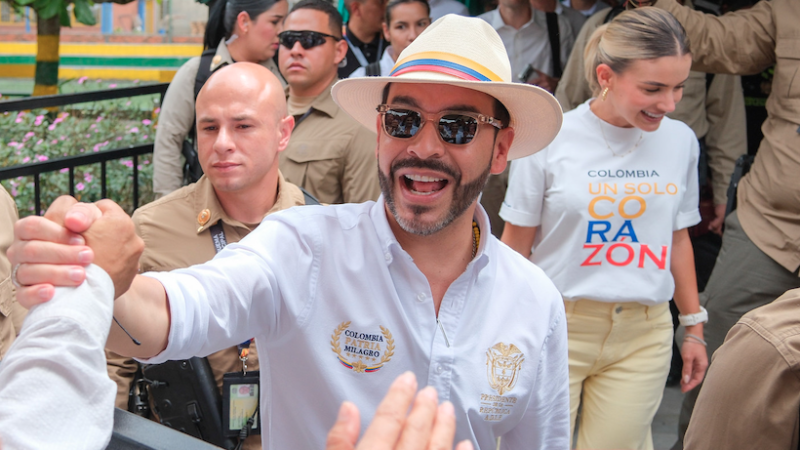
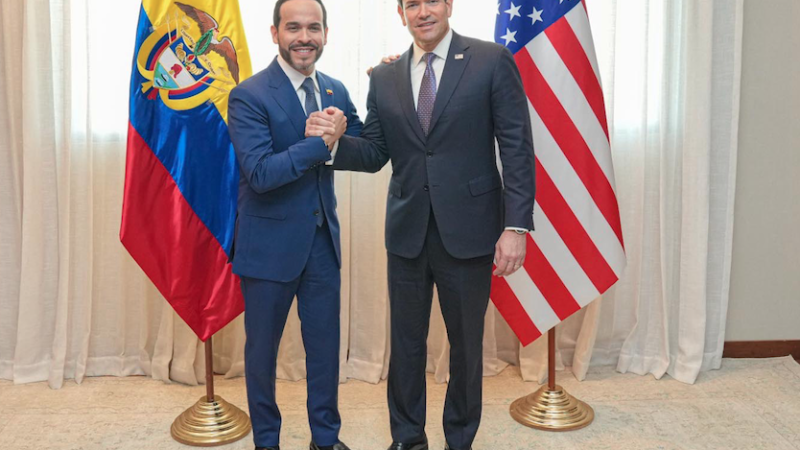
President Abelardo De La Espriella arrived in Quibdó on Tuesday morning for his latest visit to the department since taking office. He is expected to also visit Colombia’s most important Pacific port city – Buenaventura – in neighbouring Valle del Cauca to inspect reconstruction efforts following the August 10 earthquake.
It is his fourth visit to Chocó since the earthquake. He travelled to the department on the day of the disaster and subsequently announced a special recovery programme known as the “Plan Marshall”, intended to address both earthquake damage and longstanding problems involving infrastructure and connectivity.
The president’s most recent visit to Quibdó included a meeting with business leaders who have been enlisted to help develop the reconstruction strategy.
The government has also declared an Economic, Social and Ecological Emergency, allowing the Executive to mobilise resources and accelerate measures intended to assist affected households and rebuild damaged infrastructure.
Governor defends humanitarian response
Chocó Governor Nubia Carolina Córdoba has defended the government’s humanitarian response amid criticism over alleged delays in delivering assistance to families affected by the earthquake.
Córdoba said over 300 tonnes of aid have reached affected municipalities but acknowledged the logistical difficulties of providing assistance across a department where many communities are located in remote areas with limited road and transport connections.
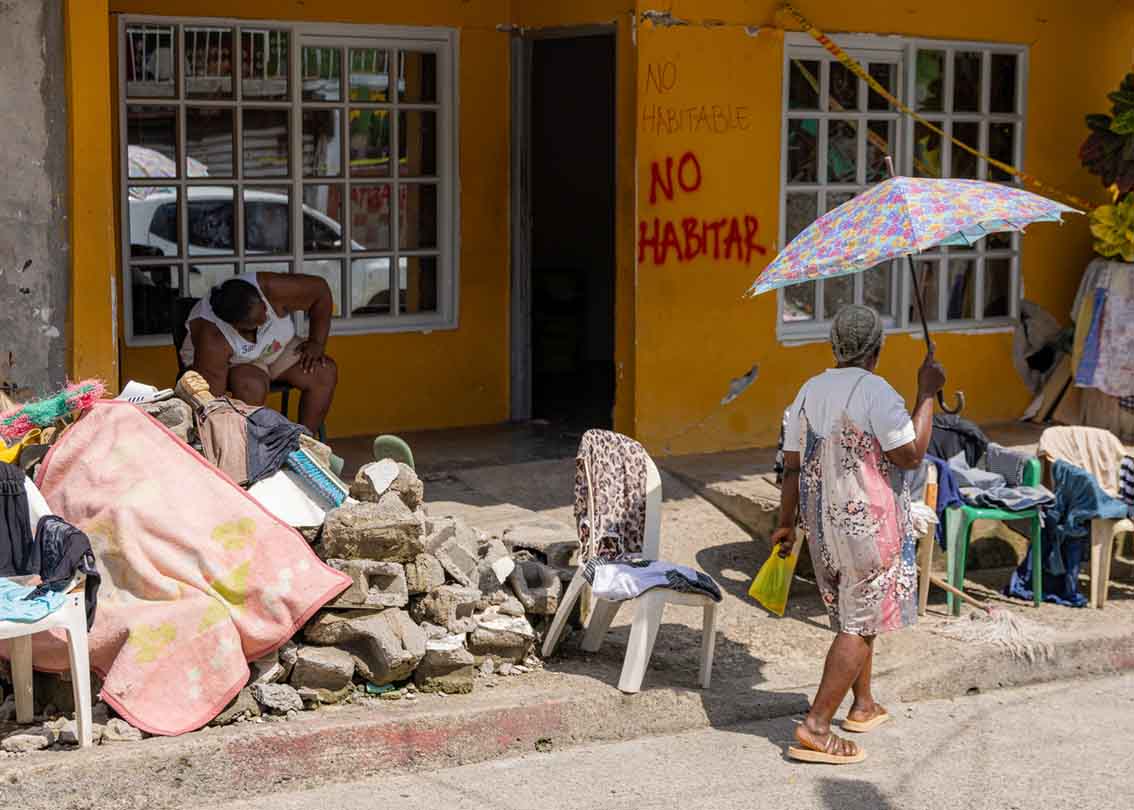
The challenge now extends beyond repairing buildings and infrastructure. More than a month after the magnitude 7.4 earthquake, the ground itself remains active.
The SGC’s identification of a seismic swarm does not mean that another earthquake of a particular magnitude is imminent. Rather, it describes a pattern of continuing seismic activity that requires monitoring. For residents across western Colombia, especially in the hardest hit cities of Pereira, Manizales and Cali, the rapid succession of tremors is a tangible reminder that the seismic emergency triggered on August 10 is still unfolding.