
If it’s sand you’re after, there’s no shortage of it in a country framed by two oceans. Colombia, with its Caribbean and Pacific coasts, offers beaches as diverse as its landscapes — from volcanic black sands and wild rainforests to desert dunes and coral reefs teeming with life. As the year draws to a close, travelers in search of solitude, adventure, or a warm December escape will find five coastal treasures that embody the country’s natural beauty and cultural depth.
Manzanillo Beach – Providencia
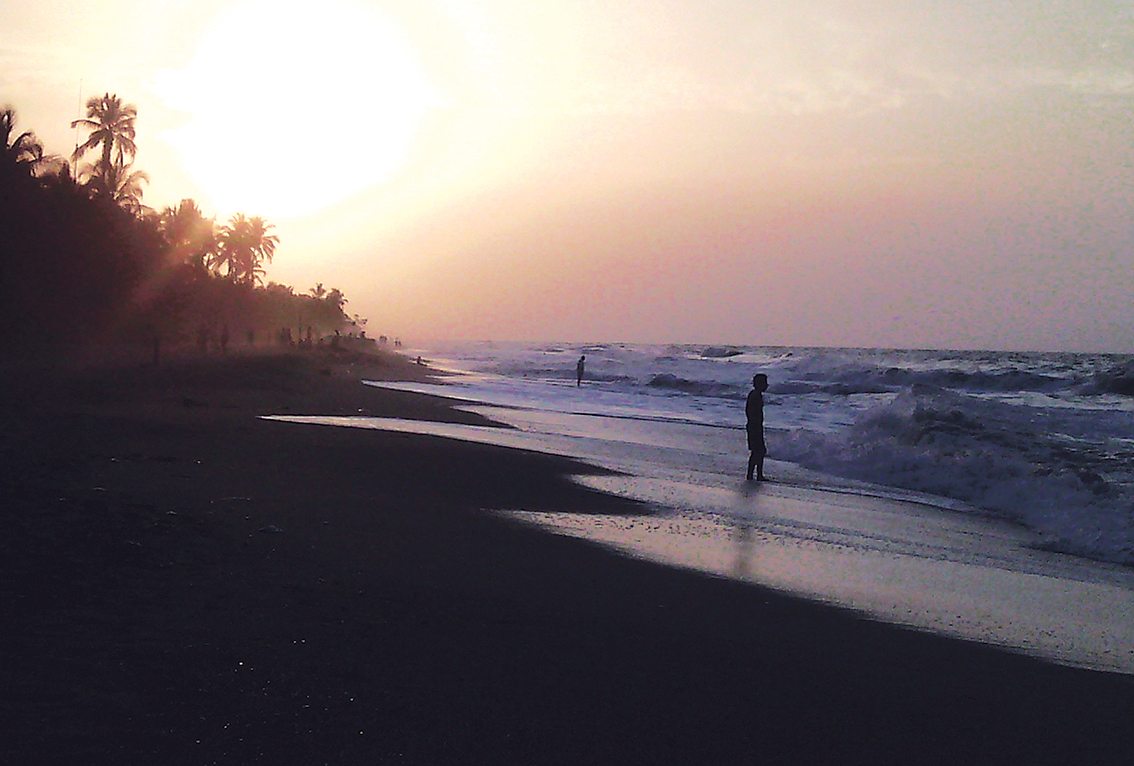
Unspoiled by mass tourism, the island of Providencia feels like a glimpse into the Caribbean’s past, when pirates roamed its turquoise waters. The most famous among them, Captain Henry Morgan, is said to have used the island as a base to raid Spanish galleons. On the southern tip lies Manzanillo Beach, the island’s largest and perhaps most idyllic bay. Shaded by manzanillo trees and caressed by calm, clear waters, it’s perfect for swimming and snorkeling. Beneath the surface, coral gardens flourish with parrotfish, rays, and delicate sea fans. As the day fades, order a Rum Punch from Roland’s Beach Bar — a local institution — and watch the sun sink beyond the horizon, painting the sea in shades of gold and violet.

Pilón de Azúcar – La Guajira
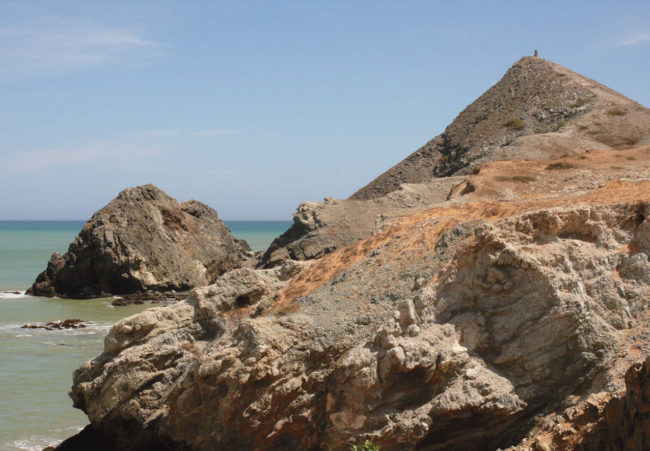
At the northern edge of South America, where desert meets the sea, lies Pilón de Azúcar — the “Sugar Pylon.” Reached by a dusty trail from the fishing village of Cabo de la Vela, this remote cove offers a surreal blend of colors: ochre sands, turquoise waters, and the deep greens of limestone hills. Cacti cling to the arid slopes, and the wind carries whispers of the Wayuu, the Indigenous people who call La Guajira home. Climb to the summit of the hill above the beach for sweeping views of the Caribbean, the desert, and the endless sky — a panorama that feels like standing on the edge of the world.
Palomino – Magdalena
Few places capture Colombia’s diversity quite like Palomino. Here, the snowy peaks of the Sierra Nevada de Santa Marta — the world’s highest coastal mountain range — descend into the Caribbean Sea. Once a quiet fishing village, Palomino has become a laid-back haven for travelers seeking a mix of beach and jungle. Its long stretch of pale sand is ideal for lazy afternoons, while the nearby Palomino River offers tubing adventures through lush forest, ending where freshwater meets saltwater. Local hostels and eco-lodges, built from wood and palm, reflect the area’s growing commitment to sustainable tourism. At night, bonfires light up the beach as backpackers and locals gather to the sound of drums and the rhythm of the waves.
Islas de San Bernardo – Bolívar
South of Cartagena, the San Bernardo archipelago floats in the Caribbean like a string of emeralds. Accessible by boat after a few hours at sea, these ten small islands remain one of Colombia’s best-kept secrets. With powder-white sands and translucent blue waters, the isles offer quiet refuge from the bustle of the mainland. The island of Tintipán is a highlight — its shallow lagoon glows with bioluminescent plankton on dark, moonless nights, creating a spectacle that seems almost supernatural. Nearby, the tiny Múcura Island combines luxury and simplicity: hammocks swinging over the sea, coral reefs just steps from shore, and sunsets that dissolve into the horizon.
Bahía Solano – Chocó
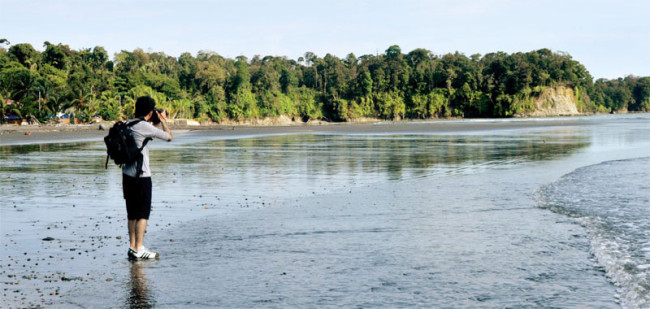
On Colombia’s Pacific coast, Bahía Solano feels like another world entirely. Isolated from the country’s urban centers and accessible only by plane or boat, it is a place where dense rainforest meets wild ocean. The beaches here are broad and volcanic gray, bordered by cliffs and mangroves alive with toucans, monkeys, and morpho butterflies. A short journey south leads to El Valle and Playa Almejal, a two-kilometer stretch ideal for surfing and bodyboarding. Between July and October, humpback whales arrive from Antarctica to breed, filling the bay with their haunting songs. Guided eco-walks in nearby Utría National Park reveal waterfalls, tide pools, and the extraordinary biodiversity that defines Chocó as one of the world’s wettest — and most pristine — regions.