Colombia’s Abelardo de la Espriella has vowed to intensify airstrikes, special operations and aerial coca eradication following a wave of terror attacks across Tolima, Huila and Cauca that left civilians dead, including a two-month-old baby.
President Abelardo de la Espriella announced Monday that he will intensify Colombia’s military offensive against illegal armed groups following a weekend of escalating guerrilla violence that culminated in a devastating bombing in Planadas, Tolima, leaving four civilians dead and at least 18 injured.
Among those killed in Sunday’s attack was a two-month-old baby, whose death has become a particularly stark symbol of the growing vulnerability of civilian communities caught in the country’s armed conflict.
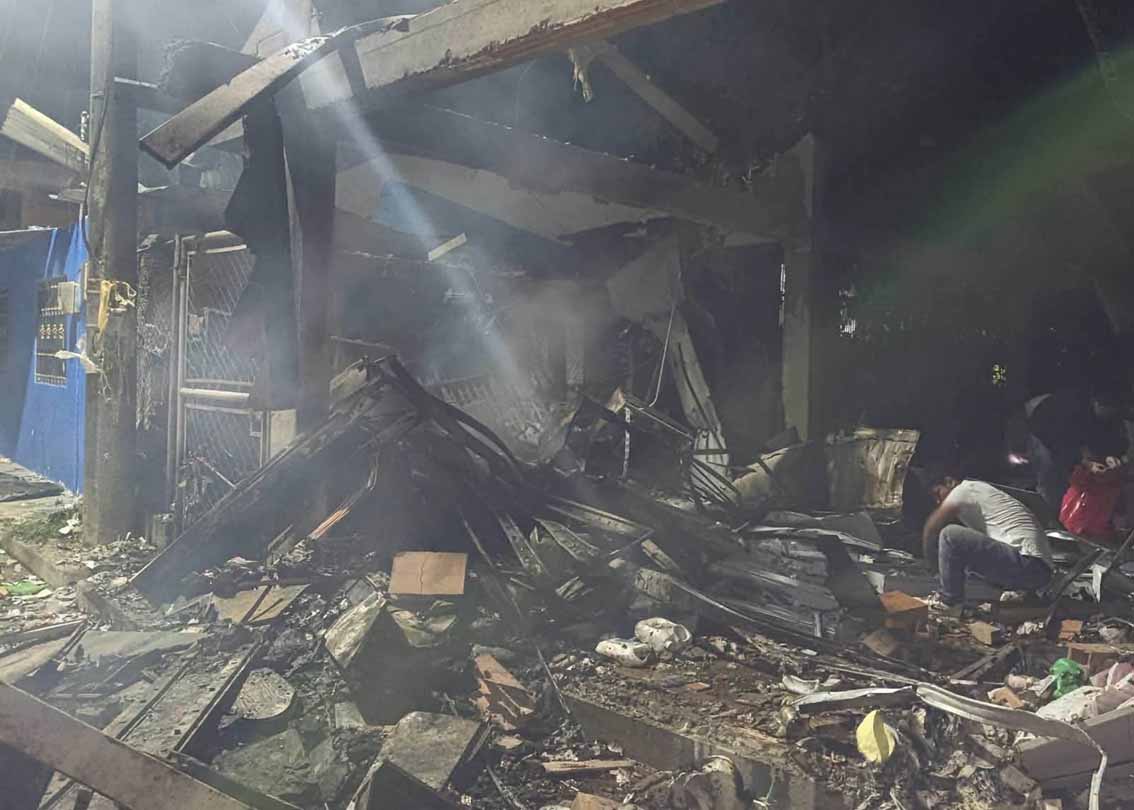
The November 1 bombing targeted the vicinity of the General Domingo Caicedo Infantry Battalion in Planadas. Explosives were reportedly transported in a dump truck before being detonated near the military installation. The resulting explosions struck residential properties and the municipal Hospital Centro de Planadas, causing extensive structural damage and destroying its pharmacy.
According to the preliminary assessment reported by Tolima authorities, approximately 177 homes were affected, while around 80% of the hospital’s infrastructure suffered damage. The injured included residents who sustained wounds from flying debris and shrapnel. Some required transfers to other medical facilities as emergency services struggled to cope with the aftermath.
The attack has prompted renewed concerns about the ability of illegal armed organisations to conduct increasingly sophisticated operations in territories where the state has struggled to maintain effective control.
In his statement, De la Espriella condemned what he described as “narcoterrorist attacks” against civilians and members of the security forces in Planadas, Algeciras in Huila, and several municipalities in Cauca. He also declared that the bombings against the civilian population and security forces “will NOT go unpunished.”
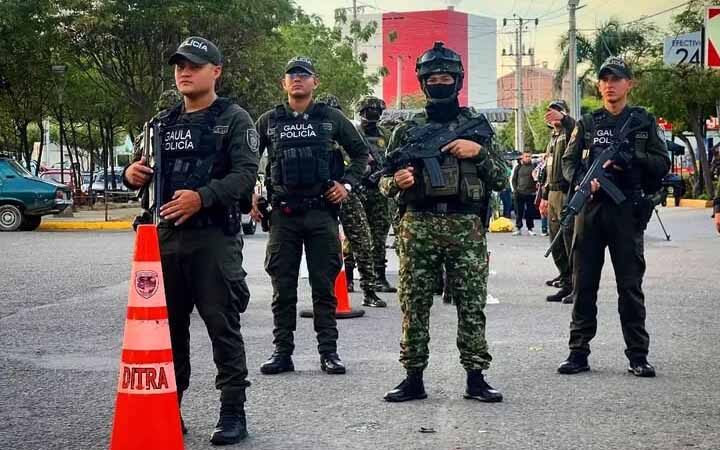
He subsequently confirmed that he had ordered a strengthening of the security forces’ presence, intensified military operations and additional security measures to prevent further attacks and recover territorial control.
Crucially, the president reaffirmed that Colombia would continue conducting airstrikes against legitimate military targets, intensify special operations and advance the reactivation of aerial spraying against coca cultivation, in accordance with the law.
“We will not retreat a single millimetre,” he said, reiterating his government’s determination to confront illegal armed organisations using the full capabilities of the state.
The announcement signals a hardening of the government’s security posture at a time when the presence of FARC dissidents and other illegal armed groups is contributing to a deterioration of security across parts of southwestern Colombia.
Struggle for territorial control
Planadas occupies a strategically important position in southern Tolima, a region historically affected by guerrilla activity and the expansion of illicit economies. Its geographical position also connects territories affected by coca cultivation and trafficking networks linking the Pacific region with routes extending towards Colombia’s eastern plains.
The competition for control of these corridors is not simply a military confrontation. It involves access to drug trafficking routes, illegal mining, extortion and other sources of revenue that sustain armed organisations.
According to the Tolima Governor’s Office, preliminary investigations into the Planadas bombing point to the possible participation of two FARC dissident structures, Ismael Ruiz and Gerónimo Galeano. Governor Adriana Magali Matiz described the attack as terrorism carried out by criminal networks associated with illegal mining and drug trafficking.
The wider situation is particularly complex. Colombia’s Ombudswoman, Iris Marín, has previously warned of territorial disputes between dissident factions associated with the Estado Mayor Central (EMC), linked to alias Iván Mordisco, and the Segunda Marquetalia.
The competition between these organisations has contributed to a deterioration in security across Planadas, Ataco, Chaparral and Rioblanco. The Ombudsman’s Office has also highlighted the expansion of illegal gold mining in southern Tolima as an additional source of instability.
In its November 2 assessment, the institution warned that the destruction of the municipal hospital represented a particularly serious humanitarian consequence. Damage to its pharmacy has disrupted access to essential medicines, while the loss of hospital capacity leaves an already vulnerable population with fewer options for emergency medical treatment.
The Ombudsman’s Office said attacks involving indiscriminate explosives in populated areas violate the principles of distinction, proportionality and precaution under international humanitarian law.
A wider security crisis
The Planadas bombing was not an isolated incident. Over the same weekend, attacks were reported in Huila and Cauca, highlighting the geographical spread of the latest escalation.
In Algeciras, Huila, a motorcycle bomb killed police officer Julián Esmith Castaño López and injured other police officers and civilians. In Cauca, explosive attacks and armed harassment were reported in Balboa, La Sierra and Totoró.
The concentration of attacks has intensified pressure on the national government to demonstrate that its security strategy can restore territorial control and protect communities living under the threat of armed groups.
De la Espriella’s commitment to continued airstrikes and intensified military operations represents a decisive rejection of a more conciliatory approach towards organisations responsible for attacks against civilians and state institutions.
Nevertheless, the renewed offensive presents significant operational and humanitarian challenges. Military operations in populated and contested territories must distinguish between combatants and civilians, particularly in areas where illegal armed organisations operate close to residential communities.
The destruction of a hospital in Planadas illustrates the consequences when explosive attacks reach civilian infrastructure, regardless of the intended military target.
For residents of southern Tolima, the immediate priority remains the restoration of essential services, the identification of those responsible and the prevention of further attacks.
Whether the renewed offensive can dismantle FARC dissident territorial networks, disrupt their illicit economies and restore security without exposing civilians to further danger is a defining test of the De la Espriella’s presidency. For the families mourning the dead in Planadas, however, that test has already begun with a tragic human cost.