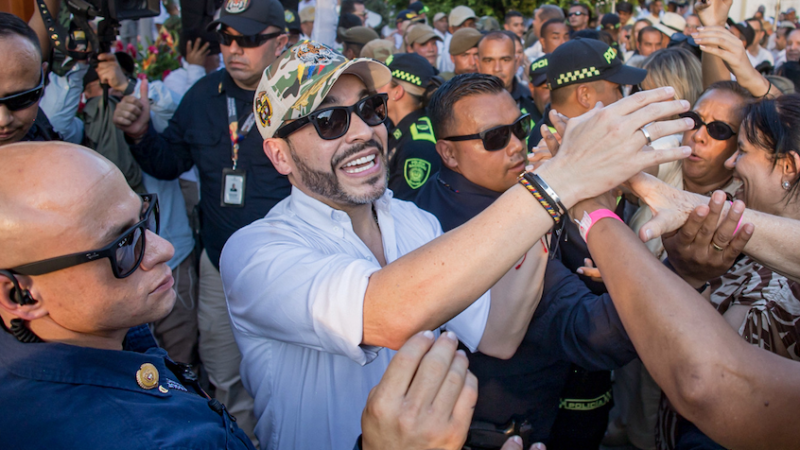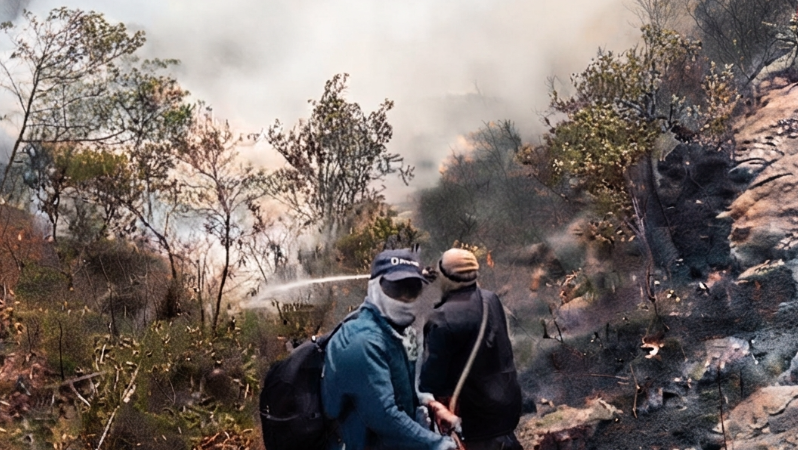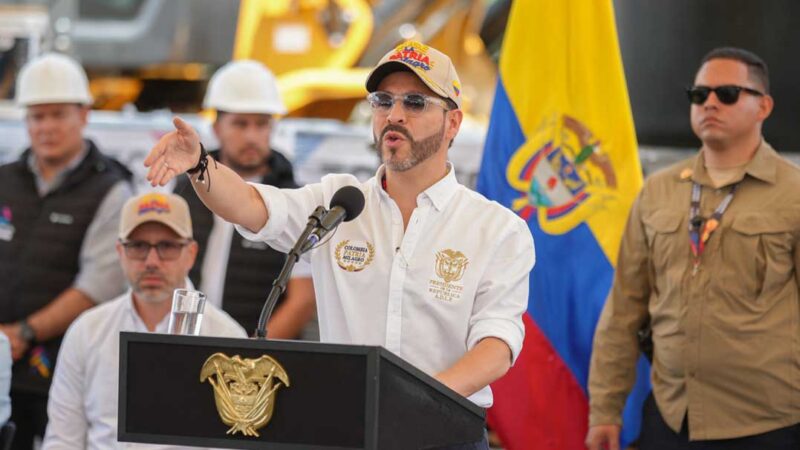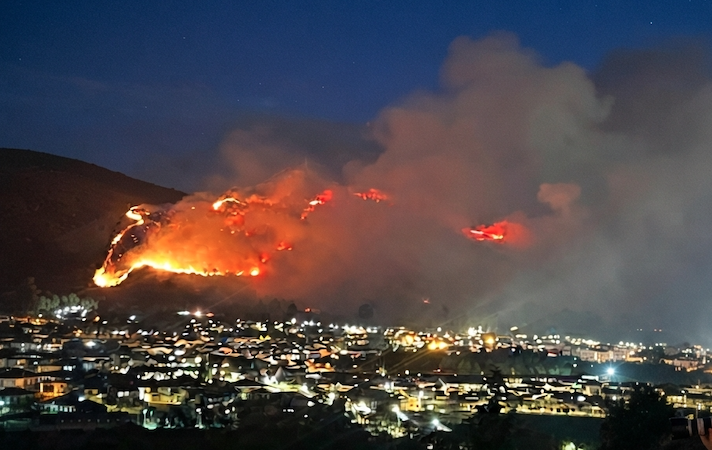

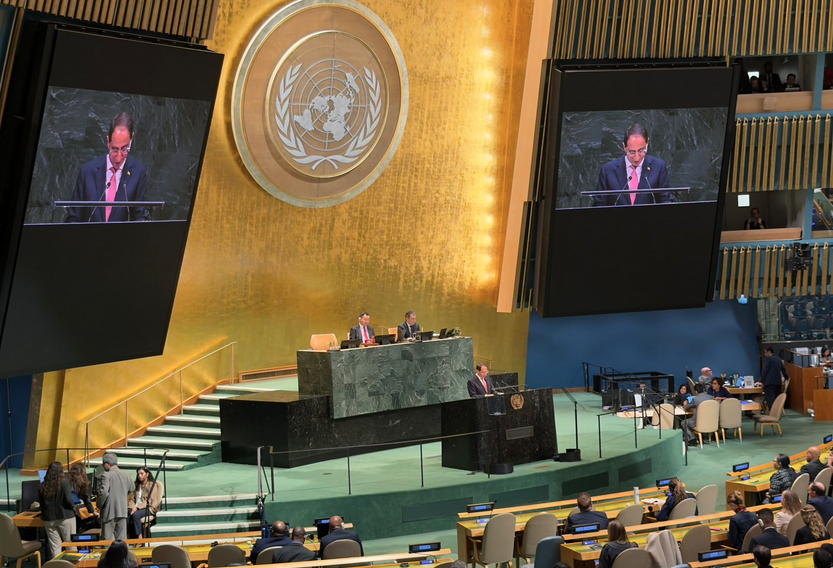
President Abelardo De La Espriella kept one of his most closely watched campaign promises on Thursday, remaining in Colombia to attend to the security situation in Santa Marta and Cali, rather than travelling to Manhattan for the 81st Session of the United Nations General Assembly.
Instead, the president entrusted his first address to the UN to Vice-President José Manuel Restrepo, who delivered a speech written by De La Espriella and used the international stage to outline the new administration’s priorities on security, economic growth, sovereignty, human rights and Venezuela.
“I have asked the Vice-President of the Republic, José Manuel Restrepo, to read this message on my behalf,” Restrepo said at the beginning of the address. “I have done so because I assured the Colombian people that I would not leave the country during the four years of my mandate. I am keeping that promise.”
The decision breaks with the recent practice of Colombian presidents personally attending the annual gathering in New York. Restrepo had travelled to the United States ahead of the General Assembly, combining the UN appearance with an economic and diplomatic agenda focused heavily on attracting investment to Colombia.
The speech opened with the August 10 earthquake, which struck Colombia just days after De La Espriella took office.
“We can fall, we can suffer and we can cry. What we cannot and do not know how to do is surrender,” Restrepo read.
He said the government had been forced to respond to both the natural disaster and what it described as a broader crisis of confidence and security. “We had to act and we acted,” he said, while acknowledging international assistance received after the earthquake.
Security a central theme
Restrepo said De La Espriella had given the security forces an “unequivocal” instruction to recover territorial control and restore the authority of the state. The president’s message also established a deliberately broad definition of the armed organisations the government intends to confront.
“Organisations that murder, kidnap, use explosives, recruit minors and deliberately resort to terror to subdue society are terrorist groups,” Restrepo said. “That is what we call them and we are confronting them with all the legitimate force of the state, within the Constitution and the law.”
The government also called for greater international cooperation against drug trafficking, arguing that Colombian-produced illicit drugs do not remain within Colombia and that transnational criminal threats require an international response.
But the most pointed section of the address was directed at the United Nations itself.
De La Espriella has previously been critical of the organisation, and his government used its first appearance before the General Assembly to question whether the UN is delivering the results expected of it.
“Is the UN fulfilling those purposes with the effectiveness that today’s world requires?” Restrepo asked. He said Colombia believes in the organisation precisely because it is legitimate to question whether its institutions are responding adequately to contemporary problems.
“My country wants a United Nations whose effectiveness is measured less by the volume of documents it produces and much more by the results it achieves,” he said. Restrepo also criticised the use of human rights as a selective political instrument.
“I categorically reject the idea that human rights are used as flags raised against some and kept down against others,” he said. “They cannot become an instrument that rewards friends, punishes adversaries, or, worse, remains silent in the face of circumstances.”
The Colombian government, he added, wants an international system that is “serious, coherent and demanding with everyone.” Venezuela was another significant element of the speech.
Restrepo explicitly called for a political transition in Colombia’s neighbour, saying: “We trust in a prompt, safe and profound democratic transition in Venezuela.”
The statement places the new Colombian government more clearly behind a democratic transition in Venezuela while also calling for a re-examination of the international institutions involved in managing regional crises.
Economic growth formed the other major pillar of Colombia’s message in New York.
Before his appearance at the General Assembly, Restrepo presented a portfolio of 176 investment projects valued by the government at more than US$150 billion. The projects cover energy, infrastructure, logistics, agro-industry, tourism, industry, technology and critical minerals, as part of the administration’s “Misión Crecer” strategy and its ambition to raise Colombia’s economic growth rate to 6 percent.
At the UN, Restrepo extended that invitation directly to international investors.
“I want to invite you to look at Colombia,” he said. “We have access to two oceans, energy resources, enormous biodiversity and a government that defends private initiative.”
The broader message was that security and economic opportunity are inseparable. The government argues that confronting criminal organisations must be accompanied by investment, employment and development in territories vulnerable to illegal economies.
“Governments do not decree economic growth,” Restrepo said. “Their task is to create the conditions for it to happen.”
For De La Espriella, the arrangement allowed him to maintain his pledge to remain in Colombia while placing Restrepo at the centre of the government’s first major international diplomatic and economic presentation.
For Colombia, meanwhile, the 2026 General Assembly produced an unusual opening statement from a new administration: delivered not by the president, but by the vice-president, and directed as much at the effectiveness of the international system as at the country’s security and economic ambitions.