The launch of the airline’s twice-weekly South American service offers more than a new connection for Colombians. Its strategic importance may lie in linking Venezuela’s vast energy resources with Gulf investment capital and opening a new gateway between Latin America, the Middle East and Asia.
BOGOTÁ – After months of changes to its launch schedule, Qatar Airways has finally arrived in Bogotá. The airline inaugurated its new South American service on November 4, establishing a twice-weekly connection between Doha, Bogotá and Caracas. Yet the commercial signifcance of the route may have less to do with the number of passengers travelling directly between Colombia and Qatar than with the wider economic geography it connects.
For the Colombian capital, the arrival of one of the world’s largest international carriers adds another gateway to markets that have traditionally required lengthy journeys through Europe or the United States. For Caracas, however, the implications could be considerably more strategic.
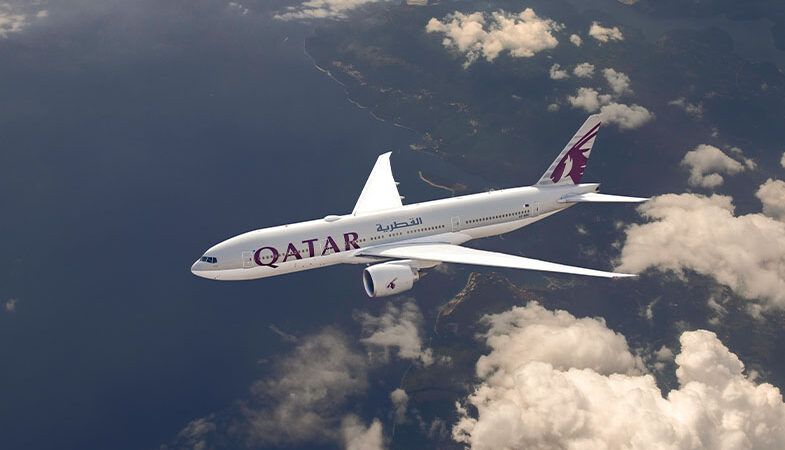
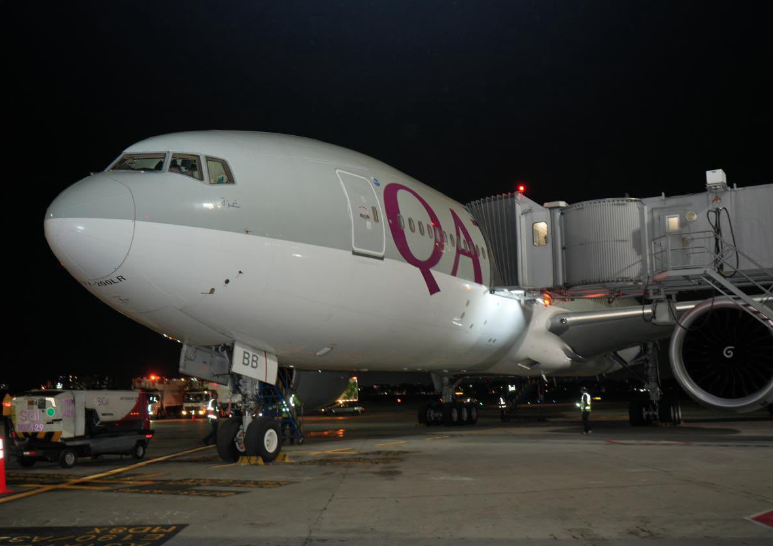
The route operates as a triangular service, with flight QR783 departing Doha for Bogotá before continuing to Caracas and returning to Qatar from the Venezuelan capital. Operated by a Boeing 777-200LR, the service runs on Wednesdays and Sundays.
Under the published schedule, the aircraft arrives at Bogotá’s El Dorado International Airport at 16:25, departing for Caracas at 17:55. It reaches Simón Bolívar International Airport at 21:00, before continuing to Doha at 23:30. The flight arrives in Qatar at 20:35 the following day.
The schedule effectively gives Bogotá passengers access to Doha through a single connecting itinerary via Caracas, without requiring a transit through the United States. From Hamad International Airport, travelers can access Qatar Airways’ extensive network of more than 170 destinations, including major business hubs in China, Japan, South Korea, Australia, India and Southeast Asia.
The more interesting business proposition, however, may be the Caracas connection.
Venezuela possesses the world’s largest proven oil reserves and substantial natural gas resources, but years of underinvestment, declining production and deteriorating infrastructure has stymied its energy potential. The prospect of rebuilding the country’s hydrocarbons industry is increasingly attracting international attention, particularly from investors with the financial resources sector earger to participate in large-scale energy projects.
Qatar already has a commercial interest in this emerging opportunity. UCC Oil & Gas, a subsidiary of Qatar’s Power International Holding, secured a participating interest in the second phase of Venezuela’s offshore Loran gas project in August 2026. The project also involves BP and XRG, the energy investment arm of Abu Dhabi’s ADNOC.
The connection between Caracas and Doha therefore takes on an additional dimension. Qatar is not simply opening a new passenger market in Venezuela; its business community already has interests in the country’s energy sector.
For Gulf-based investors, energy executives, engineering companies and financial institutions, a more convenient air connection could facilitate visits, commercial negotiations and the development of relationships with Venezuelan counterparts. It is too early to suggest that the new flight will generate significant investment by itself, but it creates infrastructure that could become increasingly relevant as Venezuela seeks international capital and expertise.
The implications also extend to Colombia. Bogotá is well positioned to serve as a regional business gateway, providing accommodation, professional services and connections to other Latin American markets for companies exploring opportunities in neighbouring Venezuela.
Qatar Airways also enters a market where Emirates has an established presence. The Dubai-based carrier operates services between Bogotá and Dubai via Miami, providing a daily connection when the service was launched in June 2024.
However, the Emirates itinerary requires passengers moving between Colombia and Dubai to comply with US immigration and entry requirements during the Miami stopover. This makes the Qatar Airways service an alternative for travelers who would prefer to avoid transiting through the United States.
For Colombian passengers, Doha offers access to a different geographical network, particularly across the Indian subcontinent, East Asia, Southeast Asia and the Gulf. The opportunity is not necessarily to attract large numbers of visitors travelling specifically to Qatar, but to make Bogotá more accessible to international markets through one of the world’s major aviation hubs.
There is also a cargo dimension worth watching. Greater connectivity with the Gulf could eventually support commercial exchanges involving Colombian agricultural exports, perishables, specialist goods and other products seeking access to markets across Asia.
Qatar Airways’ arrival is also a reminder that international aviation routes increasingly reflect economic and geopolitical calculations beyond immediate passenger demand.
The airline has made Bogotá its 16th destination and Caracas its 17th in the Americas. Its expanded partnership with LATAM Airlines Colombia will also allow passengers to connect from Bogotá to a wider network of domestic destinations, including Medellín, Cali, Cartagena, Barranquilla and Santa Marta.
For Colombia, the challenge will be to translate this additional connectivity into tangible commercial opportunities. For Venezuela, the opportunity may be even greater if the country’s energy sector succeeds in attracting the foreign capital required to restore production and develop its natural gas resources.
The twice-weekly service is unlikely to transform passenger traffic between Bogotá and Doha overnight. Its longer-term value may instead lie in connecting two very different commercial landscapes: Colombia’s position as a regional business center and Venezuela’s enormous, still largely untapped energy potential.
In that sense, the most important destination served by Qatar Airways may not be Doha itself, but the wider network of commercial relationships that a new air corridor between Bogotá, Caracas and the Gulf will help bring within reach.