
A potentially historic El Niño climate event is emerging as one of the defining stories for Colombia through the remainder of 2026, with authorities warning that extreme heat, drought, water shortages and energy pressures could push vulnerable regions toward crisis conditions.
Climate agencies, environmental authorities and agricultural groups are increasingly sounding alarms over what some scientists describe as a possible “super” El Niño – an exceptionally intense warming of Pacific Ocean waters capable of disrupting global weather systems and triggering severe consequences across Latin America.
In Colombia, the warnings are becoming stark.
Authorities fear a prolonged period of extreme temperatures, dwindling reservoirs, forest fires, crop failures and surging food prices that could stretch into early 2027 when typically the “summer season” starts. Officials have already begun urging Colombians to conserve water and electricity as forecasts indicate the phenomenon may intensify during the second half of the year.
The environmental authority of Cundinamarca, known as the CAR, warned that the probability of El Niño has reached 82%, threatening domestic water supplies, industrial production and hydroelectric generation across central Colombia.
“The measures of prevention and adaptation must be taken immediately,” CAR director Alfred Ignacio Ballesteros said, warning that the event could coincide with the Andean region’s traditional dry season in January and February, placing additional pressure on already strained water systems.
For Bogotá, however, authorities insist the capital is better prepared than during the water crisis of 2023 and 2024. The city’s Aqueduct and Sewer Company said no water rationing measures are currently expected despite the arrival of El Niño. Diego Montero, manager of the utility’s master water system, said reservoir levels remain stable, with the Chingaza system — including the Chuza and San Rafael reservoirs — holding nearly 20 million cubic meters above the established guidance curve. Officials also said the Tibitoc treatment plant is undergoing capacity upgrades aimed at increasing production and reducing pressure on the Chingaza system, which supplies most of Bogotá’s drinking water.
Fears beyond Inconvenience
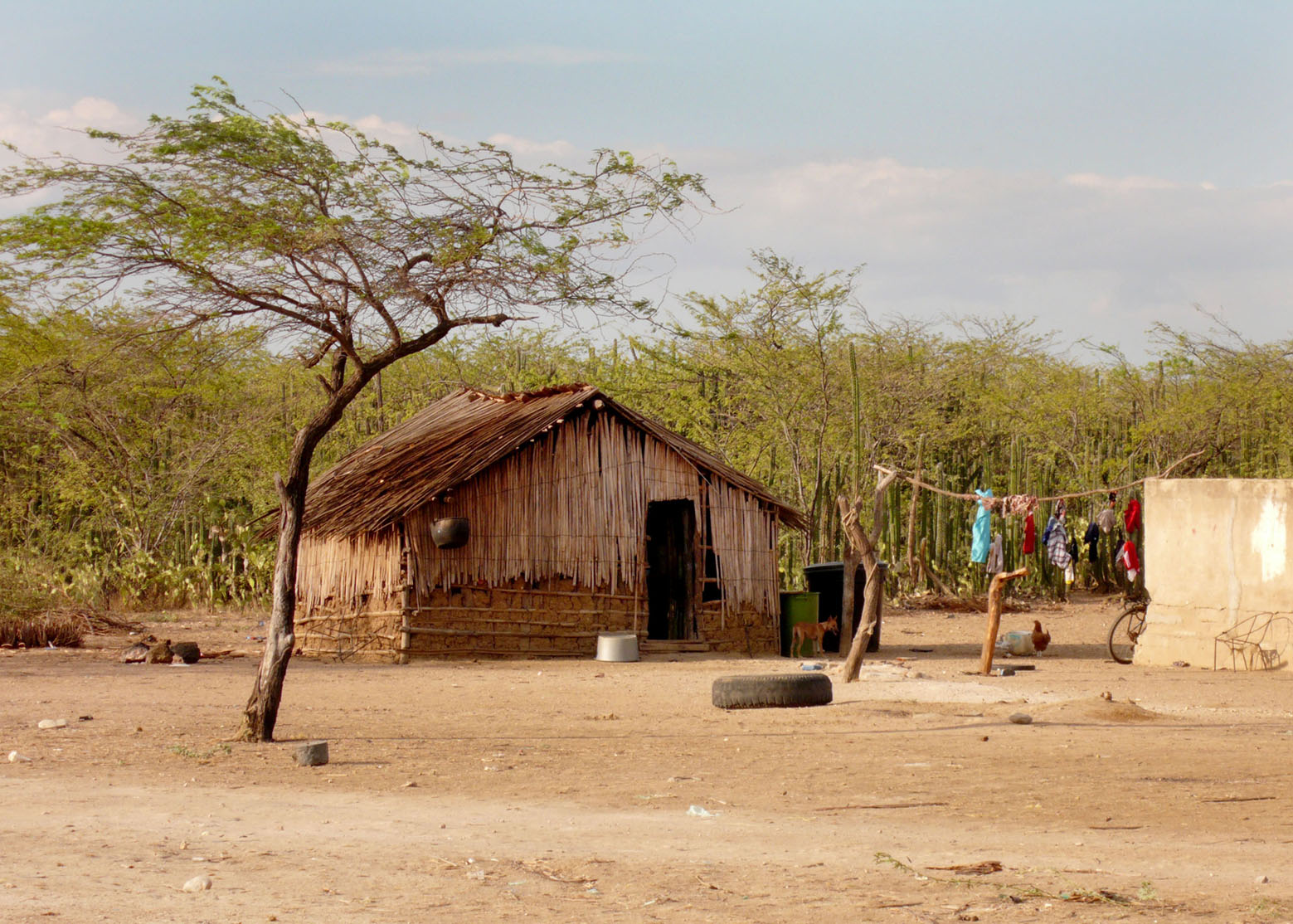
Meteorologists predict temperatures in Colombia’s Caribbean region could surpass 40 degrees Celsius, while prolonged drought conditions may devastate agriculture and livestock production. Industry groups have warned that prices for staple foods including milk, rice, vegetables and beef could rise sharply toward the end of the year, adding renewed pressure to inflation at a moment when many households are already struggling with high living costs. A ‘super’ El Niño could push inflation above 7 percent, warns the National Association of Financial Institutions – ANIF.
Officials are also concerned about the vulnerability of Colombia’s energy grid, which depends heavily on hydroelectric power. Reduced rainfall and lower reservoir levels could increase the risk of electricity rationing or blackouts similar to those experienced during past El Niño events.
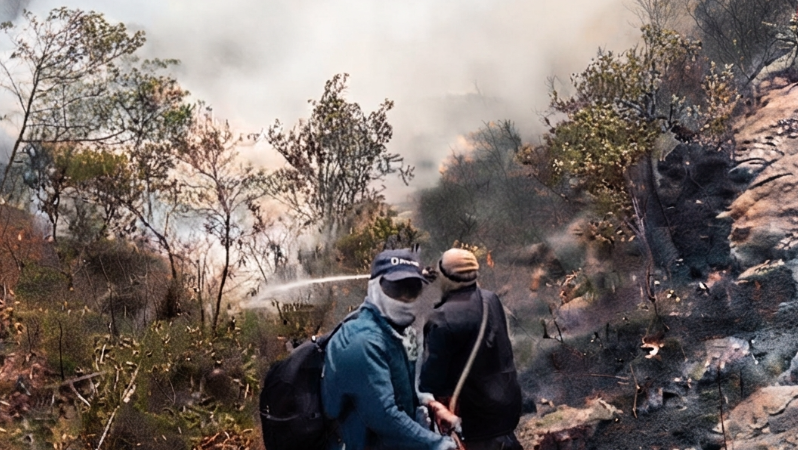
The country’s fragile páramo ecosystems and wetlands — critical natural water regulators located in the Andes — may also face heightened threats from forest fires and prolonged heatwaves. Environmentalists warn that drought could destroy sensitive habitats and endanger wildlife already under pressure from deforestation and climate change.
The emerging crisis is part of a broader global climate pattern that scientists say is being intensified by human-driven warming.
El Niño occurs every few years when ocean waters in the eastern and central Pacific become abnormally warm, altering rainfall patterns, shifting jet streams and increasing global temperatures. However, so-called “super” El Niño events are far rarer and more dangerous, with sea surface temperatures rising more than 2 degrees Celsius above historical averages.
Some climate researchers now fear the world could be heading toward one of the strongest El Niño events in modern history.
Paul Roundy, a professor of atmospheric sciences at the University of Albany, recently warned there was “real potential” for the strongest El Niño event in 140 years. Forecasts from the European Centre for Medium-Range Weather Forecasts suggest Pacific Ocean temperatures could rise three degrees Celsius above average.
Such projections have revived comparisons to the catastrophic El Niño of 1877-1878, which contributed to massive crop failures and famine across parts of India, China, Brazil and Africa. Historians estimate more than 50 million people died globally during that climate disaster.
While modern infrastructure and global trade networks make a repeat of 19th-century famine unlikely, experts say today’s interconnected crises — inflation, inequality, geopolitical conflict and fragile food systems — create new vulnerabilities.
“Hunger is fundamentally political and economic,” warns Benjamin Selwyn from the University of Sussex. “Wars disrupt trade routes, inequality restricts access to food and profit-driven agricultural systems prioritize industrial production over resilience. Climate shocks such as El Niño amplify those existing weaknesses,” writes Selwyn in The Conversation.
Studies by the UN Food and Agriculture Organization and the World Meteorological Organization have already shown that rising temperatures are reducing crop yields and making agricultural labor increasingly dangerous in tropical regions. Heat stress also lowers livestock productivity and survival rates.
In Colombia, the government of leftist President Gustavo Petro has begun discussing contingency measures, though critics argue the country remains dangerously unprepared.
Carlos Carrillo, director of Colombia’s National Unit for Disaster Risk Management (UNGRD), has called for urgent efforts to conserve water and energy while identifying regions at high risk of forest fires. There is also growing concern that years of underinvestment in water storage, energy diversification and climate adaptation could leave Colombia exposed to prolonged disruptions.
If the global forecasts prove accurate, Colombians could soon face months of punishing heat, food inflation and growing anxiety over the resilience of the country’s infrastructure in an age of accelerating climate extremes.