
At least 23 people were injured when an explosive-laden vehicle detonated outside the Meta Governor’s Office. The attack follows a bombing at the strategic Pipiral toll station on the Bogotá–Villavicencio highway, raising concerns that the eastern department is becoming a new flashpoint in Colombia’s internal conflict.
VILLAVICENCIO, COLOMBIA — Colombian President Abelardo de la Espriella has vowed to pursue and dismantle the organizations responsible for a powerful car bomb that devastated the center of Villavicencio late Monday, November 23, in an attack that injured at least 23 people and caused extensive damage to the departmental capital’s administrative district.
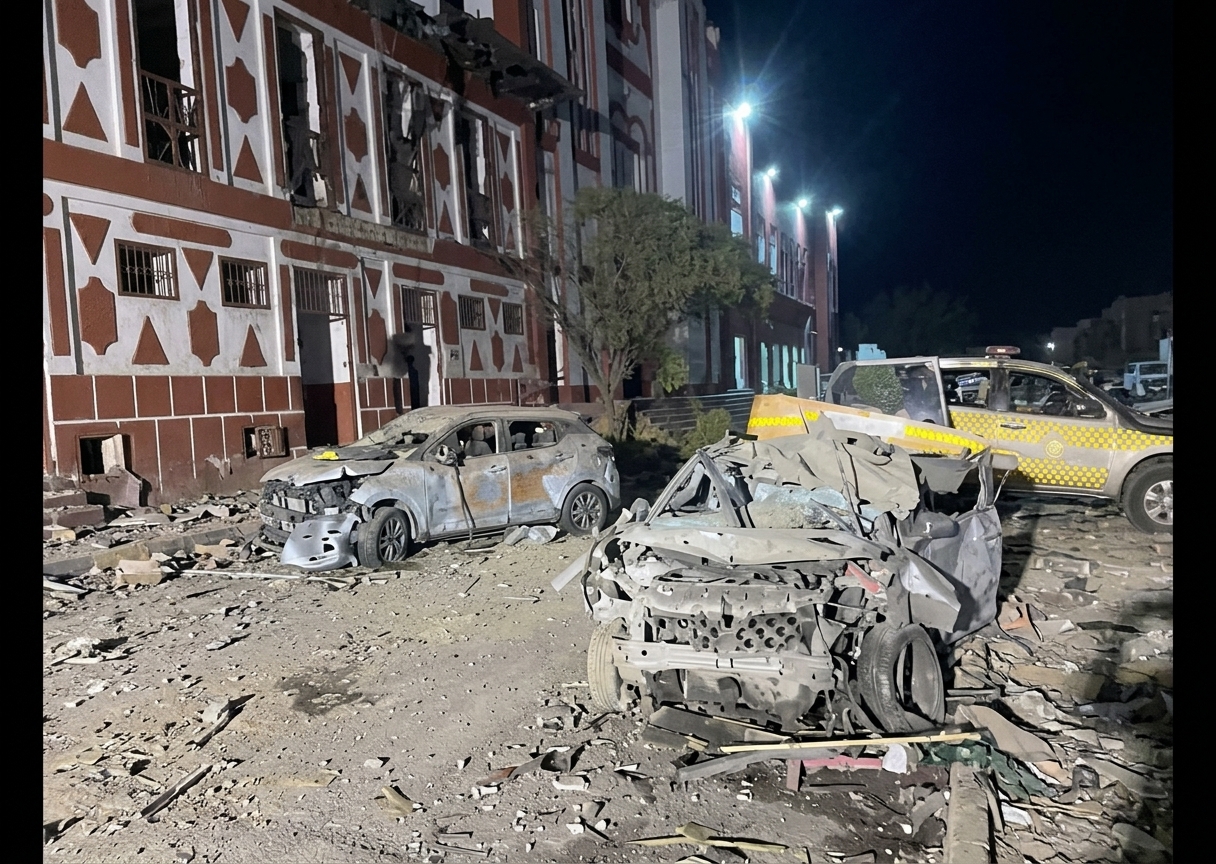
The explosion occurred at approximately 9:30 p.m. outside the headquarters of the Meta departmental government, known as the Gobernación del Meta, in the city’s central Plaza Los Libertadores. The blast ripped through surrounding buildings, destroyed a restaurant and damaged nearby public institutions, including the Cathedral of Our Lady of Mount Carmel.
According to the latest preliminary figures from Meta’s Health Secretariat, at least 23 people were injured, including a minor. No fatalities had been confirmed in the initial official assessment. Emergency services attended the scene, while hospitals across Villavicencio were placed on alert.
Images from the aftermath showed shattered windows, damaged facades, debris scattered across surrounding streets and a large crater where the vehicle had detonated. The restaurant El Samán, situated opposite the Governor’s Office, was reportedly destroyed. Authorities also began assessing the structural integrity of the departmental government building.
In a statement following the explosion, De la Espriella condemned the perpetrators and promised a forceful response. “Those responsible will answer for every drop of blood they have shed and every business and property they have destroyed. I swear I will make them pay: this attack will not go unpunished,” the president declared.
He added that his government would deploy the full capabilities of the state to pursue, dismantle and confront the terrorist groups responsible for the attack. “They will not intimidate us. We will not negotiate under terror. We will not retreat,” he said.
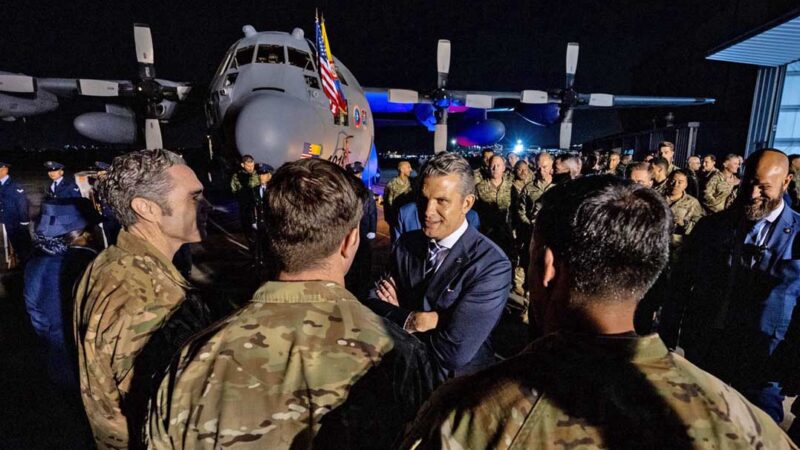
The President spoke directly with Meta Governor Rafaela Cortés, confirming that he would travel to Villavicencio on Tuesday to assess the situation and coordinate the government’s response. Cortés is a considered a political ally of the hardline, security-driven leader.
Defence Minister General (ret.) Jorge Mora also warned that the state would not yield to threats or allow violence to determine the country’s direction.
Growing security crisis in Meta
The bombing has intensified concerns about a deteriorating security situation in Meta, where attacks involving explosives have increasingly targeted strategic infrastructure.
Just six days earlier, on November 15, a vehicle loaded with explosives detonated at the Pipiral toll station on the Bogotá – Villavicencio highway, one of Colombia’s most important transport corridors connecting the capital with the eastern plains.
The explosion occurred at approximately 2:26 a.m. A small vehicle reportedly carrying around 35 kilograms of explosives had been abandoned near the toll facilities before detonating. No injuries or fatalities were reported, although the blast damaged windows and sections of the toll infrastructure.
Following the incident, Governor Cortés announced a reward of COP 30 million for information leading to the identification and capture of those responsible. She also called for a coordinated security strategy involving the governments of Meta and Cundinamarca and the Bogotá mayor’s office to protect the highway.
The Pipiral bombing is not an isolated incident in Colombia’s wider campaign of attacks against road infrastructure. According to an assessment published by the Institute for Development and Peace Studies (Indepaz) on November 19, a preliminary total of 15 incidents involving explosives against toll stations had been recorded between August and November across seven departments, including Cauca, Valle del Cauca, Meta, Huila, Tolima, Casanare and Nariño.
The concentration of attacks in Cauca, where seven of the 11 recorded detonations occurred, illustrates the extent of the problem. The incidents have raised concerns about the vulnerability of strategic transport corridors and the ability of illegal armed groups to disrupt civilian mobility and commercial activity before the start of the busy end-of-year holidays.
FARC dissident links
Authorities are investigating possible links between the Villavicencio bombing and FARC dissidents operating in eastern Colombia. Initial investigative hypotheses reported by Colombian media point to alias Antonio Medina, identified as a commander of dissident fronts 28 and 39 associated with the Bloque Amazonas.
Other reports have suggested possible connections to structures aligned with alias Iván Mordisco. However, investigators have yet to establish publicly who planned and carried out the bombing. Noeither the National Liberation Army (ELN) guerrilla, nor FARC dissidents belonging to the Estado Mayor Central (EMC) have claimed responsibility.
The Ombudsman’s Office (Defensoría del Pueblo) strongly condemned the attack, warning that the use of explosives in urban areas places civilian lives and public safety at indiscriminate risk.
Colombian security authorities must now assess if the car bombing represents an escalation in a broader campaign of violence extending into Meta, a department whose strategic position connects the capital with the agricultural and economic heartland of the Orinoquía. Alongside the security challenges confronting Cauca, Nariño and Valle del Cauca, Meta could be emerging as another front in Colombia’s territorial conflict. For the residents of Villavicencio, Monday night’s explosion has brought that possibility into the heart of its administrative and commercial center.