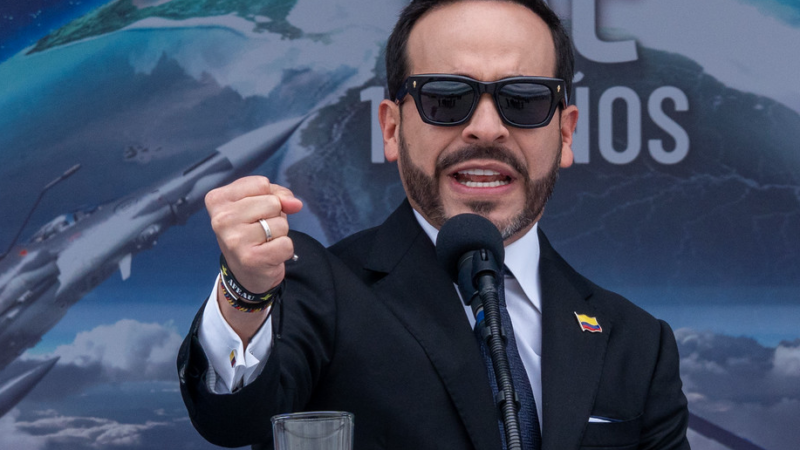
Colombia’s President Abelardo de la Espriella took to X on November 19 to categorically reject a report published in The New York Times titled “In a Setback for the Trump Administration, Colombia Rejects Drug Gang Joint Plan”. According to the president: “The information published by The New York Times, claiming that I rejected a cooperation plan with the United States to conduct joint operations against narco-terrorism, is false.”
He then went on to affirm, in all caps, that he has “NOT REJECTED ANY PROPOSAL FROM THE GOVERNMENT OF PRESIDENT DONALD TRUMP”.
He added that, “on the contrary, Colombia and the United States maintain solid and increasingly close cooperation in security, intelligence, and the fight against drug cartels and narco-terrorist organizations”.
He also clarified the nature of Colombia’s requests to Washington, saying they had consistently focused on strengthening the military, technological, operational and intelligence capabilities of the Colombian Public Forces, “not on requesting the presence of foreign troops on Colombian territory”.
The president added that any decision concerning foreign troops would be “a matter that, in any case, would fall within the authority of the Congress of the Republic”. He continued: “Any decision will be made in accordance with our Constitution, national sovereignty and the relevant legal procedures.”
He concluded his statement by declaring that the alliance with the United States “is stronger than ever, and we have a common enemy: NARCOTERRORISM”.
Response from Washington
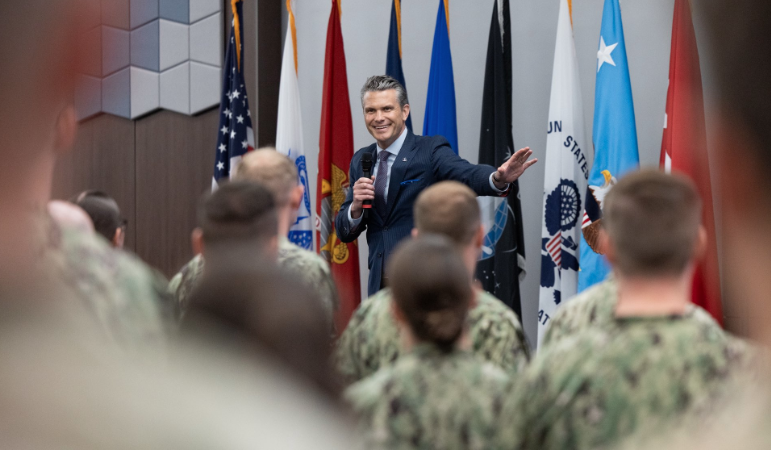
Pete Hegseth, who was visiting Venezuela and Colombia as part of a regional tour, quickly endorsed the Colombian president’s position, writing: “Amen, Mr. President. The fake news cannot help themselves. Totally false. Our partnership to defeat the narco-terrorists that threaten your country, and ours, is stronger than ever before.”
The US Secretary of War also delivered a direct message to the people of Venezuela, stating: “Our War Is Over”. He emphasized: “It’s time to build peace together.” He went on to highlight from the recently opened US Embassy in Caracas that in January his department “executed the most sophisticated military operation in Latin American history” to bring Nicolás Maduro and Cilia Flores to justice.
Hours after Hegseth confirmed a military partnership with Venezuela’s Bolivarian Armed Forces that includes a comprehensive modernization strategy, De la Espriella praised the senior Trump official on his military career and commitment to defending the United States. “Mr. Secretary, you are a true patriot, and the United States should be proud to have a Secretary of War with your extraordinary personal qualities, distinguished career, and unwavering commitment to defending your nation,” he wrote.
He added that Colombia was honored to work alongside Washington in defending freedom, security and democracy throughout the hemisphere. Referring to the US-led Shield of the Americas initiative, he concluded: “WE ARE INVINCIBLE!”
The NYT dispute coincided with Hegseth’s visit to Bogotá on Wednesday, November 18, following an unexpected and consequential stop in Caracas, Venezuela.
There, Hegseth met interim President Delcy Rodríguez and confirmed that both governments will confront shared security threats and drug trafficking cartels. Hegseth described Venezuela as having moved from being a security threat to becoming a key partner within the hesmisphere.
The New York Times, however, stands by its reporting. Journalist Julie Turkewitz stated on X that the newspaper had contacted the Colombian president’s team several times before publication to seek a response but had received none. The article was subsequently updated to include De la Espriella’s public statement.
But the sequence of events raises a legitimate question: does a failure to respond to a journalist’s request for comment provide a carte blanche to proceed with publication, particularly when the allegations concern a matter of serious national security?
At the heart of the government’s criticism of the NYT report lies a broader accusation of anti-De la Espriella narratives. Recent international media coverage of the president’s tough security policy appears to be clouded by political bias. Colombia has maintained security cooperation with the United States across successive administrations, including under the country’s first left-wing government, led by Gustavo Petro. The question now concerns whether this relationship should extend to US security personnel participating directly in joint operations on Colombian territory.
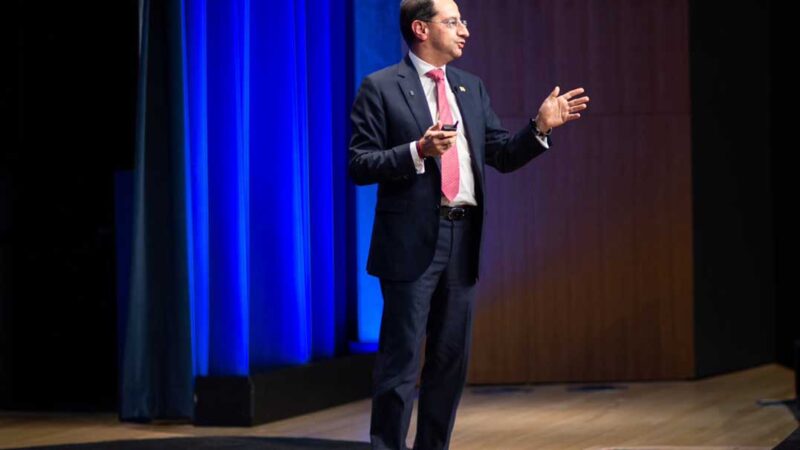
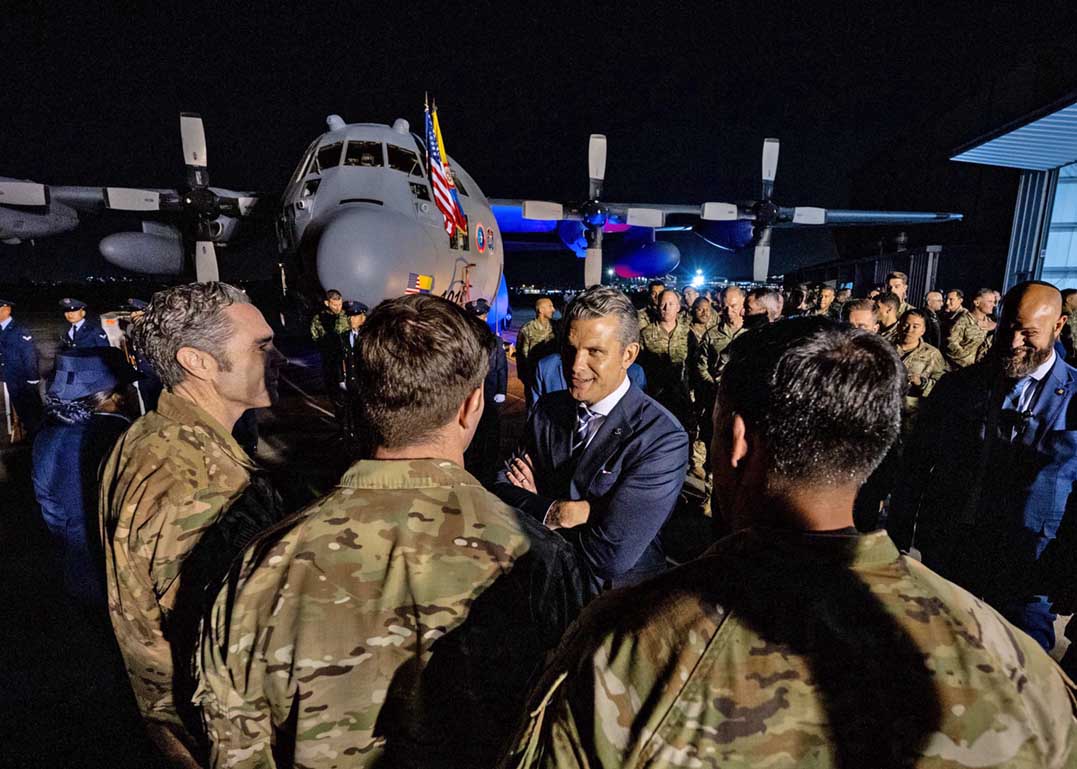
Once the US Secretary of War had landed in Colombia, he met with Defence Minister General (ret.) Jorge Eduardo Mora at the Military Air Transport Command (CATAM) in Bogotá. The visit included the handover of a Lockheed Martin C-130 Hercules transport aircraft to the Colombian armed forces, part of Washington’s broader commitment to strengthening Colombia’s operational capabilities.
Mora had previously indicated that the United States could potentially transfer two additional C-130 aircraft. The transport planes are designed to move troops, equipment and supplies, and can operate from relatively short or unpaved runways, making them particularly useful in Colombia’s geographically challenging regions.
The meetings also reinforced Colombia’s participation in the Shield of the Americas, the US-led regional initiative against drug cartels and transnational criminal networks.
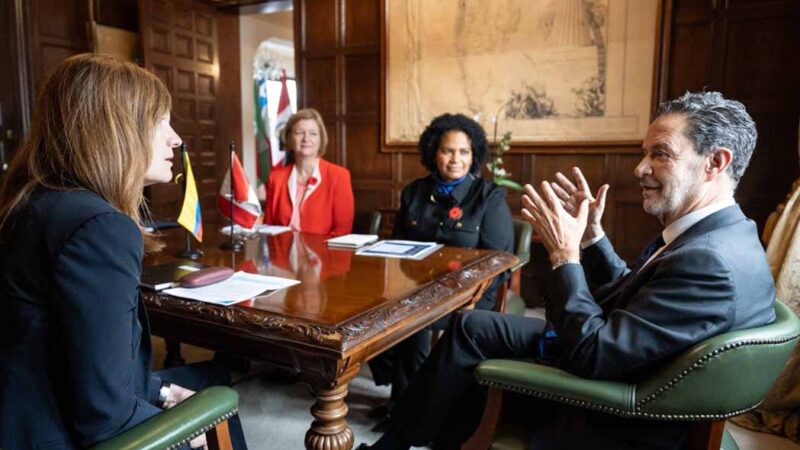
Speaking during his Bogotá visit, Hegseth emphasized that cooperation would respect the sovereignty and legal frameworks of participating countries. Colombia’s Foreign Minister Omar Bula also reiterated that any decision concerning joint military operations would have to pass through Congress.
For Bogotá, the immediate message from the visit was that military cooperation with Washington remains active, with additional equipment, intelligence and operational support on the agenda.
The disagreement with The New York Times has nevertheless placed an important question at the center of Colombia’s security debate: how far can the bilateral alliance extend when the participation of foreign forces in domestic operations requires congressional authorization?
The dispute with The New York Times is therefore unlikely to be the last between De la Espriella and the foreign press. A succession of reports, political commentaries and editorial assessments published abroad has placed the president’s hardline security agenda under increasingly skewed optics.
From The Economist’s examination of his first 100 days to the latest reporting from Bogotá, the debate extends beyond the effectiveness of his policies to ideological assumptions through which they are interpreted. The New York Times itself faced extensive scrutiny over its headlines from Colombia during the 2021 National Strike – Paro Nacional.
What makes the present dispute different is the president himself. De la Espriella is a fluent English speaker who follows international coverage closely and is clearly conscious of how his administration is being represented beyond Colombia’s borders. Unlike his erratic predecessor, the articulate criminal defense lawyer is able to engage directly with foreign journalists, challenge their reporting – or bias – in their own language and take his case to an international audience. Or in his words: “Neither criminals, nor those who spread fake news, will be able to break the alliance we have built to confront, fight, and punish the narco-terrorists operating in our hemisphere.”
For a president whose political identity is built around restoring state authority and confronting terrorist groups, the battle over the international interpretation of his security policy may prove to be almost as persistent as the one he is currently waging on the ground.