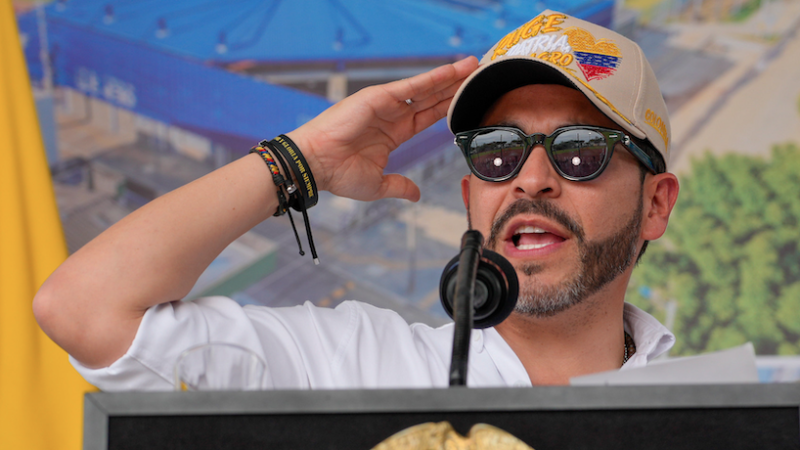

President Abelardo de la Espriella has set clear ground rules for an indigenous mobilization scheduled for October 11–14 in Cauca, guaranteeing the right to peaceful protest while warning that his government will not permit road blockades, violence or attempts to paralyze the department.
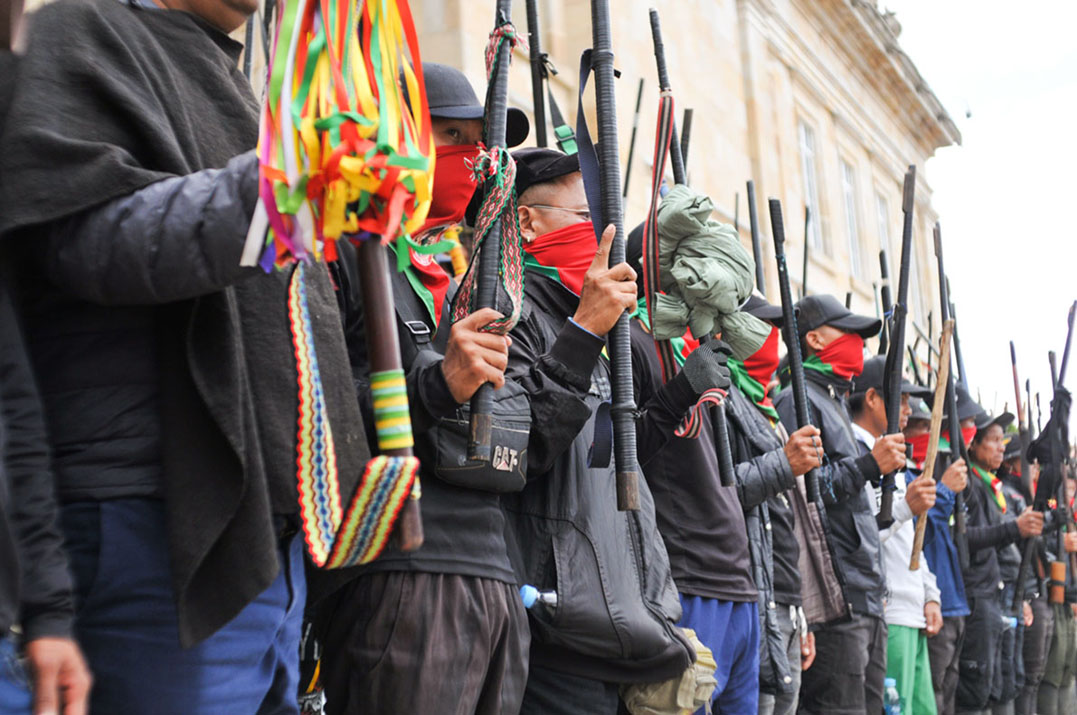
The warning comes as the Consejo Regional Indígena del Cauca (CRIC) prepares for four days of demonstrations and meetings under the slogan “Indigenous Summit and Social Mobilization for Life.” The gathering is being organized in Caldono, a town under frequent attack from FARC dissidents and in department where indigenous and other vulnerable communities face persistent threats from illegal armed groups, including the National Liberation Army (ELN) guerrilla.
Speaking after a lengthy cabinet meeting at the Casa de Nariño, De la Espriella said the government respects Colombia’s indigenous peoples and remains prepared to engage directly with their legitimate authorities. But he drew a clear distinction between the right to demonstrate and actions that obstruct transportation or seek to impose political conditions through pressure. “One thing is Colombia’s indigenous peoples, and something very different is the CRIC.”
The president said his government “deeply respects” indigenous communities and is willing to maintain dialogue with their legitimate authorities. But he added: “We are not going to negotiate under pressure. We are not going to negotiate through actions outside the law, and certainly not under threats.”
De la Espriella’s warning comes against an unusually difficult security backdrop in Cauca. The department remains one of the principal areas affected by illegal armed groups and has become a major centre of child recruitment by FARC dissidents.
The Colombian Ombudsman’s Office registered 14 cases of forced recruitment of children and adolescents in Cauca between January and May 2026, second only to Norte de Santander, which recorded 15. Nationally, the Ombudsman’s Office registered 51 cases during the same period.
The scale of the problem is considerably larger when viewed over several years. According to recent Colombian government data at least 1,500 children had been recruited nationally since 2021, with FARC dissident groups responsible for the vast majority of reported cases. More than half of the documented cases were concentrated in Cauca, while indigenous children accounted for nearly half of reported victims despite representing only a small proportion of Colombia’s population.
The security threat also extends to one of the country’s most important transportation corridors.
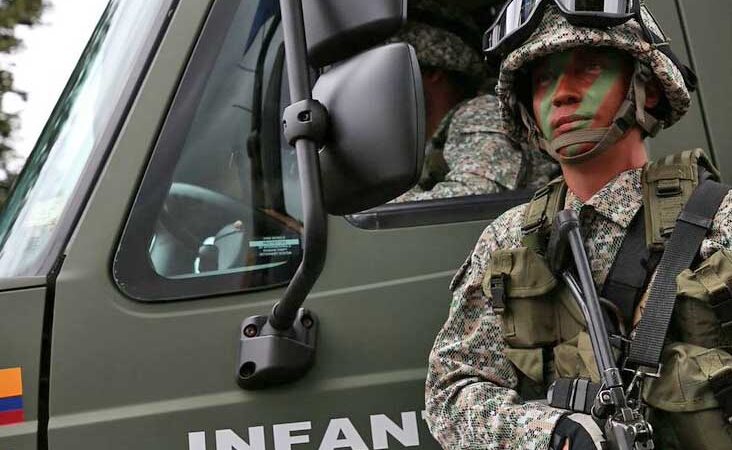
The Pan-American Highway, which connects southwestern Colombia with the rest of the country, has repeatedly been targeted by illegal armed groups. In August, just one day after De la Espriella took office, a car bomb exploded at a toll plaza on the highway, injuring two security guards and damaging nearby homes. The Army attributed the attack to FARC dissidents.
In September, another explosive attack on the Pan-American Highway near the Cauca-Nariño border killed one soldier and wounded two others. Authorities said the device appeared to have been used as a lure to attract members of the security forces to the site.
Against this backdrop, any disruption of the Pan-American Highway during a major mobilization would have consequences extending well beyond the immediate area of protest.
De la Espriella also announced that his government would also investigate the COP$1.13 billion pesos that the leftist government of Gustavo Petro gave CRIC to appease its leadership. “Peso by peso, we are going to review contract by contract and agreement by agreement.”
The president said that Colombians have an unquestionable right to demonstrate peacefully, but that this right cannot be used to deprive other citizens of their own rights. “Anyone who wants to demonstrate peacefully will have every guarantee, but we will not allow blockades of any kind, violence or actions intended to paralyze regions in order to impose conditions on the government.”
He went further, explicitly linking the right to protest with the rights of other Colombians to move freely, work and access essential services. “Protest ends where the rights of others begin. No one can prevent another Colombian from working, studying, reaching a hospital or moving freely.”
The President then issued his strongest warning: “Those who march peacefully will have every guarantee. Those who block roads, destroy property or attack the security forces or citizens will have to answer for their actions and face the full force of the state.”
He immediately qualified that statement by saying that authorities would operate within the law. “The authorities will act within the Constitution and the law, without excesses, but also without permissiveness.”
The distinction is significant in Cauca, where indigenous communities themselves have been victims of violence by illegal armed groups and where the Indigenous Guard operates as a community-based territorial protection structure.
Previous mobilizations in Colombia’s largest cities, including Bogotá, have resulted in the occupation of public parks, media outlets, and government buildings as well as infiltration by criminal groups and masked vandals – encapuchados. The security concern, however, is unavoidable in a region where illegal organizations have demonstrated their ability to recruit children, threaten communities and attack key infrastructure.
The October mobilization will therefore provide an early test of the De la Espriella government’s approach to protest in one of Colombia’s most difficult security scenarios.
The immediate issue is whether the four-day mobilization can proceed as a peaceful civic demonstration without disrupting strategic food supply chains or creating conditions for violence in a territory already under pressure from narco-terrorist groups.
For De la Espriella, the message is clear: peaceful protest will be protected, but paralysis of public roads, any act violence and political coercion will not be accepted as negotiating tactics.