
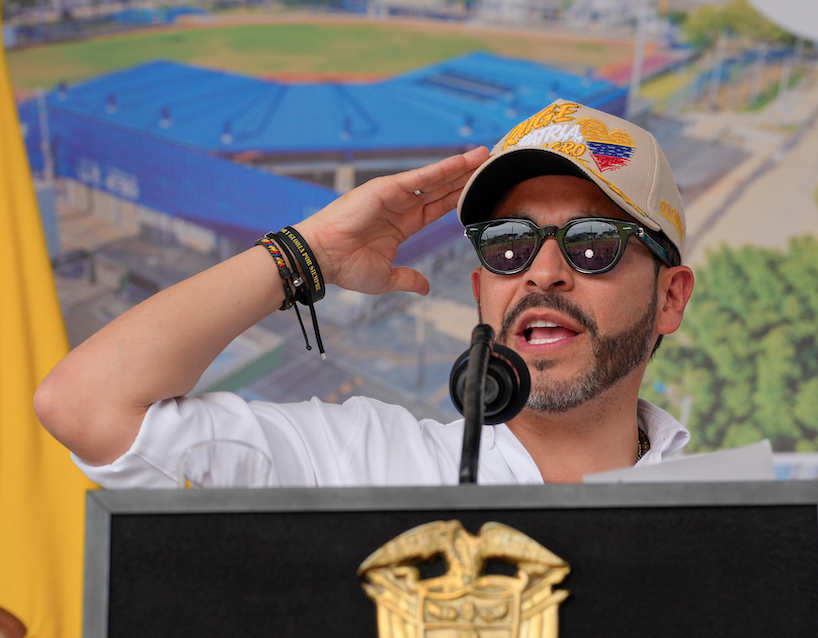
After 60 days, Abelardo de la Espriella has made one thing unmistakably clear: the era of Gustavo Petro’s “Total Peace” is over. There will be no intermediaries, no back-channel negotiations and no political accommodation with Colombia’s illegal armed groups. The new government is betting instead on military pressure, territorial control and the restoration of the state’s authority.
Two fledgling months, however, is not a litmus test of a new Colombian presidency, but it is long enough to understand its direction. And on security, De la Espriella has left little room for ambiguity.
The rupture with Petro’s erratic governance is complete.
The new president has repeatedly stated that his government will not negotiate with illegal armed organisations and will not use intermediaries to establish political channels with groups that continue to traffic drugs, extort civilians, recruit children and challenge the authority of the Colombian state.
It is one of the clearest ideological breaks between the two administrations.
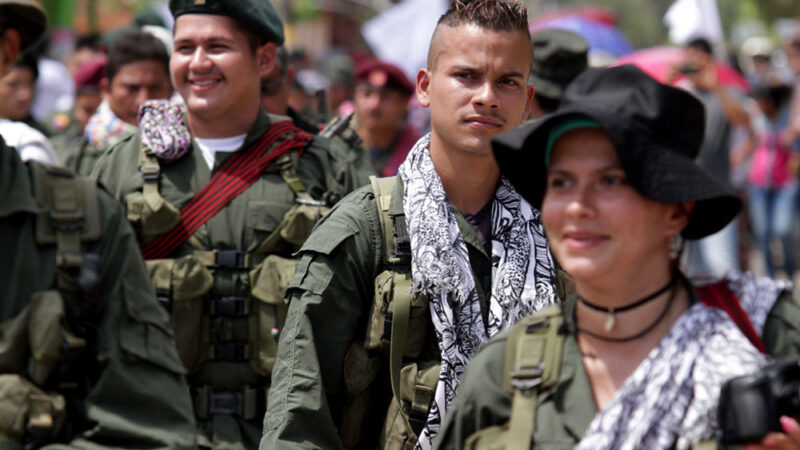
Petro’s Total Peace sought to bring multiple armed and criminal organisations into a negotiating framework, arguing that Colombia’s cycle of violence could not be resolved through military force alone. De la Espriella has rejected that premise. For his government, illegal armed groups are not potential political interlocutors but criminal and security threats whose territorial power must be confronted.
That distinction is now being played out on the ground.
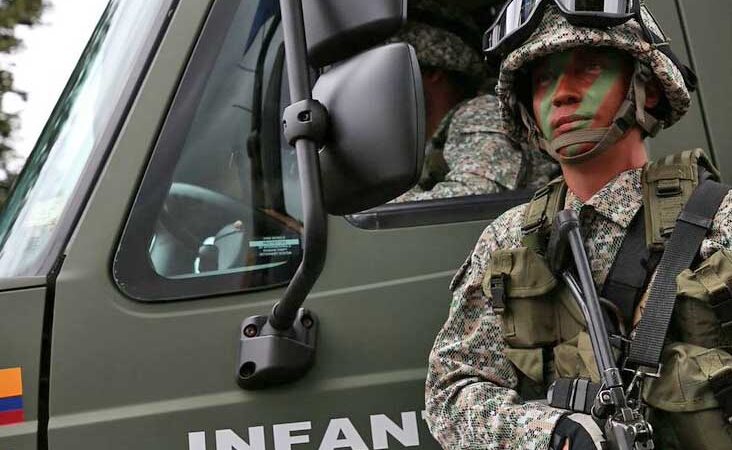
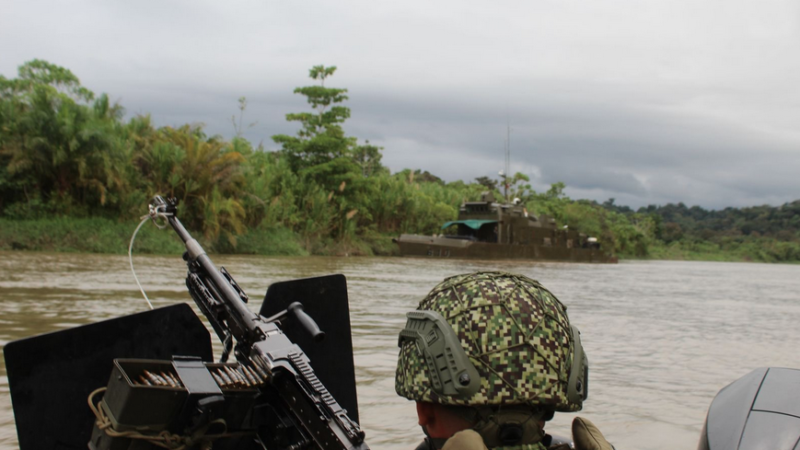
In Santa Marta, the government’s decision to strengthen military operations has provided an early test of the new doctrine. The message is unmistakable: the state intends to recover territory and confront criminal organisations rather than negotiate its way out of the problem.
For a country where extortion, drug trafficking, displacement and armed groups have expanded into territories where the state remains weak, the policy has obvious political appeal.
But it also raises the first major test of the De la Espriella presidency: can military pressure produce lasting security?
Soldiers can regain control of a neighbourhood or territory. They cannot, by themselves, replace police forces, prosecutors, judges and functioning local government.
The government’s promise to construct Colombia’s first mega-prison belongs to the same security philosophy. It reflects the belief that the country’s criminal organisations have become too powerful for an overstretched justice and prison system to contain.
But here again, symbolism will eventually give way to results. The question will be whether a new mega-prison can actually help dismantle criminal networks rather than simply create another enormous facility that organised crime learns to penetrate.
And this is where the second half of the government’s first 60 days becomes important.
A “Miracle Week” in Manhattan
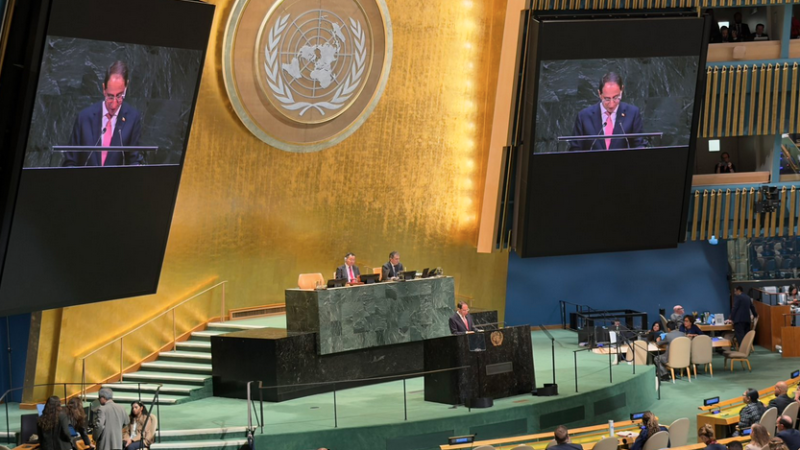
While soldiers have been deployed against criminal organisations, Vice President José Manuel Restrepo and Commerce Minister Mauricio Gómez Amín have been pounding the pavements of New York in search of international investment.
Dubbed La Semana de la Patria Milagro, or “Miracle Week,” the recent shoring-up of investor confidence in Colombia captures the government’s economic strategy almost perfectly.
The administration knows that its security ambitions will cost money. It also inherited a difficult fiscal situation, including high public debt and significant spending pressures following Petro’s ideologically-infused economic policies. f
De la Espriella therefore faces a delicate balancing act: increase spending on security while persuading investors and international markets that Colombia can restore fiscal discipline.
That makes the New York meetings more than diplomatic theatre. Colombia needs capital, infrastructure, industrial investment and jobs. The real measure of the government’s investor offensive will not be the number of meetings held on Wall Street or Park Avenue but the number of projects that eventually materialise.
The same search for a new direction is visible in foreign policy.
The relationship with Washington has been fundamentally recalibrated after four years in which Petro’s challenged the United States over drugs, security and foreign policy and interference in Colombia’s 2026 presidential campaign.
Secretary of State Marco Rubio’s recent visit to Barranquilla offered perhaps the most visible symbol of the change.
De la Espriella is seeking a much closer strategic relationship with Washington — one based on security cooperation, counternarcotics, intelligence, trade and investment. His government’s strengthening relationship with Israel forms part of the same broader geopolitical repositioning.
The message to Washington and international investors is straightforward: Colombia is once again presenting itself as a security partner, an investment destination and a reliable strategic ally.
But the inheritance remains formidable. And this is the real test of the next 60 days.
The first two months have established the doctrine. No Total Peace. No intermediaries. No negotiations with illegal armed groups. A stronger military response at home, a stronger relationship with Washington and an aggressive search for investment abroad.
The question now is whether ‘The Tiger” doctrine can deliver and a revamped relationship with both Washington and Tel Aviv can translate into concrete economic and security gains.
After 60 days, De la Espriella has made the break with Petro unmistakable. Now comes the harder part: turning rupture into results.