
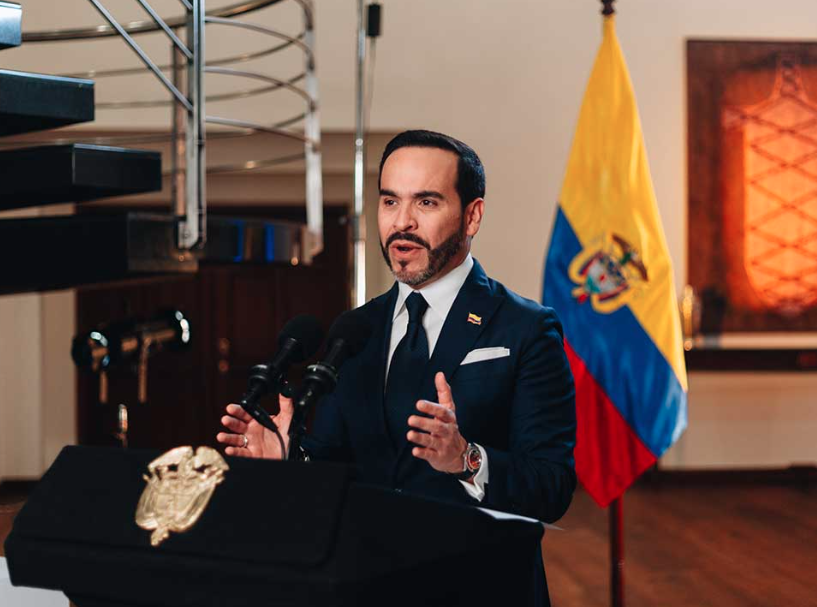
President Abelardo De La Espriella announced a sweeping recovery program for Colombia’s fire-ravaged Tolima department on Sunday, saying more than 50,000 hectares had been affected by wildfires and warning that investigators had found indications that many of the blazes were deliberately started.
The announcement came during a nationally televised address from Bogotá in which De La Espriella sought to reset his government’s response to three simultaneous crises: wildfires across several regions, the aftermath of the Aug. 10 earthquake and deteriorating security.
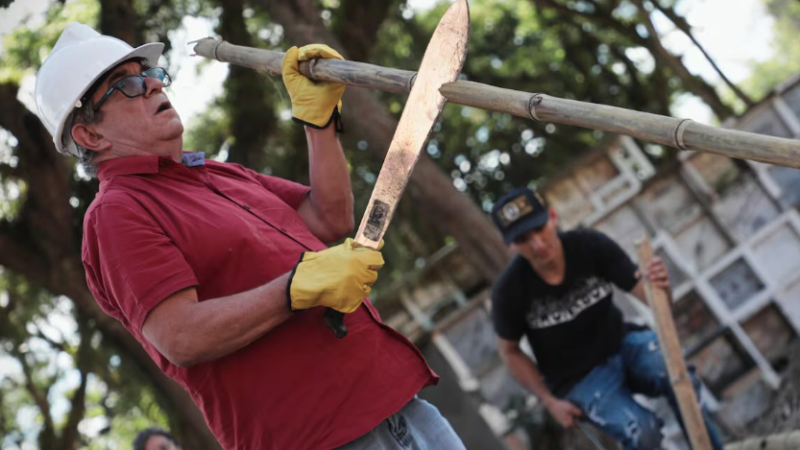
The Tolima fires have burned more than 50,000 hectares, including about 28,000 hectares of agricultural land, according to official figures. Some 2,660 producers have been affected, losses exceed COP134 billion pesos ($33.5 million), and 163,000 animals are at risk. The fires have affected 23 municipalities and hundreds of rural districts, according to the government.
“We have indications, information and studies that show that a large part of these fires have been deliberately caused,” De La Espriella said, describing the perpetrators as “criminal hands.”
His comments add a potential security dimension to what has become one of Colombia’s most serious environmental emergencies of the year. Extremely dry conditions and high temperatures have helped fires spread rapidly, while authorities have also warned that human activity is responsible for many wildfires.
The president announced that the special program will be called “Environmental, Productive, Rural and Security Recovery” for Tolima.
The package includes 343 subsidies of COP65 million pesos each to rebuild rural homes damaged by the fires. The government will also provide 5,000 tonnes of hay and 5,000 tonnes of rice straw to feed livestock whose grazing land has been destroyed.
“We are going to provide 5,000 tonnes of hay and 5,000 tonnes of rice straw to attend to the feeding of the animals,” the president said. He also announced 7 billion pesos for productive projects aimed at helping farmers restart their livelihoods.
For farmers facing credit default, the government will freeze agricultural loan obligations for three months, giving producers additional time before repayments resume. The president also referred to possible debt-purchasing measures.
The crisis has been particularly severe for cattle producers, with livestock owners warning that animals will face severe water shortages and starvation as pastureland disappears.
De La Espriella pledged that government assistance would continue after the fires themselves are extinguished. “We are not going to abandon Tolima when the last flame goes out,” he said. “We are going to remain until it recovers its productive capacity.”
Reconstruction begins after earthquake
The president also formally announced the beginning of Colombia’s reconstruction phase following the Aug. 10 earthquake, while emphasizing that emergency operations and searches for missing people will continue.
“Today I want to announce to the country that we are beginning a new stage: the reconstruction of the homeland,” De La Espriella said. “This does not mean that we are abandoning the search, humanitarian assistance or support for families.”
The latest government figures presented in the address put the number of people affected by the earthquake at 452,782, belonging to 213,400 families across 16 departments. The disaster has killed 331 people, injured 4,497 and left 152 missing.
The reconstruction program will focus on housing and essential infrastructure, including schools, hospitals and roads, while seeking to restore agricultural production and economic activity in communities devastated by the quake.
But De La Espriella stressed that reconstruction would not come at the expense of those still waiting for relatives to be found. “As long as there is one missing person, we will make every effort,” he said.
National Security shift
The address also marked a significant change in the government’s security policy. De La Espriella said he had ended dialogue processes with three armed groups, arguing that they had failed to demonstrate a genuine commitment to peace, civilian reintegration or submission to justice.
“I have taken this decision because there is no real and verifiable willingness for peace, much less for reintegration into civilian life or serious submission to justice,” he said.
The President ordered military and police commanders to recover territory controlled or pressured by illegal armed groups and confirmed new search units to combat extortion.
The combination of emergency relief, reconstruction and tough security posture represents an early test for De La Espriella’s government, less than a month since taking office.
For Tolima, the immediate challenge is fundamental: containing the flames, protecting livestock and restoring a rural economy that supplies the nation’s economic basket with essential staples, among them, rice, cocao, palm oil and sugarcane.