
Colombia is preparing for one of its most significant foreign policy realignments in more than two decades as President-elect Abelardo De La Espriella assembles a government that promises to restore close strategic relations with the United States and other Western democracies, while distancing the country from the ideological alliances that defined the presidency of Gustavo Petro.
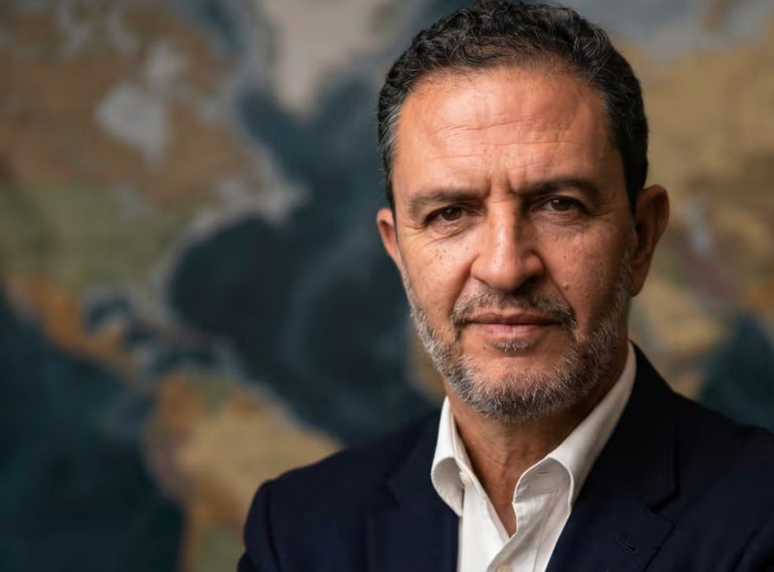
At the center of the diplomatic shift is Foreign Minister-designate Omar Bula Escobar, a veteran United Nations diplomat and international development specialist whose appointment signals the incoming administration’s intention to reshape Colombia’s global role around economic diplomacy, democratic partnerships and international security cooperation.
In one of his first public policy announcements since his nomination, Bula confirmed that the new government will not maintain Colombian embassies in Cuba or Nicaragua, arguing that the country should not legitimize governments it considers authoritarian. While consular affairs and diplomatic communication will continue through alternative mechanisms, the decision marks a sharp departure from Petro’s efforts to strengthen political ties with Havana and Managua during his four years in office.
Instead, the incoming administration intends to prioritize strategic partnerships with the United States, Canada, the United Kingdom and Israel, countries it views as essential allies for expanding trade, attracting investment, strengthening security cooperation and reinforcing democratic institutions.
The change represents far more than a diplomatic reshuffle.
During the presidential campaign, De La Espriella repeatedly argued that Colombia’s foreign policy had become driven by ideology at the expense of national interests. His administration has pledged to transform the Foreign Ministry into an institution focused on commercial diplomacy, technological cooperation and international competitiveness, while rebuilding confidence among investors and traditional allies.
“Our embassies must become engines for investment, trade and opportunity,” the president-elect has said, outlining a vision that places economic diplomacy at the center of Colombia’s international engagement.
That mission will largely fall to Bula, whose professional background differs considerably from many of Colombia’s recent foreign ministers.
Rather than emerging from party politics, Bula has spent more than two decades working within the United Nations system, leading humanitarian and development programs across Africa, the Middle East, Europe and Latin America.
His academic credentials reflect an equally international career. He studied Business Administration at the European Business School before earning a doctorate in Economic Sciences from Belgium’s Catholic University of Louvain. He later completed an MBA at Aden Business School and executive studies in business management at Harvard University.
Fluent in Spanish, English, French and Portuguese, Bula has combined academic research with extensive field experience in some of the world’s most politically complex environments.
His assignments have taken him to Egypt, Iraq, Ethiopia, Sudan, Senegal, Brazil, Panama and Italy, where he held senior positions with the United Nations World Food Programme. His responsibilities included overseeing humanitarian operations, food security programs, institutional development and international cooperation in regions affected by armed conflict, political instability and humanitarian emergencies.
Alongside his diplomatic career, Bula has served as an international university professor and developed a public profile as a geopolitical analyst specializing in international security, global economics and Middle Eastern affairs. His commentary has frequently emphasized the importance of strengthening alliances among democratic nations while expanding economic cooperation with North America and Europe.
His appointment is widely viewed as reflecting De La Espriella’s broader effort to professionalize Colombia’s diplomatic service by placing career international specialists, rather than political allies, in key foreign policy positions.
Nowhere will the administration’s new direction be watched more closely than in Washington.
Relations between Bogotá and Washington became increasingly strained under Petro over counternarcotics policy, regional security, Venezuela and the Israel-Hamas war. Although security cooperation continued, political disagreements frequently overshadowed a relationship that had long been considered one of the strongest bilateral partnerships in Latin America.
The incoming government has pledged to restore that strategic alliance, emphasizing cooperation in defense, intelligence, counter-narcotics, trade, cybersecurity and investment. Officials also see Canada and the United Kingdom as critical partners for expanding collaboration in mining, energy, education, finance and technological innovation.
Perhaps the most symbolic reversal concerns Israel.
Petro severed diplomatic relations with Israel in 2024 over the conflict in Gaza, ending decades of close military and security cooperation between the two countries.
De La Espriella has pledged to restore full diplomatic relations immediately upon taking office and has expressed support for rebuilding cooperation in defense, intelligence, cybersecurity, agriculture and technology. Members of the incoming administration have also indicated that Colombia will pursue a distinctly pro-Israel foreign policy while maintaining support for a negotiated peace in the Middle East.
The decision has been welcomed by sectors of Colombia’s business community that view closer relations with Israel as an opportunity to expand cooperation in innovation, water management, agricultural technology and digital security.
At the same time, the decision to eliminate embassies in Cuba and Nicaragua signals that democratic governance and respect for human rights will become more prominent considerations in Bogotá’s diplomatic engagement throughout the region.
Political analysts say the changes amount to the most significant reorientation of Colombian foreign policy since the security-focused administrations of the early 2000s. Rather than pursuing ideological alignment, the incoming government appears determined to position Colombia as a reliable democratic partner for North America and Europe while leveraging diplomacy to stimulate investment and economic growth.
Whether that ambitious recalibration succeeds will ultimately depend on the government’s ability to translate diplomatic goodwill into tangible economic results.
Yet even before taking office on August 7, De La Espriella and his foreign minister have left little doubt that Colombia is preparing to reclaim a markedly different place on the world stage—one anchored in Western alliances, commercial diplomacy and a renewed emphasis on democratic partnerships in an increasingly fragmented geopolitical landscape.