
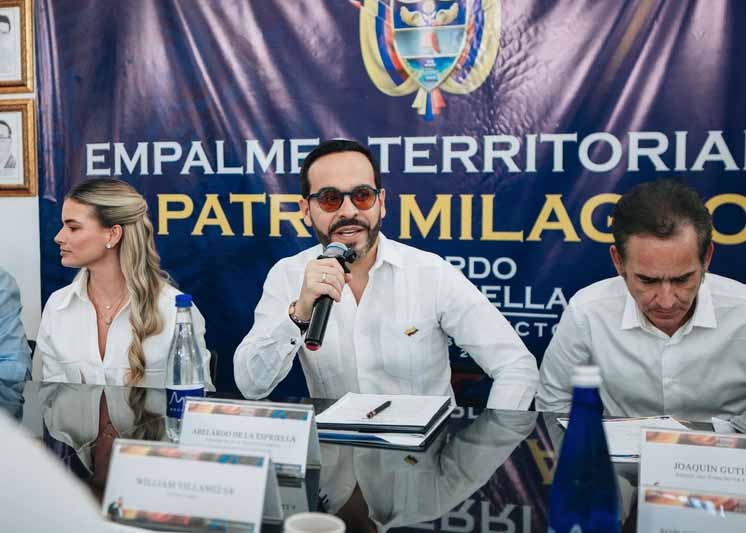
Colombia’s president-elect, Abelardo de la Espriella, has appealed to the international community to closely monitor the country’s democratic transition, as outgoing President Gustavo Petro and opposition leader Iván Cepeda attempt to undermine the August 7 transfer of power.
In a statement released by his transition team on Wednesday, the criminal defense lawyer said he had requested the support of allied governments, international organizations, election observers and democracy watchdogs to remain vigilant during what he described as an increasingly fragile constitutional moment.
According to the statement, de la Espriella believes the outgoing administration is seeking to “alter the constitutional order,” disregard the presidential credentials issued by Colombia’s electoral authorities and disrupt the democratic transition that is constitutionally scheduled to conclude with his inauguration on August 7.
“The request is directed to allied governments, international organizations, observation missions and defenders of democracy so they may actively accompany this institutional moment and keep their eyes on Colombia until any attempt at a coup d’état has ceased,” his office said.
The appeal follows several days of increasingly confrontational rhetoric between the president-elect and senior figures aligned with the outgoing government.
Earlier on Wednesday, de la Espriella posted a message on X drawing an apparent comparison between Colombia’s political crisis and neighboring Venezuela. “The last person who didn’t recognize the elections and stayed in power was Nicolás Maduro. We all know how that ended.”
Although he did not mention Petro by name, the remarks were widely interpreted as referring to the outgoing president. In a subsequent post, de la Espriella was more direct. “Petro and Cepeda don’t know who they’ve messed with. By defending the popular will, order, constitutionality, and the Constitution, I will be relentless and forceful.”
The president-elect has repeatedly accused Petro and Cepeda of refusing to recognize the election results and attempting to obstruct the transition. Petro and Cepeda have rejected de la Espriella’s presidency, with Petro maintaining his allegation that the election was fraudulent and declaring in recent public remarks that “the president of Colombia is Iván Cepeda.” The government has not produced evidence publicly substantiating claims of electoral fraud.
The dispute has intensified after the suspension of the formal transition process between the outgoing and incoming administrations, raising concerns over what had traditionally been a peaceful constitutional handover of power.
De la Espriella has also urged Colombians to remain calm while defending the constitutional order.
“The resistance must be democratic, peaceful, constitutional and firm,” his office said in the statement. “The vote of Colombians must be respected, and the legitimate transition must conclude on August 7.”
Growing confrontation
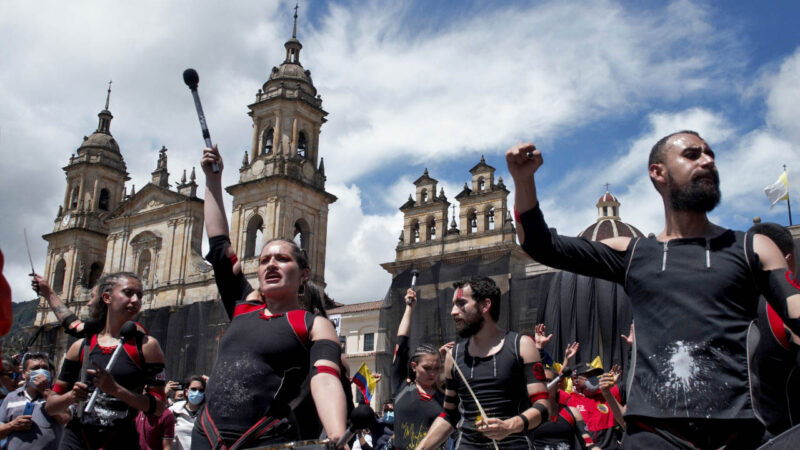
The increasingly polarized atmosphere has been fueled by calls from Cepeda for “civil disobedience” against the incoming administration.
Speaking earlier this week, the senator and former presidential candidate argued that Colombians should resist policies announced by the incoming government. He also alleged – without publicly presenting a shred of evidence – that de la Espriella’s proposed security measures could amount to the formation of a “paramilitary government.”
“Colombia is beginning to take the shape of a paramilitary government,” Cepeda said while criticizing the president-elect’s security agenda.
De la Espriella has rebuked those remarks, warning that any actions outside the law would be met with the full authority of the state. “Some extremists speak of civil disobedience, which is nothing more than road blockades, urban terrorism and the revival of the ‘First Line,'” he said, referring to the protest groups that emerged during nationwide demonstrations in 2021. “I propose constitutional obedience. Everything outside the law will be confronted with the full force of the rule of law.”
A Military inauguration?
Adding to the extraordinary political climate, de la Espriella is reportedly considering taking the presidential oath at a military installation rather than in Bogotá’s Plaza de Bolívar, where every Colombian president in recent decades has been inaugurated before Congress.
Constitutional scholars have noted that Article 192 of Colombia’s Constitution requires the president to be sworn in before Congress but does not explicitly require the ceremony to take place inside the Capitol building. Article 140 allows Congress to convene in a different location if both legislative chambers agree.
The proposal is widely seen as both a security precaution and a symbolic demonstration of institutional support from the armed forces amid the deepening political confrontation.