
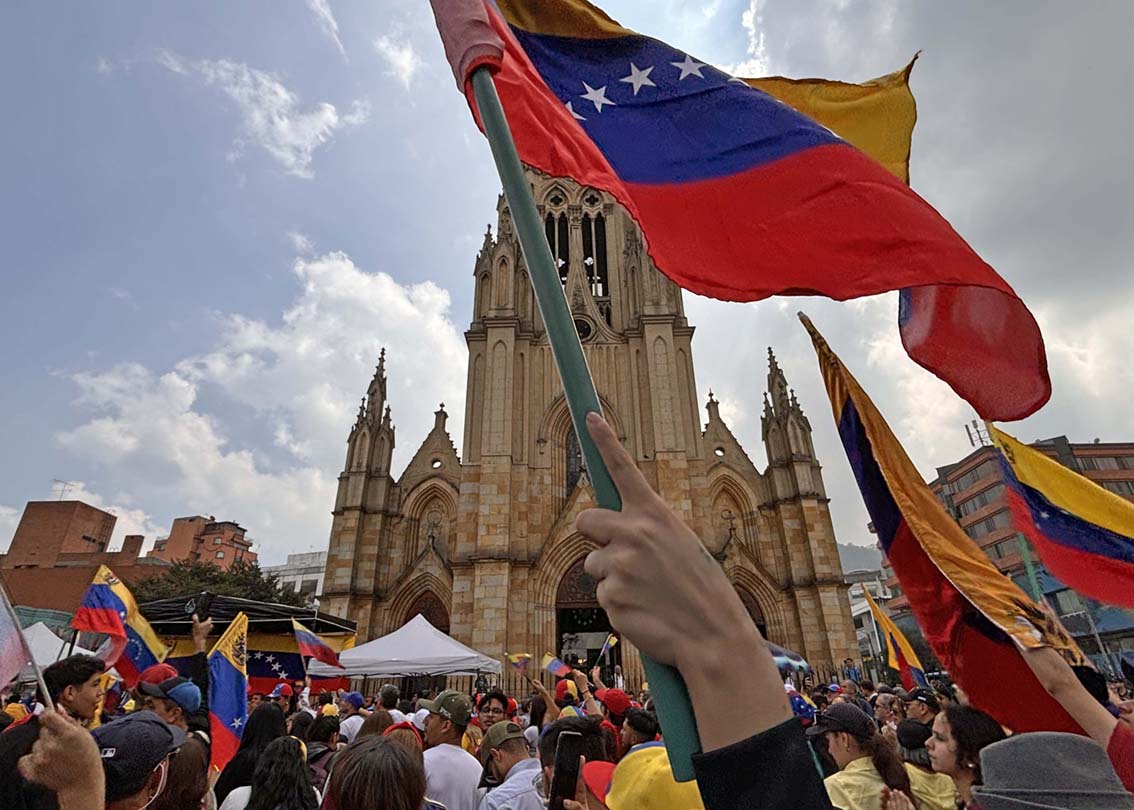
Protest and military action raised the prospect of regime change in Iran and Venezuela, and the voices of both countries’ diasporas were heard loud and clear through the media of their host nations.
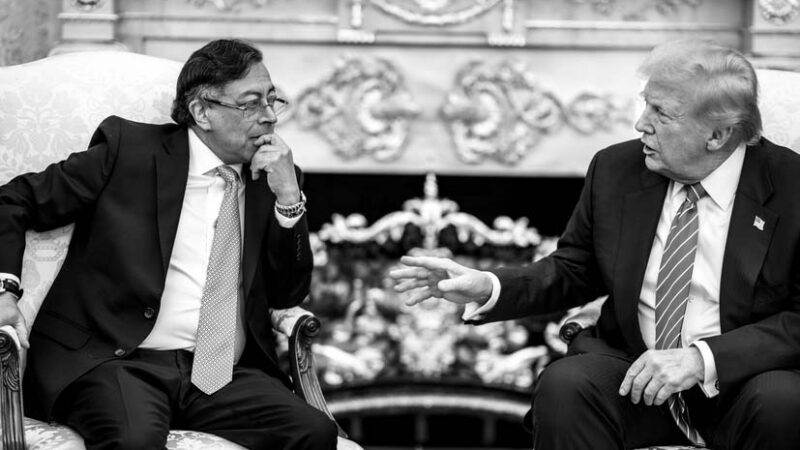
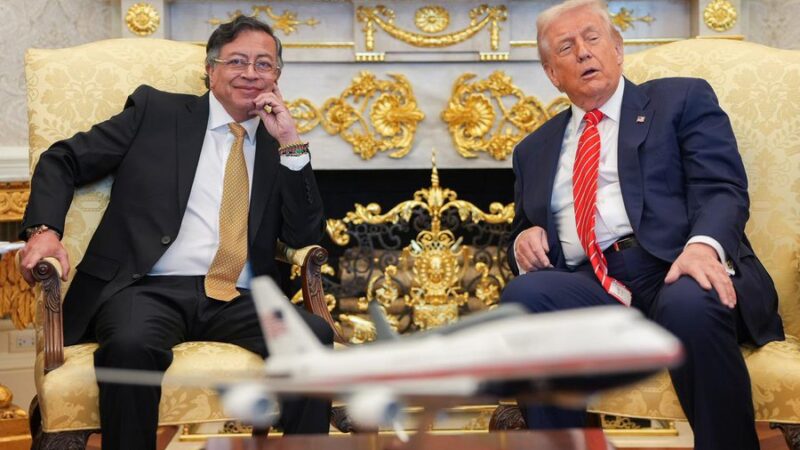
Venezuelan exiles in the U.S. were, according to the popular narrative, broadly behind President Donald Trump and his plan to “run Venezuela,” as the nickname “MAGAzuelans” suggests. Meanwhile, the Iranian diaspora rallied behind Prince Reza Pahlavi as he positioned himself as a leader-in-waiting, projecting an image of unified exile support.
Diasporas are often treated by media and policymakers as monolithic blocs — politically unified, ideologically coherent and ready to be mobilized for regime change. But as a scholar of migration and security in Latin America, I know this assumption misunderstands how diaspora communities form, evolve and engage politically.
Iranian and Venezuelan émigrés might broadly oppose their current governments — having left them, this is unsurprising. But they are far from unified on what should replace those governments, who should lead or how change should come about.
Migration waves shape politics
Diasporas are not uniform because their constituent populations did not arrive all at once, from the same places or for the same reasons. Each migration wave carries distinct political orientations shaped by the circumstances of departure.
The tendency of diasporas to become politically frozen at the moment of departure appears across contexts. El Salvador’s diaspora in the United States, which first left during the 1980s civil war, developed a reputation for being “stuck in the ’80s” — mentally still fighting battles that had long since ended at home.
This temporal displacement has consequences. Iranian-American sociologist Asef Bayat, writing about the Iranian diaspora, argues that exile opposition to the ruling government back home “suffers from a political disease, positioning itself against the movement it claims to support.”
In other words, diaspora activists may advocate positions that resonate with Western audiences but find little support among those actually living under authoritarian rule. This lack of accountability to political consequences back home can rankle the constituencies on whose behalf they seek to advocate.
Research on the Venezuelan diaspora reflects similar dynamics. A 2022 study found that Venezuelan exiles hold more extreme anti-government views than those who remained.
Despite this presumed disconnection, homeland politicians often devote disproportionate attention to those who have left. The logic is simple: emigrants send money home — accounting for as much as 25% of gross domestic product in some Central American and Caribbean countries. Politicians assume that this financial power translates into political influence over remittance-receiving relatives.
One party official in El Salvador told me: “If we get one Salvadoran in Washington to support us, that gives us five votes in El Salvador — and it doesn’t even matter if the one in Washington votes.”
My own research tested this assumption using polling and voting data across Latin America and found it to be exaggerated. Remittances and family communication mostly reinforce existing partisan sympathies rather than swing votes.
But the belief in diaspora influence matters politically — and diaspora voters can be weaponized by authoritarian leaders. El Salvadoran President Nayib Bukele, in his successful and plainly unconstitutional 2024 reelection bid, expanded external voting through online balloting, increasing diaspora votes by 87-fold over the previous election.
Diasporas can influence home-country politics through several channels: direct voting, financial support for opposition movements, lobbying host governments and transmitting democratic values through what sociologist Peggy Levitt calls “social remittances.” Other research has found that remittances can undermine dictatorships by helping fund opposition activities.
Yet authoritarian governments have developed sophisticated countermeasures. Freedom House recorded more than 1,200 incidents of physical transnational repression against dissidents — including assassinations, abductions and unlawful deportation — between 2014 and 2024 involving 48 governments.
The limits of exile politics
For Venezuela and Iran, these lessons counsel caution. Nearly 8 million Venezuelans have fled their homeland — the largest displacement crisis in the Western Hemisphere. Iranian emigration accelerated after the 2022 protests.
Both diasporas contain passionate activists, wealthy donors and would-be leaders positioning themselves for future rule. But passion does not equal unity, and visibility does not equal representation.
The loudest voices on social media — or those amplified by U.S. officials and media — may represent narrow slices of diverse communities. There may be consensus on opposing the government back home, but far less agreement on what should be done or how change should occur.
Nor does diaspora opposition necessarily translate into regime vulnerability. Authoritarian states have learned to insulate themselves from diaspora pressure while simultaneously using emigration as a safety valve, turning potential dissidents into remittance-senders.
Diasporas can contribute to democratic change through funding, advocacy and the transmission of democratic values. But ultimately, the path to democratic change in Venezuela, Iran and elsewhere will be determined by those who remain, not those who left. Diasporas can support that struggle; they cannot substitute for it.
About the author: Michael Paarlberg is Associate Professor of Political Science at Virginia Commonwealth University.
This article is reproduced from The Conversation under a Creative Commons licence.