
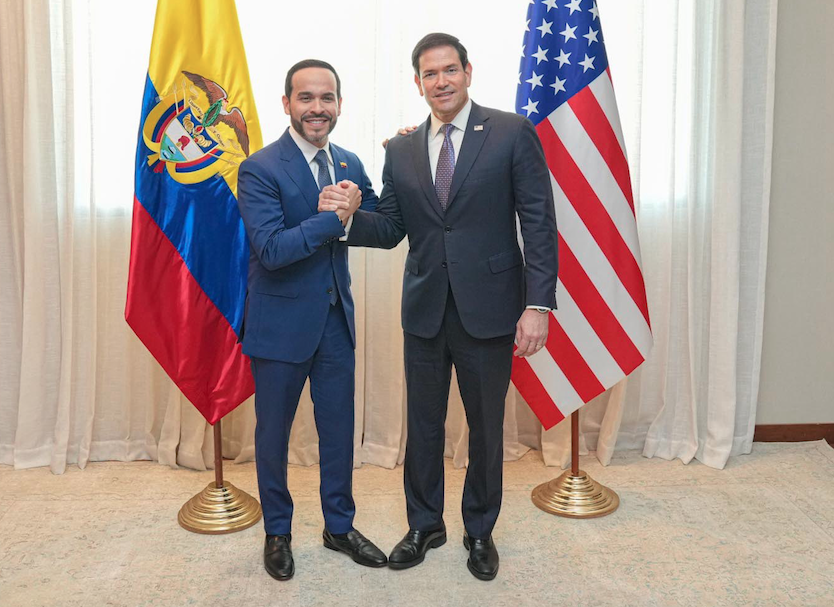
U.S. Secretary of State Marco Rubio’s whirlwind visit to Colombia on Tuesday marked a decisive shift in relations between Washington and Bogotá, with President Abelardo De La Espriella presenting his government as a renewed strategic partner for the United States in Latin America.
Meeting in Barranquilla, the alternate seat of Colombia’s presidency since De La Espriella took office on August 7, the two leaders discussed security, narcotics trafficking, border cooperation, migration, investment and Venezuela.
De La Espriella said the meeting advanced an agenda designed to strengthen regional security, confront narcoterrorism and expand cooperation along Colombia’s borders while opening new opportunities for investment and economic development.
“Colombia retakes its international leadership with seriousness, character and a diplomacy of results, not speeches,” highlighted De La Espriella.
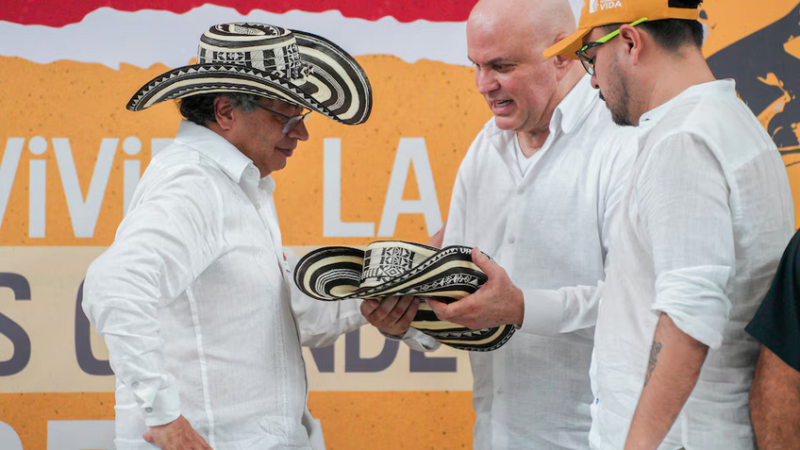
The message was unmistakable: after four years of often tense relations between Washington and the government of former President Gustavo Petro, Bogotá is seeking a rapid restoration of its traditional strategic alignment with the United States.
Rubio said Washington was equally interested in rebuilding the relationship. “There was a longstanding security relationship between the United States and Colombia,” Rubio said, adding that it had unfortunately been impeded during the previous three or four years by political leadership. “But that has now changed,” he said.
The meeting produced two memorandums of understanding signed by Colombian Foreign Minister Omar Bula and Rubio.
The first establishes a framework for cooperation on securing supply chains involving critical minerals and rare earths — resources increasingly viewed by Washington as essential to economic and national security.
The second establishes strategic civilian cooperation in nuclear matters, opening another area of technological and scientific collaboration between the two countries.
The agreements give the new relationship an economic and strategic dimension extending beyond the traditional U.S.-Colombia focus on counternarcotics.
Rubio said the economic opportunities in Colombia were “incredible,” while De La Espriella emphasized investment, development and prosperity as central elements of the renewed partnership.
Security returns to the center
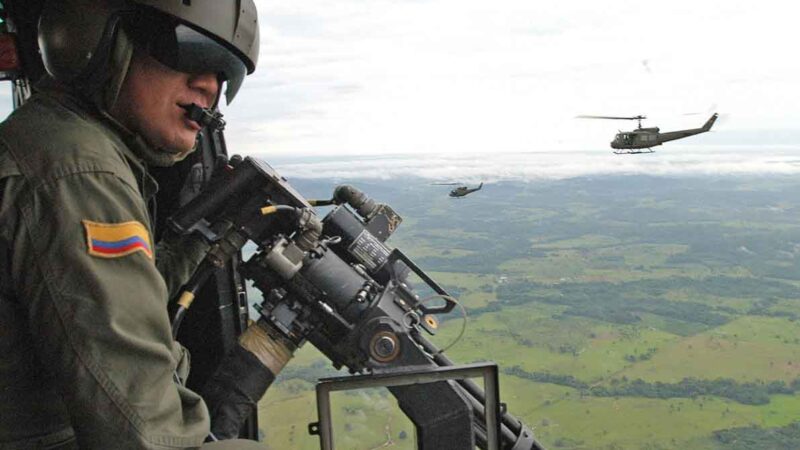
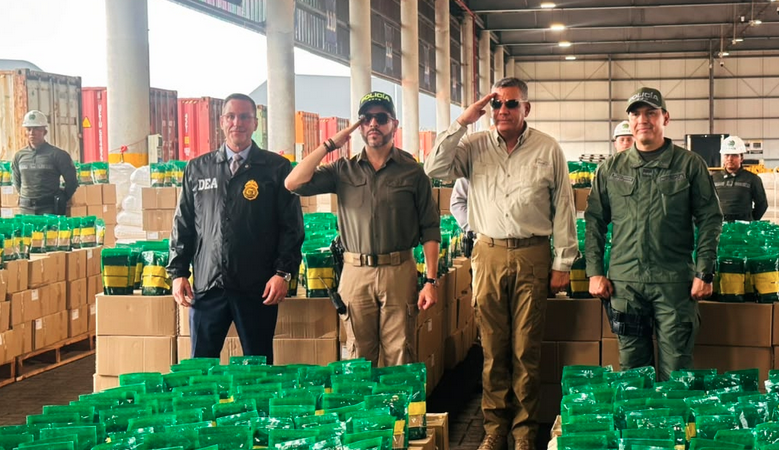
Security, however, remained the dominant theme. De La Espriella said Colombia was seeking U.S. assistance with aircraft, drones, radar, intelligence capabilities and measures to combat money laundering as it confronts increasingly powerful drug-trafficking organizations and armed groups.
Rubio confirmed that U.S. and Colombian security officials were discussing new forms of cooperation, including equipment, intelligence and training, although he did not specify what Washington would ultimately provide.
“The security threats Colombia faces are the same ones we face in the United States,” Rubio said.
For De La Espriella, the objective is larger than bilateral cooperation. He said Colombia wants to consolidate itself as the United States’ principal hemispheric security partner.
The language places Colombia at the center of Washington’s broader effort to strengthen its influence across Latin America at a time when migration, organized crime, narcotics trafficking and regional instability have become major priorities for the Trump administration.
Venezuela looms large
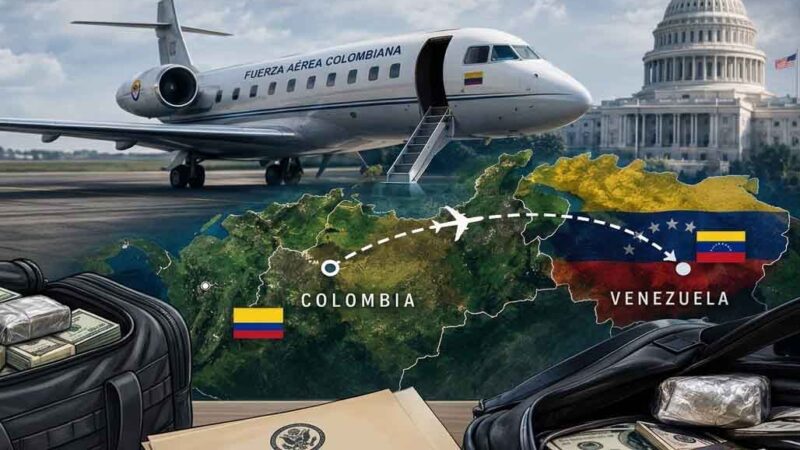
Adressing the on-going Venezuela situation was inevitable during the official eight-hour visit. De La Espriella said Colombia would work responsibly with the United States following the capture of Nicolás Maduro and the emergence of Delcy Rodríguez as interim president, arguing that events in Venezuela have immediate consequences for Colombia.
“Everything that happens in Venezuela has direct consequences for Colombia,” he said, pointing to security, migration, narcotrafficking, smuggling, armed organizations and energy.
Colombia, he added, would deepen cooperation with Washington on border, migration and security matters while supporting efforts aimed at regional stability and the restoration of democracy in Venezuela.
The Venezuelan question gives the new U.S.-Colombia relationship an additional strategic importance, particularly given Colombia’s long land border with Venezuela and its exposure to the consequences of political and economic instability there.
A blunt assessment of the Petro
Perhaps the sharpest political moment came when Rubio described the inheritance awaiting De La Espriella after Petro’s administration. “You are confronting the mistakes of the last four years and you have to fix that,” Rubio said, adding that “the opportunities we have now” should be used.
His remarks offered a clear indication of Washington’s assessment of the leftist administration and expectations surrounding De La Espriella’s government. Rubio also stressed the historic depth of the U.S.-Colombia relationship, saying the links between the two countries were almost “impossible to replicate” elsewhere in the region.
Diplomatic partners to personal friends
The meeting also revealed an unusually personal connection between the two men. Rubio said he had known De La Espriella for years, long before the Colombian entered politics. He recalled that the two had been seated at the same table at a wedding in South Florida approximately two and a half years ago.
The secretary of state joked about arriving in Colombia to discover that someone he had known personally had become president.
The anecdote offered a rare glimpse behind the formal diplomacy — and underscored the extraordinary political transformation represented by De La Espriella’s arrival in the Casa de Nariño.
For Washington and Bogotá, however, the larger message from Rubio’s visit was clear: the era of diplomatic friction between the two governments is being replaced by an ambitious partnership built around security, strategic resources, economic opportunity and a shared interest in reshaping the balance of power in the hemisphere.