
Ten years after Colombia first signed its historic peace agreement with the FARC, the country’s experiment with transitional justice has reached a critical moment.
The anniversary arrives not as a celebration of an uncontested peace, but amid a confrontation over the future of the Special Jurisdiction for Peace, or JEP, the tribunal established to investigate and judge the gravest crimes committed during the country’s armed conflict.
At the centre of the dispute is money, but the argument is ultimately about something larger: what does justice mean after a decades-long internal conflict?
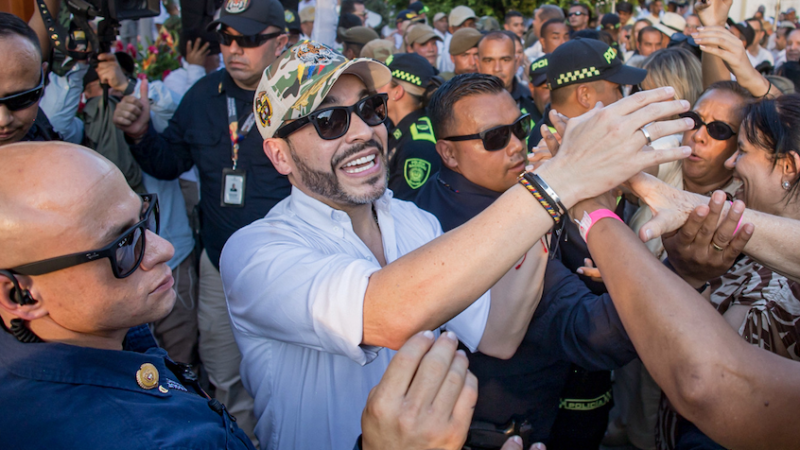
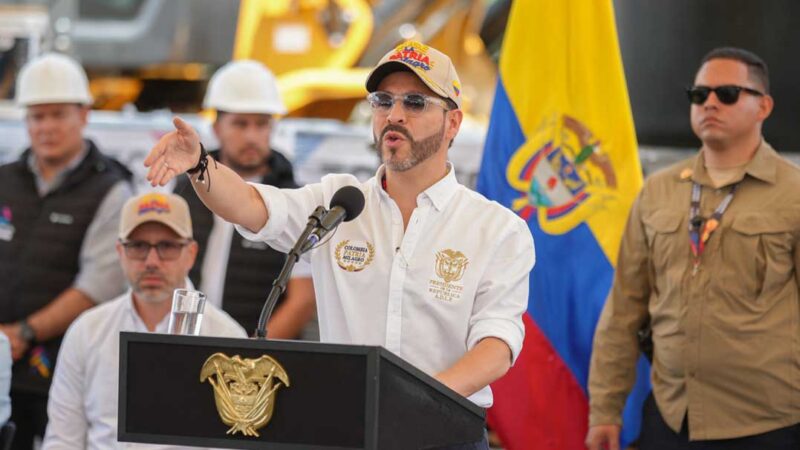
President Abelardo De La Espriella has made clear that he intends to challenge the JEP’s role and cost while respecting its constitutional existence. In his inauguration speech in August, he said Colombia could not accept a justice system becoming “a mechanism of indulgence” for those responsible for the deaths of Colombians.
He also argued that the JEP was born from a process that had failed to win popular approval.
The original agreement between President Juan Manuel Santos’ government and the FARC was signed in Cartagena on September 26, 2016. Six days later, Colombian voters narrowly rejected it in a plebiscite, with 50.21 percent voting No and 49.78 percent Yes. A revised agreement was subsequently signed in Bogotá on November 24.
For De La Espriella, that vote remains central to the legitimacy debate. “I will respect the existing legal order,” he said at his inauguration, while warning that this would not prevent him from reviewing “with absolute rigor” the “nature and effects” of a jurisdiction that, in his words, was created without acknowledging the will of the people.
His position has since extended beyond the question of the JEP’s budget and into one of the most painful legacies of Colombia’s armed conflict: the recruitment of children.
Speaking in a televised address on Sunday, September 27, from the government headquarters in Barranquilla, De La Espriella said he will protect children and adolescents recruited by criminal organizations while pursuing those who use them to commit crimes.
Children at the Centre of the Conflict
The president said that recruiting a child amounts to taking away their childhood, education, home and family environment, and questioned the use of children and adolescents for different tasks within criminal structures. “A recruited minor is a daughter or son whose school, childhood, innocence, home and family have been stolen,” he said.
The remarks add a sharper dimension to De La Espriella’s challenge to the transitional justice model. While he has questioned what he describes as the JEP’s substantial demands on public funding, his government is also presenting the protection of children and the direct pursuit of those who recruit them as a central responsibility of the state.
That tension goes to the heart of Colombia’s unfinished business with peace: how to reconcile restorative justice, accountability and reparations for victims with a government determined to demonstrate that those who continue to exploit civilians — particularly children — will face the full force of the state.
His security-focused government is now proposing a COP170 billion reduction in the 2027 budget allocation for the transitional-justice system. The proposed reduction includes COP30 billion in operating expenditure and COP140 billion in investment. The government says the measure is intended to rationalize spending under Colombia’s fiscal constraints while preserving the resources necessary for the JEP’s core functions.
JEP president Alejandro Ramelli has described the proposed transfer of resources as a form of financial “asphyxiation.”
The timing could hardly be more consequential.
The JEP has finally reached the stage at which senior former FARC commanders are receiving some punitive sanctions. The tribunal’s restorative model was never intended simply to reproduce ordinary criminal justice. Instead, perpetrators who acknowledge responsibility can receive sanctions based on restricted liberty, truth-telling and restorative work.
That model is now being tested against the expectations of victims.
For many Colombians who suffered kidnapping, forced displacement, disappearance, recruitment of children and other crimes, the central question is not simply whether a tribunal has established responsibility. It is whether justice has produced something tangible: truth, acknowledgement, reparations and restoration.
This is where the anniversary becomes particularly uncomfortable.
Does Justice Serve Victims?
The JEP was created to place victims at the centre of the peace process. Yet after a decade, there remains frustration over the pace of proceedings and the delivery of reparations. At the same time, thousands of victims have participated in the tribunal’s proceedings and have used it to obtain recognition and information about crimes that might otherwise have remained hidden.
The tribunal’s defenders therefore argue that its work cannot be measured simply by prison sentences.
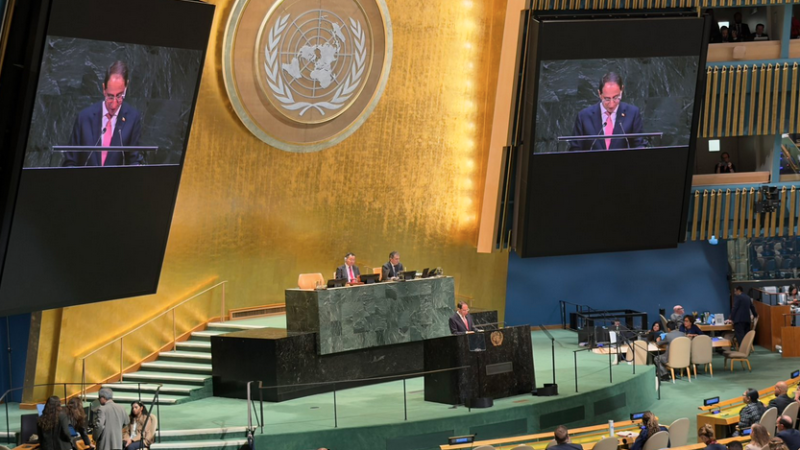
That argument received significant international backing Monday from UN High Commissioner for Human Rights Volker Türk.
Türk called Colombia’s restorative measures “a global achievement for transitional justice” and highlighted projects in which former FARC members and members of the Colombian armed forces are working together to locate and identify people disappeared during the conflict. He urged Colombia to ensure that the JEP and the Unit for the Search of Missing Persons have sufficient resources to fulfil their mandates.
The contrast is stark.
For De La Espriella, the question is whether Colombia can continue financing an expensive special jurisdiction when ordinary justice and security systems also face enormous demands.
For the JEP and the United Nations, the question is whether Colombia can afford to weaken a system precisely when its restorative mechanisms are beginning to produce concrete results.
And for victims, the question is more elemental: after ten years, what has actually been repaired?
That may ultimately be the most important question Colombians now ask themselves.
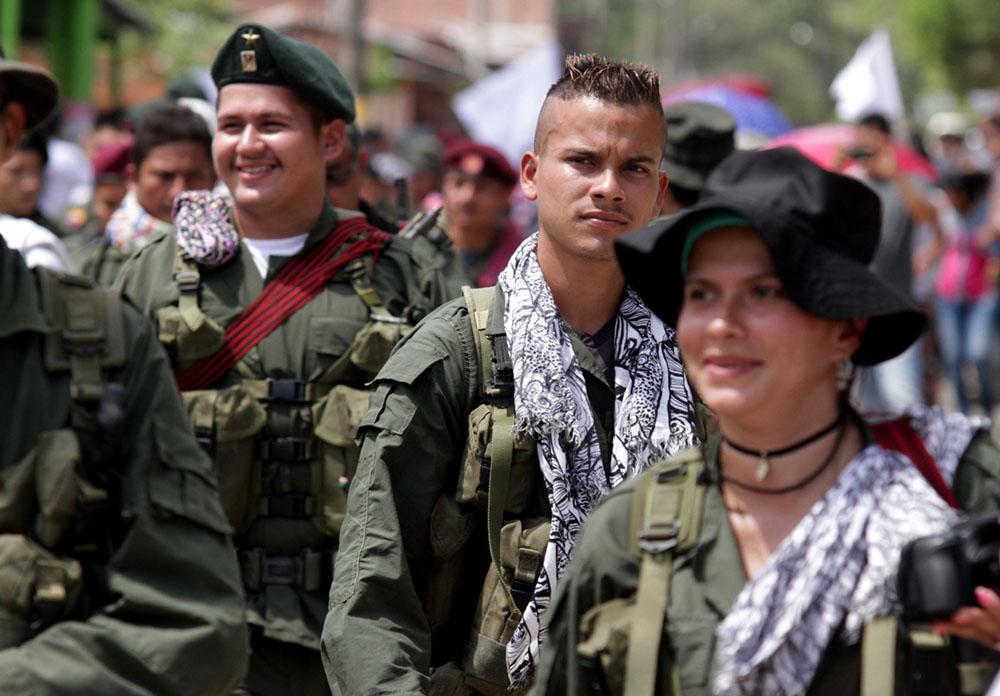
The FARC no longer exists as the unified insurgency that fought the Colombian state for more than half a century. But splinter armed groups – Second Marquetalia and EMC – proliferated under the leftist government of Gustavo Petro. These criminal organizations continue to recruit children, displace communities and control vast swathes of territory. President De La Espriella has made child recruitment a particular focus of his security policy, arguing that children must be treated as victims while those who recruit them face prosecution.
Ten years after the fanfare in Cartagena, Colombia therefore finds itself confronting the unfinished business of peace.
The country must now decide how much weight to give punishment, restoration, truth, reparations, security and public expenditure — and whether those objectives can coexist within the extraordinary judicial experiment created by the 2016 agreement.
The tenth anniversary is consequently less a moment of closure than a test of whether Colombia still believes in the bargain it made with the FARC a decade ago.