
Colombia entered the final week of campaigning on Monday ahead of a presidential election that has exposed deep political divisions, sharpened ideological tensions and raised concerns over the country’s security and economic future.
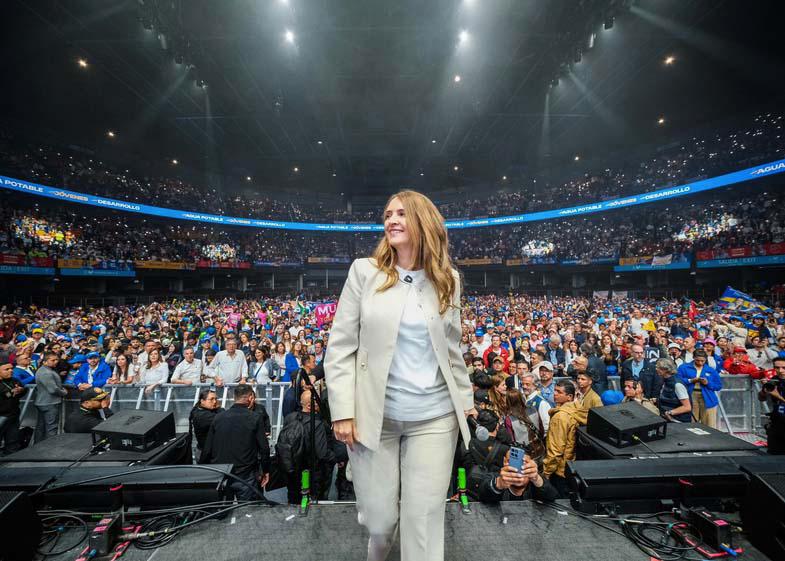
The three leading candidates in the 2026 race wrapped up major public appearances over the weekend with rallies across Bogotá, where supporters waving flags, chanting slogans and wearing campaign colors filled arenas, public plazas and avenues in a final push before Sunday’s first-round vote.
The election has increasingly become a referendum on the legacy of President Gustavo Petro and the future direction of the South American nation after four years marked by failed social reforms, diplomatic friction, fiscal pressures and a deteriorating security conditions ahead of the May 31 election.
Senator Iván Cepeda, the candidate aligned with Petro’s governing Historic Pact coalition, entered the final stretch of the campaign presenting himself as the defender of progressive reforms and social justice policies aimed at reducing inequality and expanding access to education, pensions and healthcare.
Speaking before supporters in Bogotá’s historic Plaza de Bolívar, Cepeda urged Colombians to “defend hope” and reject what he described as a return to the political establishment that governed Colombia before Petro’s historic 2022 victory.
“Our project is one of dignity, peace and social transformation,” the hard-left senator told supporters. “We cannot allow fear and hatred to reverse the changes that millions of Colombians demanded.”
Cepeda has pledged to continue the government’s controversial “Total Peace” strategy, which seeks negotiated settlements with armed guerrilla groups and criminal organizations. The policy, however, has failed to curb violence and has instead allowed illegal armed factions to strengthen territorial control in rural areas.
Security has emerged as one of the defining issues of the campaign following a rise in massacres, attacks against security forces and extortion in regions including Catatumbo, Cauca and parts of the Pacific coast. Several recent bomb attacks and clashes involving dissident rebel groups have intensified public anxiety and become central talking points for opposition candidates.
Conservative lawyer and political outsider Abelardo de la Espriella has capitalized on growing frustration over insecurity, presenting himself as the candidate of “authority and order.”
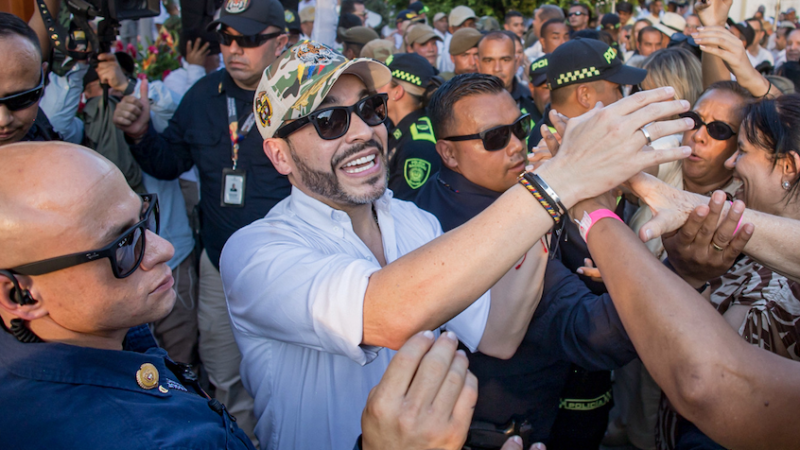
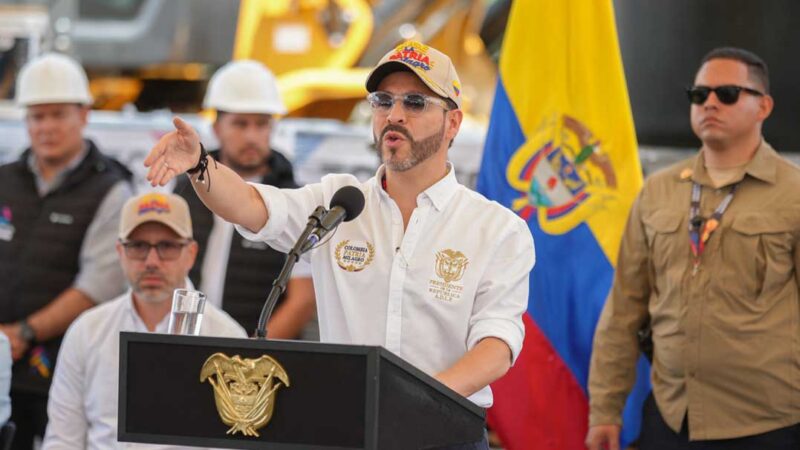
During rallies attended by thousands in Bogotá, Barranquilla and Medellín, de la Espriella has promised a sweeping security crackdown against illegal armed groups, tougher prison sentences and expanded support for the military and police.
“Colombia cannot continue surrendering territory to criminals and terrorists,” he told cheering supporters. “The state must recover authority in every corner of the country.”
De la Espriella has also sought to attract business leaders and middle-class voters concerned about inflation, unemployment and slowing investment. His campaign platform includes proposals for tax reductions, deregulation and incentives aimed at restoring investor confidence after several years of economic uncertainty.
Meanwhile, senator Paloma Valencia closed her campaign with a massive event at Bogotá’s Movistar Arena, in which she framed the election as a battle to prevent Colombia from drifting toward authoritarianism and economic collapse. Throughout the campaign, she has repeatedly warned voters against what she calls “the Venezuelanization of Colombia,” a message that has resonated strongly among conservative sectors and business elites.
“We are voting for democracy, liberty and the survival of our institutions,” Valencia said during her closing rally. “Colombia cannot continue down the path of division and improvisation.”
Political analysts say the election reflects a country increasingly polarized between those who support Petro’s promise of structural change and those who believe the administration’s policies have weakened institutions, damaged investor confidence and emboldened armed groups.
Recent polling suggests Cepeda maintains a narrow lead heading into Sunday’s vote, though few observers expect any candidate to secure the more than 50 percent needed to avoid a runoff election scheduled for June 21.
The latest surveys indicate a highly competitive contest for second place between Valencia and de la Espriella, setting the stage for what could become one of the most polarized second-round races in Colombia’s modern political history.
Beyond ideology, many voters say they remain concerned about rising living costs, access to employment, corruption and public safety.
In downtown Bogotá, where campaign caravans and political posters have become a daily feature of city life, voters have expressed exhaustion after months of aggressive rhetoric and constant political confrontation.
With just days remaining before Colombians head to the polls, authorities across the country have increased security measures amid concerns over possible unrest and isolated acts of political violence.
Sunday’s election is widely viewed as one of the most consequential in decades, with the outcome expected to shape Colombia’s political and economic direction long after the campaign slogans and rallies fade from the streets of Bogotá.