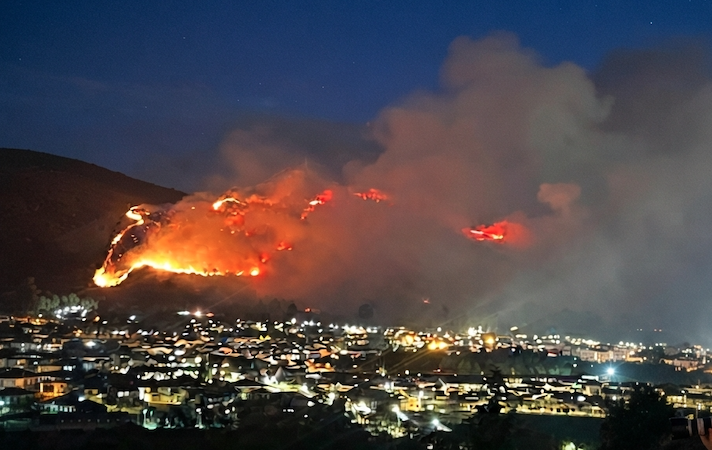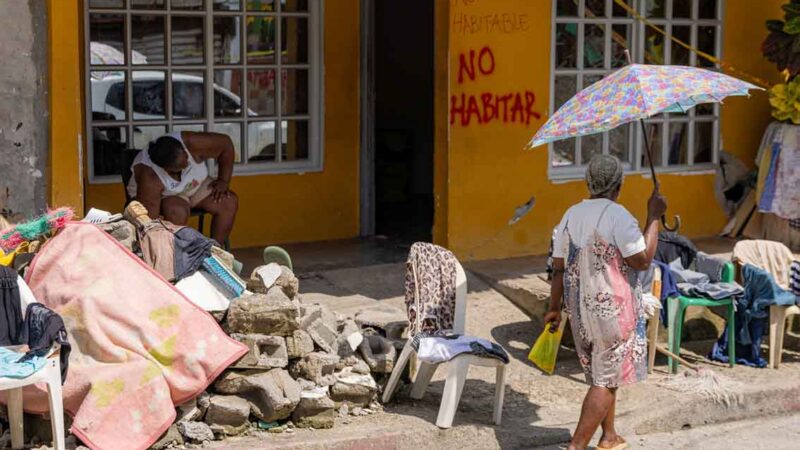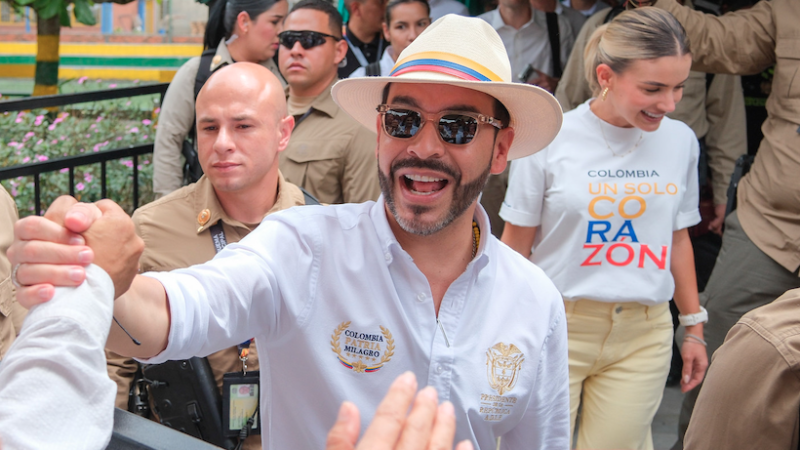

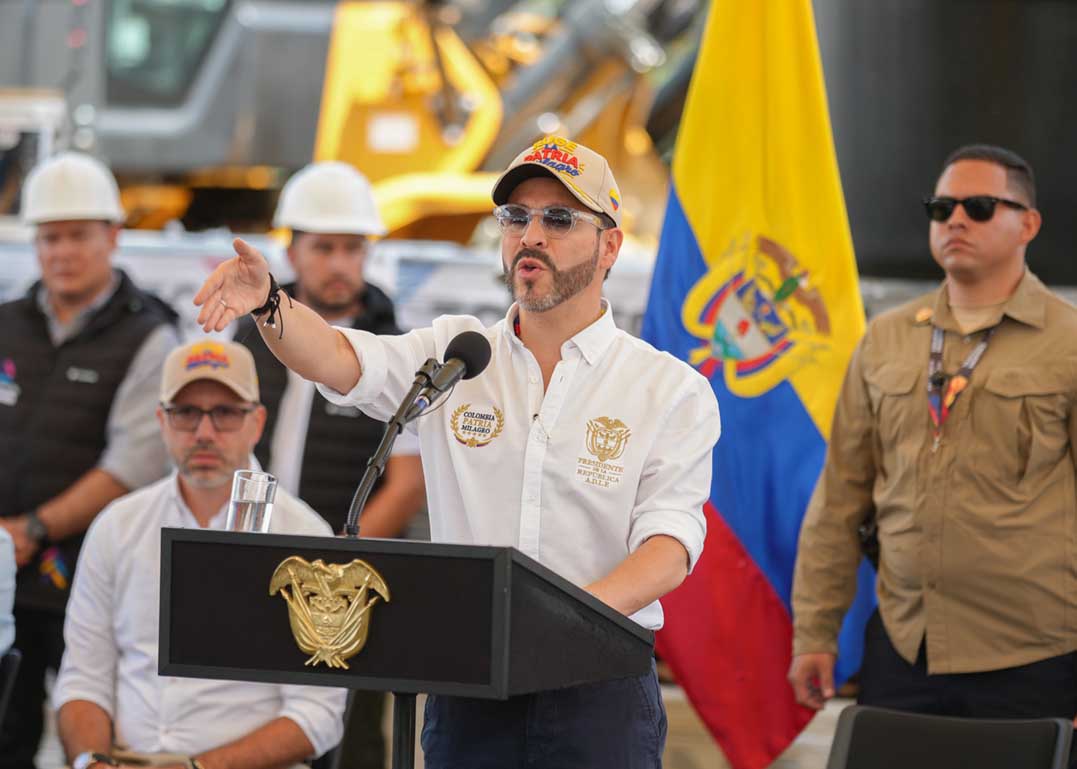
Santa Marta woke on Tuesday to deserted streets, closed businesses and suspended transport following the killing of a senior commander of the Autodefensas Conquistadoras de la Sierra Nevada (ACSN), as President Abelardo De La Espriella vowed to pursue the armed group’s leadership.
José Luis Pérez Villanueva, alias “Cholo”, described by authorities as the second commander and financier of the ACSN, was killed Monday during a security operation in rural Santa Marta. Six other alleged members of the organisation were also killed and three were captured, according to the government.
The operation immediately triggered reprisals attributed to the ACSN, including blockades along the Troncal del Caribe and the burning of buses. Intermunicipal transport and services toward La Guajira were suspended, while schools and businesses closed amid fears of an armed strike announced by the group.
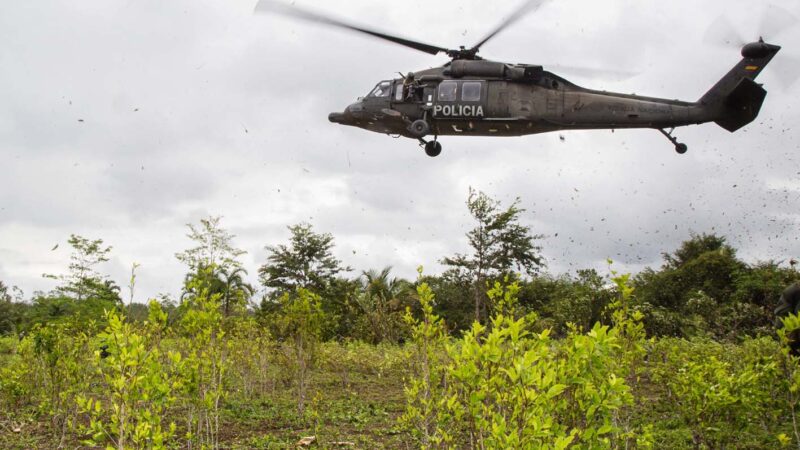
De La Espriella travelled to Santa Marta late Monday night accompanied by a fleet of helicopters that could be seen flying over the Colombia’s oldest city. The president called a security council as authorities maintained a Unified Command Post to coordinate the response.
“[They] lost one of their principal commanders, we hit their finances and seized a powerful arsenal,” De La Espriella said in a message posted on X. “Now, defeated and cornered, they intend to terrorise the population with an armed strike. I will not allow it.”
The president added: “We are going after all the narcoterrorists of the Autodefensas Conquistadoras de la Sierra Nevada and the Clan del Golfo. One by one.”
The Police National said the operation took place in the Quebrada del Sol sector of Guachaca, in the rural area of Santa Marta. It involved the Directorate of Anti-Narcotics, police investigators, Jungla commandos and police aviation, working with the Attorney General’s Office and with support from the Colombian Air Force.
Authorities said the operation produced seven deaths and three arrests. Among those killed was “Cholo”, identified by the government as one of the most important figures in Los Pachenca, another name used for the ACSN.
The group is a powerful armed criminal organisation operating across the Sierra Nevada and parts of the Caribbean region. Authorities associate it with drug trafficking, extortion and control of illicit economies and territory along the Troncal del Caribe, the principal road connecting Santa Marta with La Guajira. The government has portrayed the operation as a major blow against the organisation’s command structure and finances.
But the immediate consequences have been felt by civilians.
Communities in and around Santa Marta reported a sharp deterioration in security following Monday’s operation. Streets were left largely empty, commercial activity was disrupted and public transport was suspended. Indigenous communities in the Sierra Nevada have also faced confinement and heightened security risks amid the confrontation between armed groups and government forces.
Indigenous authorities have previously warned of the risks of forced displacement, confinement and the use of civilians as human shields in areas where armed groups operate. They have called on the state to strengthen protection for communities living in ancestral territories.
The president’s response has been uncompromising. According to eye-witness reports, on Monday armed gunmen could be seen shooting at shops that dared to open. Many of the city’s more affluent residents began leaving on Monday to nearby Barranquilla, in fear of potential violence.
In a video released after the operation, De La Espriella described the result as an “exceptional” achievement by the security forces and singled out “Cholo” as one of the region’s most feared armed figures.
He then turned his attention to the ACSN’s top leadership.
“They have been falling like rats: ‘Bendito Menor’, ‘Cholo’, and very soon ‘Pinocho’,” the president said, referring to Fredy Castillo Carrillo, identified by authorities as the organisation’s maximum commander and financier.
“Pinocho, you have an expiration date and we are after you,” De La Espriella added.
Castillo Carrillo is a key figure in the government’s campaign against the ACSN, whose influence extends beyond Magdalena into neighbouring La Guajira and Cesar.
The killing of “Cholo” follows the recent death of another senior ACSN commander, alias “Bendito Menor”, further intensifying pressure on the organisation’s leadership.
For Santa Marta, however, the immediate challenge is preventing the security operation from becoming a wider confrontation affecting civilians and one of Colombia’s most important Caribbean transport corridors.
With the Troncal del Caribe disrupted and authorities on heightened alert, the government now faces a test of whether its offensive against the ACSN can restore control without provoking further reprisals against the population.
For De La Espriella, the message is already clear: the campaign will continue. And after the death of “Cholo”, the president has publicly identified his next target.