

U.S. Secretary of State Marco Rubio is expected to arrive in Barranquilla on Tuesday afternoon for a high-level meeting with Colombian President Abelardo De La Espriella, in what could become a defining moment in the reconstruction of relations between Bogotá and Washington.
The visit, confirmed by Colombia’s Foreign Ministry, will be Rubio’s first official trip to Colombia since becoming the State Department’s top diplomat and one of the first major bilateral meetings between the administration of President Donald Trump and De La Espriella’s government, which took office on August 7.
According to the Colombian government, the meeting is intended to strengthen mechanisms of dialogue and cooperation between the two countries.
“During the meeting, the two governments will address opportunities to deepen bilateral cooperation and identify new areas of joint work in response to challenges related to security, stability and development in the hemisphere,” the Foreign Ministry said.
Rubio is expected to land at approximately 1 p.m., with his meeting with De La Espriella scheduled for 3 p.m.
The two leaders are then expected to participate in the signing of agreements before Rubio meets U.S. Embassy personnel later in the afternoon.
The precise itinerary remains subject to change as security and diplomatic arrangements are finalized.
The Four Pillars
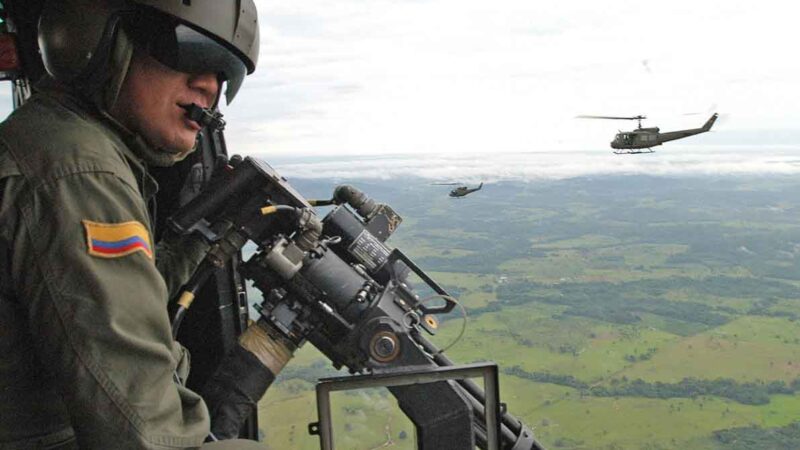
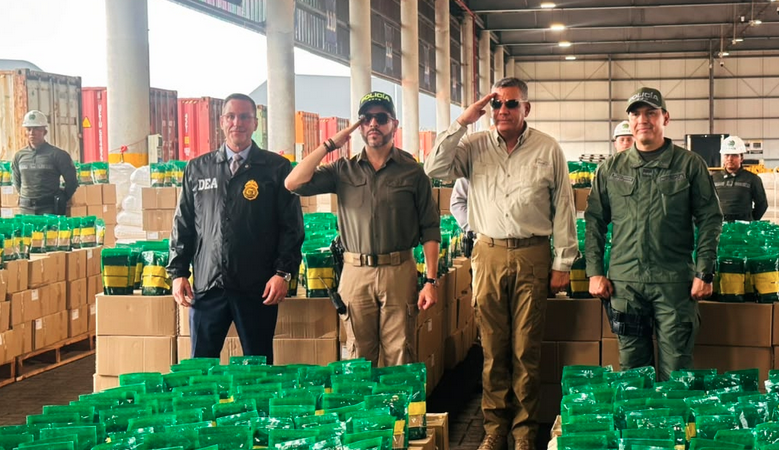
Security is expected to dominate the conversation. Washington has identified increased cooperation against what it describes as narcoterrorism as one of the principal objectives of Rubio’s regional tour. Colombia remains a strategically important U.S. partner in combating drug-trafficking organizations and armed criminal groups operating across the region.
For the De La Espriella administration, the meeting provides an opportunity to demonstrate a decisive break with the failed “total peace” agenda and anti-U.S rhetoric of Gustavo Petro.
In recent weeks, Bogotá has signaled a significantly closer alignment with Washington on security issues, including Colombia’s entry into the so-called ‘Shield of the Americas’, the resumption of aerial glyphosate spraying and a more aggressive military and police campaign against criminal organizations and armed groups.
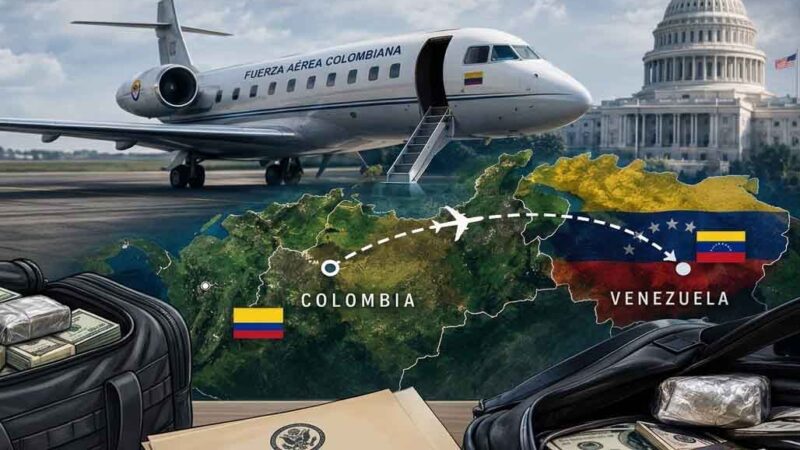
The two governments are also expected to discuss the possibility of expanding military cooperation, and relations with neighbouring Venezuela.
Weeks ago, U.S. Secretary of War Pete Hegseth spoke in Panama about the possibility of joint operations in Colombia. Bogotá has not confirmed that concrete plans for such operations exist.
Any proposal involving the presence or movement of foreign troops would also carry significant political implications in Colombia, where congressional approval requirements could become an important factor.
New Economic Partnership
Trade and economic cooperation are expected to form another important pillar of the meeting, particularly as Washington and Bogotá explore new areas of strategic economic cooperation.
The planned agreements on civilian nuclear energy and critical minerals could prove particularly significant.
Critical minerals and rare earth elements have become increasingly important to the United States as Washington seeks to strengthen supply chains and reduce strategic dependence on China.
For Colombia, closer cooperation in this area could potentially open new investment opportunities while placing the country’s mineral resources within a broader U.S. hemispheric strategy.
Earthquake Assistance
The devastating earthquake that recently struck Colombia is another key reason for Rubio’s visit.
The U.S. State Department has said Rubio will discuss American support for Colombia’s response to the disaster, including possible mechanisms for international cooperation and recovery assistance.
That gives the meeting an immediate humanitarian dimension alongside its broader geopolitical significance.
For the new Colombian government, American assistance could become an important component of reconstruction efforts in some of the territories hardest hit by the August 10, 7.4-magnitude earthquake.
Rubio’s arrival comes after a strained period in U.S.-Colombian relations under the country’s first leftist president. The relationship with the Trump administration deteriorated sharply over issues including deportation flights, migration and drug policy, culminating in diplomatic measures and a temporary suspension of some U.S. visa services in Bogotá.
The De La Espriella government has since moved rapidly to repair relations.
Foreign Minister Omar Bula described Rubio’s visit as a signal of the direction Colombia’s new foreign policy intends to take. “This is the first high-level visit that President De La Espriella will receive in Colombia and it shows the beginning of the reconstruction of a strategic alliance with the United States, our principal partner in the region,” he said.
The choice of Barranquilla also gives the visit a distinctly Caribbean dimension. Rubio is expected to spend at least part of Tuesday at the presidential facilities at Batallón Paraíso. Colombian officials have also been in contact with advisers to Barranquilla Mayor Álex Char over the possibility of Rubio visiting some of the city’s landmarks, potentially including the Caribbean broadwalk – Malecón.
Whether such a visit takes place will depend on the secretary’s schedule and security arrangements.
Rubio’s Regional Tour
After leaving Colombia, Rubio is scheduled to continue his regional tour to Peru and Ecuador, where he will meet the respective governments.
For Washington, the itinerary places Colombia within a broader effort to strengthen relationships with governments considered important partners in confronting organized crime, irregular migration and growing strategic competition in the Western Hemisphere.
For Bogotá, Tuesday’s meeting represents something potentially more consequential: the first major test of whether the new government’s promise to rebuild a strategic alliance with Washington can translate into concrete agreements on security, trade, energy and reconstruction.