
Amidst the rubble and destruction caused by Monday’s devastating 7.4-magnitude earthquake across much as Central and Southwest Colombia, reports are surfacing that the leftist government of ex-President Gustavo Petro initially decided that the country did not need specialized international search-and-rescue teams. According to a letter signed by Javier Pava, the former head of the National Unit for Disaster Risk Management (UNGRD),and sent to Colombia’s Foreign Ministry on August 11, Pava claims that based on the assessment of the emergency – and available resources domestically – that Colombia did not require international specialized assistance.
Pava’s decision has triggered stern criticism as the confirmed death toll from the earthquake rose to 285, with 3,975 people injured and 379 still missing, according to the latest UNGRD report issued Friday morning. A total of 354 people have been rescued.
The document said the decision would be reviewed as the emergency evolved and that, if the scale of the disaster exceeded Colombia’s national capacity, the government would communicate specific requirements for international assistance and could then request appropriately classified international search-and-rescue teams.
The controversy centers on the timing of that decision.
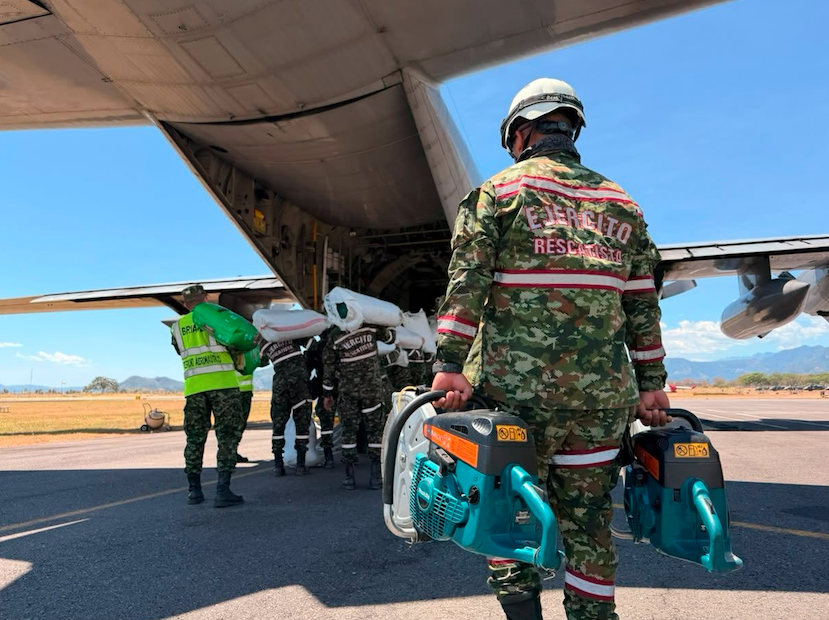
Pava left the UNGRD leadership on Wednesday, August 12, when David Santiago Tamayo was sworn in as his replacement. Following the change, Colombia began accepting international rescue assistance, including teams from Israel, the United States and El Salvador.
Tamayo said the foreign teams would operate under United Nations protocols. He also stressed that Colombia was open to international cooperation and that assistance would be accepted without political or ideological considerations.
The issue has become particularly contentious because rescue operations were continuing in several of the cities hardest hit by the earthquake, while images of collapsed buildings and local rescuers digging through rubble circulated across Colombian and international media.
Interior Minister Rodrigo Lara confirmed that Pava had been the official who determined that international rescuers were not initially required. “Pava was the one who certified in a letter that we did not need help from international rescuers,” Lara said in an interview with Blu Radio.
Lara defended the decision as a technical assessment rather than a political one. He argued that Colombia could not simply bring thousands of foreign rescuers into the country without creating additional logistical challenges. According to Lara, international teams were requested from three countries because authorities determined that more were not necessary at the time.
The controversy has also produced confusion over the distinction between officially classified international USAR teams and independent rescue groups. Colombia has 23 nationally certified rescue groups, according to the information cited in the debate, while independent groups such as the Mexican Topos generated public attention after saying they had not been allowed to enter the country.
Mexico’s President Claudia Sheinbaum also became involved in the controversy after comments about the entry of Mexican rescuers were interpreted as indicating that Colombia had rejected official Mexican rescue teams. The dispute highlighted the complexity of coordinating international disaster assistance during the first hours of a major catastrophe.
The government has rejected allegations that political considerations influenced its decisions. Foreign Minister Omar Bula said the acceptance or rejection of foreign assistance was not based on political considerations. Tamayo similarly said Colombia would receive international cooperation according to the needs of the emergency.
The latest disaster figures underline the scale of the challenge facing the country.
The UNGRD says the earthquake has affected 15 departments and 426 municipalities, with 45,523 families and 102,263 people affected. More than 73,455 homes have been damaged, while 12,828 homes have been destroyed. At least 121 buildings have collapsed, along with damage to 240 health centers, 2,205 educational institutions and 1,208 community centers.
The earthquake has also generated continuing seismic activity. The Colombian Geological Service reported several smaller earthquakes and aftershocks in Chocó and neighboring areas through Friday morning, including a magnitude 4.0 event in Nóvita late Thursday.
Authorities have warned that aftershocks can continue for days or weeks following a major earthquake, although their frequency and intensity generally decline over time.
In Chocó, Governor Nubia Carolina Córdoba-Curi announced Wednesday night that the search-and-rescue phase had been closed in the department and that attention is shifting toward reconstruction and recovery.
The decision to close rescue operations in some areas contrasts with the continuing search for missing people elsewhere, including the hard-hit cities of Pereira, Dosquebradas and Cali. For families still searching for missing relatives, the new government of President Abelardo de la Espriella has stressed solidarity among Colombians and to set aside their political differences. For now, the priority is for this country of 45 million to pool together every available resource where it matters most.
For people in Bogotá who want to assist earthquake victims, collection centers have been established to receive basic supplies. The Bogotá-Cundinamarca Red Cross has identified collection points including its administrative headquarters at Carrera 24 #73-38, the Palacio de los Deportes, the Centro de Salvamento Acuático, and other designated facilities.
HOW TO HELP
The Colombian Red Cross has opened four collection points in Bogotá for donations following the 7.4-magnitude earthquake. Donations are being directed to communities affected by the disaster.
Where to donate
Cruz Roja Bogotá / Carrera 24 No.73-38
Estadio El Campín / Cra 30 with Calle 53B Bis
Centro Comercial Unicentro / Carrera 15 No.124-30
Universidad Jorge Tadeo Lozano / Carrera 4 No.22-61
Palacio de los Deportes / Calle 63 No.54A-06
What to donate
Personal hygiene
- Soap and personal-care products
- Toothbrushes and toothpaste
- Shampoo
- Diapers
- Sanitary products
Non-perishable food
- Rice and grains
- Canned food
- Panela
- Bottled water
- Hydration drinks
- Snacks
New shelter supplies
- Mattresses
- Blankets
- Pillows
- Mosquito nets
- Sheets
For companion animals
- Dry or wet pet food
- Muzzles and collars
- Beds and blankets
- Veterinary supplies
Please do NOT donate
- Medicines
- Used clothing
- Used household items
- Perishable food, including fruit and vegetables
The Red Cross Colombia asks donors to follow these guidelines so that aid can be sorted, transported and distributed efficiently according to needs on the ground.
The requested supplies include bottled drinking water, blankets, sheets, mattresses and mosquito nets, as well as non-perishable food such as rice, cooking oil, pasta, canned food, beans, lentils, flour, panela and powdered milk.
Hygiene and first-aid supplies are also needed, including masks, sterile gauze, alcohol, gloves, soap, shampoo, toothpaste, sanitary products, toilet paper, diapers and wet wipes.
Authorities and aid organizations are asking donors not to send perishable or opened food, damaged water containers or medicines that have already been opened or are close to their expiration date.
As Colombia moves from emergency rescue toward recovery, the controversy over the first hours of the response is likely to continue. The central question is not whether Colombia eventually accepted international assistance – it did – but whether the initial assessment that foreign search-and-rescue teams were unnecessary delayed potentially valuable assistance while people remained trapped in collapsed buildings.