
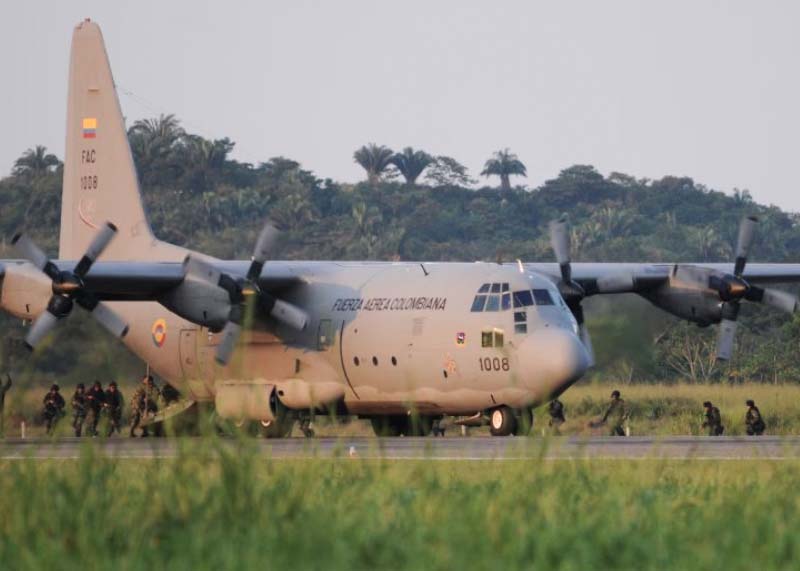
Colombian authorities are investigating whether mechanical failure, human error or excess weight caused the crash of a military C-130 aircraft that has now left at least 69 dead, as a political dispute intensifies over the condition of the country’s aging air fleet.
The aircraft, a Lockheed C-130 Hercules operated by the Colombian Aerospace Force (FAC), went down shortly after take-off on Monday near Puerto Leguízamo, in a remote jungle region bordering Peru and Ecuador.
The plane, identified as FAC 1016, was carrying 128 personnel when it crashed minutes after departure en route to Puerto Asís, roughly 200 kilometres away. Officials have confirmed dozens of survivors, though many remain hospitalised with injuries ranging from minor trauma to severe burns.
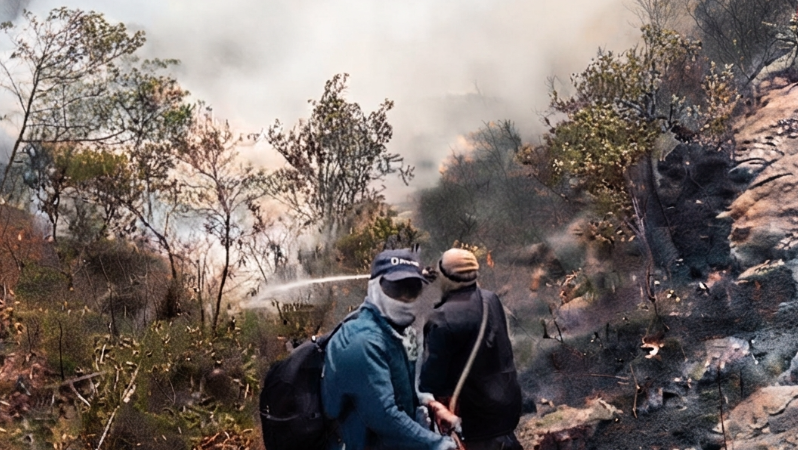
Emergency crews faced major challenges reaching the crash site due to the dense Amazonian terrain, while the impact and subsequent fire — compounded by detonations from ammunition on board — left many bodies severely damaged, complicating identification efforts.
Aging aircraft under scrutiny
The C-130H aircraft had been in service since 1983 and was donated to Colombia by the United States in 2020 as part of long-standing bilateral defence cooperation. It underwent a major maintenance overhaul in 2023, including structural inspections and system upgrades, before being returned to operation.
Despite its age, military officials insist the aircraft remained within operational limits. General Carlos Fernando Silva publicly contradicted President Gustavo Petro’s description of the aircraft as “scrap”, presenting detailed figures on its operational life during a televised cabinet meeting alongside Defence Minister Pedro Sánchez and senior military officials.
General Silva said the aircraft had flown 345 hours between 2021 and 2024, and 537 hours in 2025, broadly in line with standard annual usage of around 500 hours. Based on remaining flight capacity — estimated at up to 20,000 hours — he said the aircraft could theoretically continue operating for decades if strict maintenance protocols were followed.
Concerns have emerged from U.S. defence officials regarding maintenance standards and the availability of spare parts for aircraft supplied to Colombia, according to reports by El Tiempo. Sources cited by the newspaper said such aircraft can operate safely for around 10,000 hours, provided rigorous inspection and servicing regimes are maintained.
United States Southern Command has offered to support Colombia’s investigation with a technical team, underscoring the importance of determining whether maintenance, logistics or operational factors contributed to the crash.
Authorities reiterated there is no indication the crash was caused by hostile action, despite the aircraft going down in a region where dissident factions of the former FARC operate and where coca cultivation is widespread.
Investigators are focusing on three main hypotheses: mechanical failure, pilot error, or overloading at take-off. Officials said flight data, maintenance records and communications with air traffic control will be central to establishing the sequence of events.
The disaster has triggered a heated political exchange between President Gustavo Petro and his predecessor Iván Duque, exposing sharp divisions over defence policy and military procurement.
Petro described the aircraft as “scrap”, criticizing past administrations for accepting donated military equipment and arguing that such decisions have weakened Colombia’s operational capacity. “A country cannot defend itself with obsolete machines,” he said, pledging that his government would prioritize acquiring new equipment and strengthening domestic defence production.
He also questioned the long-term cost of maintaining aging platforms, suggesting that donated equipment can ultimately impose higher financial and operational burdens.
Duque strongly rejected the accusation, defending his administration’s handling of the armed forces and pointing to maintenance protocols carried out before the aircraft was delivered. He noted that C-130 aircraft continue to operate in dozens of countries worldwide and urged a technical investigation into factors such as aircraft weight, runway conditions and operational procedures.
Duque also accused Petro of callous social media statements in the hours after the tragedy, calling for restraint while investigations remain ongoing.
The crash adds to six previous military aviation accidents since 2022 and raises deep concerns about the readiness and sustainability of Colombia’s air fleet, much of which relies on aging platforms acquired through international cooperation.
Analysts say the incident could intensify scrutiny over budget-cuts in defence spending, maintenance capacity and the balance between acquiring new equipment and extending the life of existing assets.
As recovery operations continue in Putumayo’s dense jungle, authorities face the dual challenge of identifying victims and providing answers to families, while determining whether the disaster reflects isolated failure or deeper systemic issues within Colombia’s military aviation infrastructure.