

Colombia’s security forces believe FARC dissident leader Iván Mordisco is alive but seriously wounded following a major aerial bombardment in the remote department of Vaupés, dealing a significant blow to one of the country’s most powerful armed groups.
Uncertainty over the fate of Mordisco — whose real name is Néstor Gregorio Vera Fernández — mounted over the weekend after the military reported six people killed in the strike, raising expectations that the elusive commander might be among the dead.
But Colombia’s forensic authority, Instituto Nacional de Medicina Legal, confirmed on March 29 that none of the bodies recovered from the operation corresponded to the rebel leader.
“After concluding forensic studies on six bodies received on March 28, it was determined that they correspond to four women and two men,” the agency said in a statement, adding that Mordisco was not among them.
Authorities said two of the women have yet to be formally identified. One of the victims is believed to have been a minor, aged between 16 and 17, according to officials.
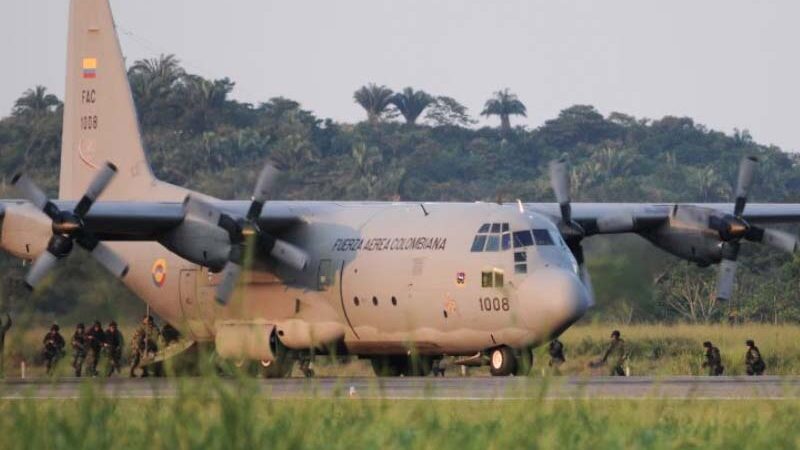
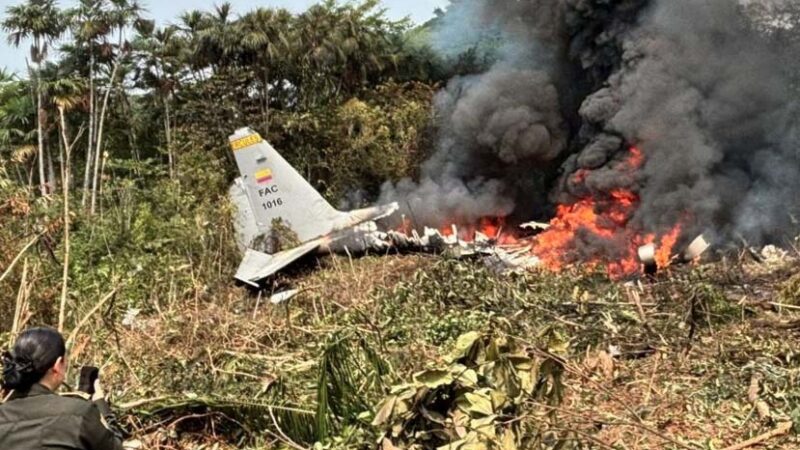
The bombardment — one of the most powerful in recent months — targeted a jungle encampment linked to the dissident group’s Amazonas Bloc, considered part of Mordisco’s inner security ring. The operation combined air-to-ground strikes with a ground assault by elite units from Colombia’s military.
According to the armed forces, the offensive forms part of a broader escalation of operations against dissident factions that rejected the 2016 peace agreement with the FARC and resumed armed activity.
Military intelligence cited by local media indicates Mordisco was present in the area at the time of the attack and may have escaped wounded. Authorities say he is now “on the move” as troops attempt to close in on his location.
The head of Colombia’s Armed Forces, General Hugo Alejandro López Barreto, said the operation had “significantly affected the logistical and criminal capabilities” of the group, noting that weapons, explosives, communications equipment and computers were seized.
Among the items recovered were a pair of glasses resembling those used by Mordisco — a recurring detail in previous operations where the rebel leader narrowly escaped capture.
Security forces have since launched a large-scale containment operation in Vaupés, deploying troops, aircraft and surveillance drones in an effort to prevent his escape. “The objective is to establish a cordon — no one enters, no one leaves,” a security source said.
Mordisco, regarded as the top commander of the so-called Estado Mayor Central (EMC), has long been one of Colombia’s most wanted men. Authorities have placed a reward of 5 billion pesos (about $1.3 million) for information leading to his capture, while the United States has offered up to $5 million.
Despite sustained military pressure, he has repeatedly evaded capture. Officials say he has survived at least a dozen prior bombardments.
The latest operation follows a series of blows against his network earlier this month, including the arrest of several relatives and close associates in different parts of the country.
Government figures show that of 18 major operations carried out against illegal armed groups under President Gustavo Petro, 12 have targeted structures linked to the EMC.
The offensive comes as Petro’s “Total Peace” security strategy has stalled with illegal armed groups, including the National Liberation Army (ELN) guerrilla.
A confirmed injury or eventual capture of Mordisco would represent a major symbolic and operational victory for the government, potentially weakening one of the most hardline factions still engaged in conflict.
For now, uncertainty over his movements remains. While authorities have ruled out his death, the extent of his injuries — and his ability to continue commanding operations — is still unclear.
What is evident is that Colombian forces believe they are closer than ever to their target.