
Colombian authorities on Wednesday arrested Ángel Esteban Aguilar Morales, alias “Lobo Menor”, an alleged senior figure in the Ecuadorian criminal group Los Lobos and suspected intellectual author behind the 2023 assassination of Ecuadorian presidential candidate Fernando Villavicencio.
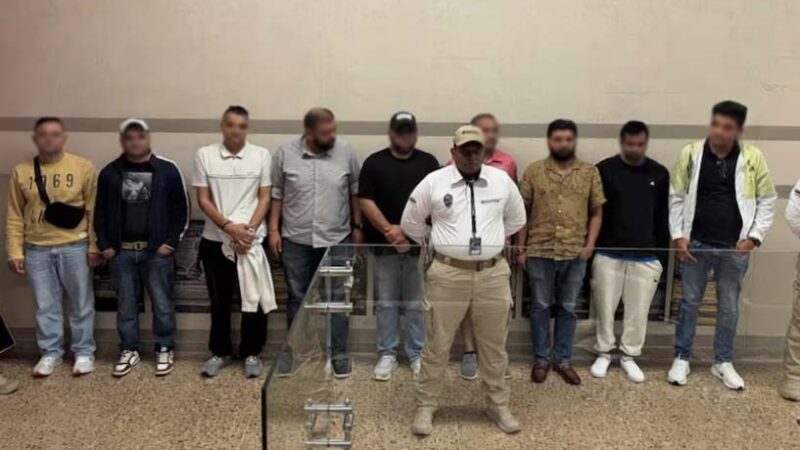
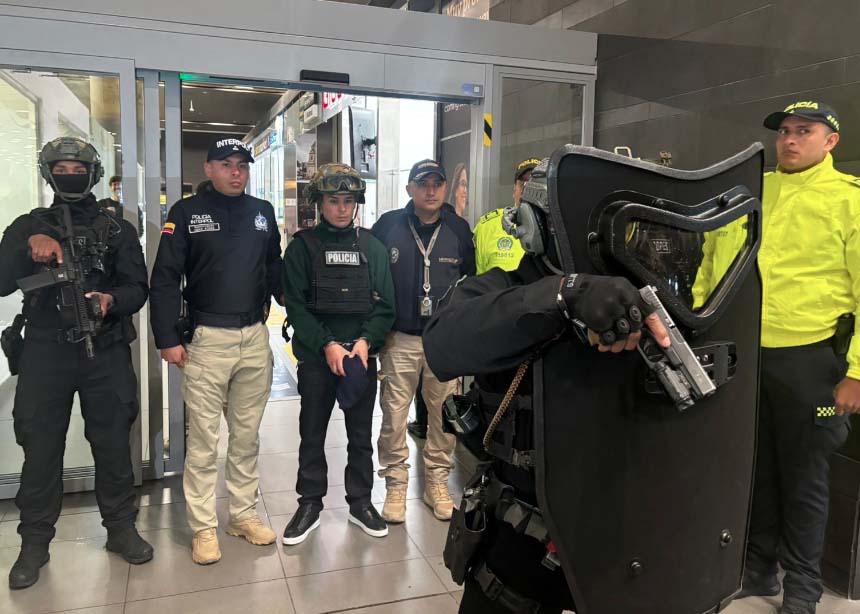
The arrest took place at El Dorado International Airport, where Aguilar Morales arrived on a commercial flight from Mexico, according to Colombia’s migration authority.
Officials said the suspect attempted to evade detection using false identification as a Colombian citizen, but biometric verification and international intelligence-sharing mechanisms exposed his true identity. He was detained under an Interpol red notice and handed over to judicial authorities pending extradition proceedings.
Aguilar Morales is considered a high-ranking member of Los Lobos, an Ecuador-based criminal organization linked to narcotrafficking, contract killings, illegal mining, and broader transnational crime. Authorities allege he played a central role in planning the killing of Villavicencio, whose assassination during the 2023 campaign sent shockwaves across the region.
The arrest comes at a delicate moment in bilateral relations. Colombia and Ecuador are this week attempting to defuse a growing diplomatic and security crisis following the discovery of an unexploded device inside Colombian territory near the border between the departments of Nariño and Putumayo. The incident has triggered sharp exchanges between the governments of President Gustavo Petro and Ecuador’s leadership, amid mutual accusations over cross-border security threats.
Colombia’s migration chief Gloria Esperanza Arriero López said the capture underscores the country’s determination to confront transnational criminal networks, particularly as tensions with Ecuador highlight the porous and contested nature of the shared border.
“This result demonstrates that Colombia has strong institutions and coordinated security forces working to close the space for criminal organizations, regardless of their origin,” Arriero said.
Colombian officials said Aguilar Morales had been under surveillance following intelligence tracking his movements through Medellín and Itagüí before traveling to Mexico. Authorities credited close cooperation with Mexican counterparts for locating and intercepting him as part of a multinational operation referred to by Petro as “Jericó.”
Petro described the suspect as one of the most significant figures linked to the Villavicencio assassination and alleged ties to dissident Colombian armed factions, including networks associated with “Iván Mordisco,” as well as Mexican cartels — evidence, he said, of the expanding integration of regional criminal economies.
According to investigators, Aguilar Morales had previously been sentenced in Ecuador to 20 years in prison for murder in 2013, but was granted conditional release in 2022 after serving half his sentence. Authorities allege he used falsified documents to meet legal reporting requirements while continuing criminal operations across borders.
The arrest marks a major development in the Villavicencio case and comes as Ecuador grapples with escalating violence linked to organized crime and drug trafficking routes. The slain candidate had campaigned on an anti-corruption platform and vowed to dismantle criminal networks, placing him squarely in their crosshairs.
Colombian authorities said the capture also demonstrates the importance of trilateral coordination between Colombia, Ecuador and Mexico in dismantling organized crime structures. Aguilar Morales is expected to face extradition as Ecuador seeks to prosecute those responsible for orchestrating the assassination.
The timing of the arrest — against the backdrop of rising diplomatic tensions and border security concerns — is likely to reinforce calls for deeper regional cooperation to address increasingly interconnected criminal threats operating across the Andes.