
Colombia is preparing for one of the largest international election observation missions in its history as the country heads toward Sunday’s presidential election amid heightened security measures, dry laws and nationwide institutional alerts aimed at safeguarding the democratic process.
Polling stations across Colombia will open on Sunday, May 31, from 8:00 a.m. until 4:00 p.m. as voters head to the ballot box to elect a new president for the 2026–2030 term. If no candidate secures an outright majority, a runoff election will be held on June 21.
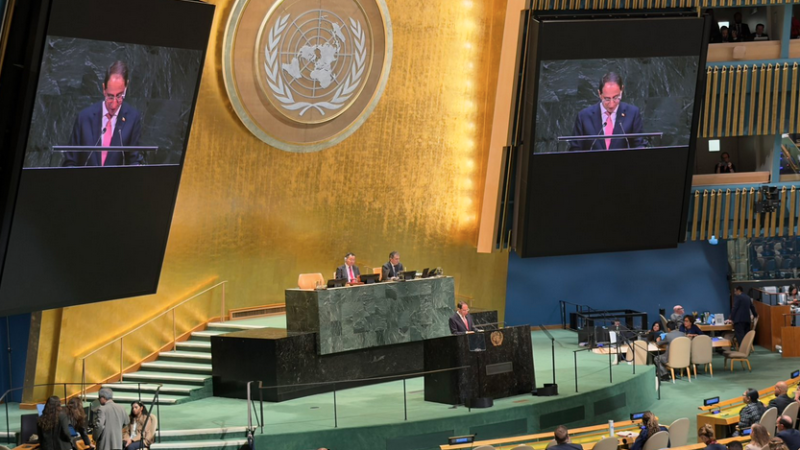
More than 1,200 international observers from 22 countries are expected to monitor the elections under a mission coordinated by Colombia’s National Electoral Council (CNE), in what officials describe as one of the most extensive observation deployments ever organized in the country.
The official installation of the International Observation Mission took place Friday morning at Bogotá’s Grand Hyatt Hotel, where electoral authorities, diplomats and representatives of multilateral organizations gathered ahead of the vote.
According to the CNE, a total of 1,207 accredited observers will participate in territorial inspections, technical briefings and electoral monitoring operations across various regions of Colombia.
Authorities say the mission seeks to strengthen public confidence, transparency and legitimacy in a country where concerns over disinformation campaigns, fake news and political polarization have increasingly shaped the electoral climate.
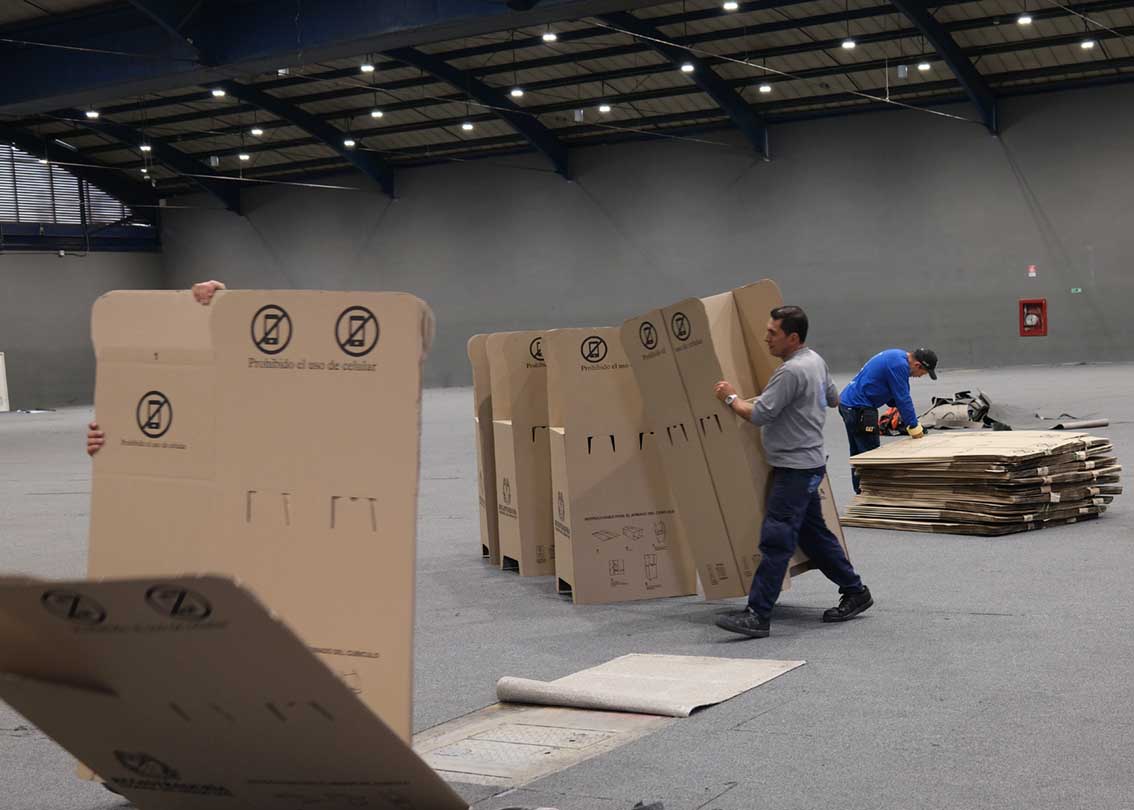
Official figures show Colombia will install 118,346 voting tables distributed across 13,489 polling stations nationwide.
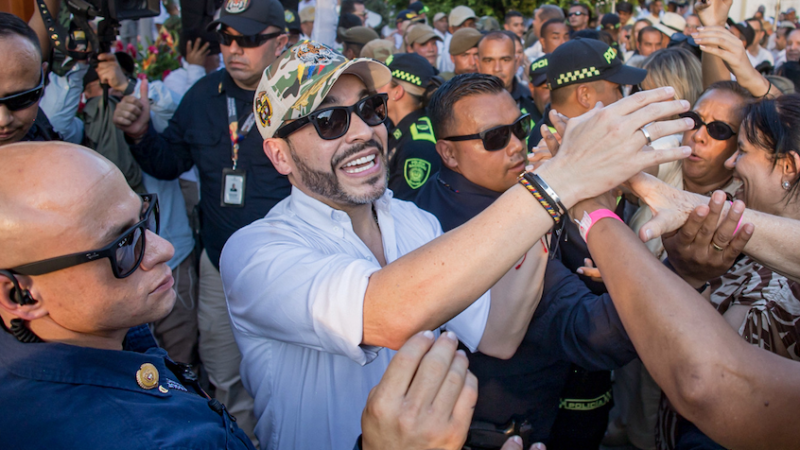
Among the international observers already arriving in Colombia is U.S. Republican Senator from Ohio, Bernie Moreno, who landed in Cartagena to participate in election monitoring activities.
Moreno, who was born in Colombia before emigrating to the United States, is part of the delegation accredited by the National Electoral Council to observe the presidential elections and verify the conditions under which the democratic process unfolds.
In Bogotá, authorities have implemented extraordinary measures aimed at maintaining public order during election weekend.
Mayor Carlos Fernando Galán’s administration announced that the capital’s “Ley Seca,” or dry law, will begin at 6:00 p.m. on Friday, May 29, and remain in effect until midday on Monday, June 1.
The restrictions prohibit the sale and consumption of alcoholic beverages in public spaces and establishments open to the public throughout Bogotá.
The measure begins 24 hours earlier than the nationwide presidential decree regulating election weekend restrictions and has sparked criticism from nightlife businesses, bars and restaurant owners who warn the extended dry law could significantly impact weekend revenues.
Business owners have also pointed to the timing of the UEFA Champions League final scheduled for Saturday evening between Paris Saint-Germain and Arsenal F.C. at Budapest’s Puskás Aréna, an event expected to draw large crowds to bars and public viewing venues across the Colombian capital.
“The decree seeks to guarantee coexistence and the proper development of the electoral process,” Bogotá authorities said in the official order announcing the restrictions.
At the same time, Bogotá’s Health Secretariat declared a yellow hospital alert across the entire capital beginning Friday evening and lasting through Monday evening.
The alert places the city’s public and private hospital network under a state of heightened operational readiness in anticipation of any emergencies or disturbances related to the elections.
“We call on all hospital directors and healthcare providers to strictly comply with the directives established under this alert,” José Vicente Guzmán, Bogotá’s deputy director for Emergency and Disaster Risk Management, said in a statement.
“It is essential to streamline patient admissions in emergency rooms, optimize ambulance response times and maintain direct and real-time communication channels with the city’s Emergency and Urgency Coordination Center,” he added.
Under the emergency protocols, hospitals have been ordered to activate disaster risk contingency plans, guarantee staffing availability, ensure sufficient medical supplies and maintain full operational readiness of ambulance services and patient transfer systems.
Authorities warned the alert level could be raised to orange or red depending on events during the weekend.
Residents requiring emergency medical attention have been advised to contact Bogotá’s 137 emergency hotline, which will remain operational around the clock throughout the election period.
Elsewhere in Colombia, local governments are also implementing measures to facilitate voting and public mobility.
In Medellín and the surrounding Aburrá Valley metropolitan region, authorities announced free rides on the city’s metro and cable car systems on election day until 6:00 p.m., while bus services will continue operating normally.
The presidential election arrives at a politically charged moment for Colombia after months of polarized campaigning, growing security concerns in several regions and intense national debate over the future direction of the country following the first leftist administration of President Gustavo Petro.
International observers, electoral authorities and security forces are expected to remain deployed throughout the weekend as Colombia prepares for one of the most consequential elections in recent years.