
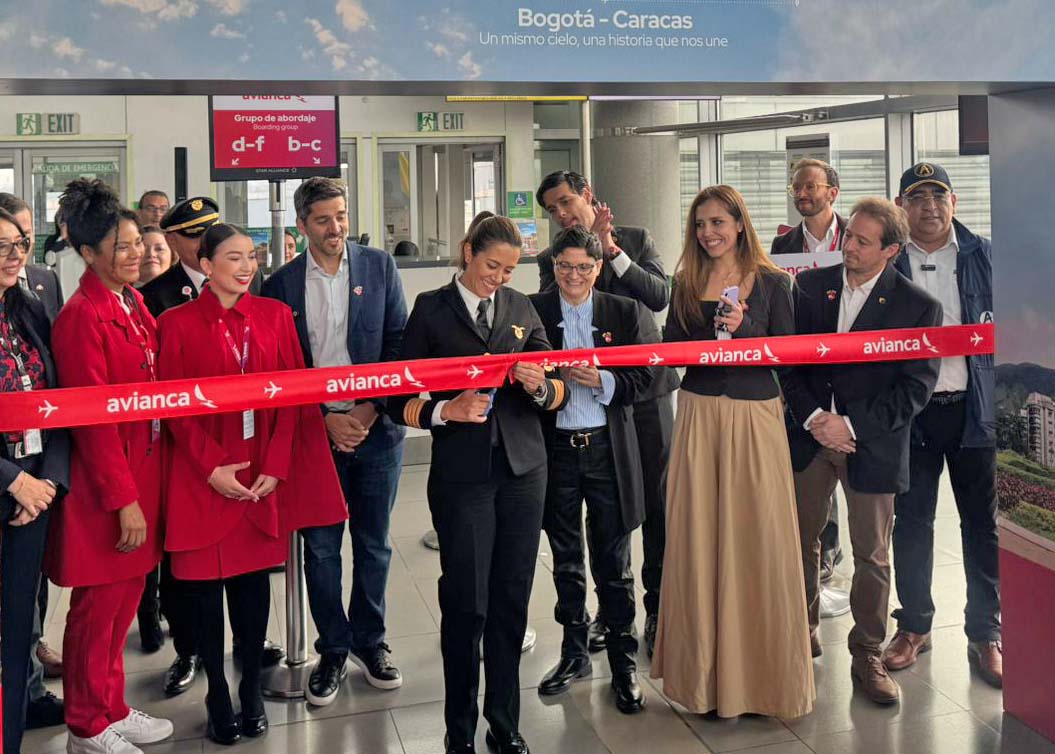
International airlines are rapidly re-establishing services to Venezuela, signalling a cautious but commercially significant reopening of the country’s aviation market. On Thursday, February 12, Colombia’s Avianca resumed a daily direct flights between Bogotá and Caracas.
The move restores one of the most important air corridors in northern South America and comes amid a flurry of announcements from carriers across Europe, the Americas and the Middle East seeking to regain access to a market that has been largely closed since 2019.
The flagship carrier claims that this key route was restored after a “comprehensive evaluation of operational conditions and aviation safety,” carried out in coordination with Colombian and Venezuelan authorities.
Avianca’s daily round trip flight will operate with an A320 aircraft, departing Bogotá (AV142) at 07:40 a.m. and returning from Caracas (AV143) at 12:10 p.m.
The resumption reflects the strong commercial ties between Colombia and Venezuela, as well as growing confidence among airlines that operational, regulatory and security conditions now allow for a gradual return.
For Avianca, which has operated in Venezuela for more than 60 years, the route carries both symbolic and strategic weight. The carrier said the service would strengthen regional connectivity and support trade, tourism and business travel between the two countries, which share deep economic and social ties disrupted during years of political confrontation and border closures.
Avianca’s return is part of a broader recalibration by the global aviation industry following Venezuela’s political transition and the end of Nicolás Maduro’s rule. Airlines had largely withdrawn from the country after the suspension of international flights, currency controls, safety concerns and U.S. sanctions made operations increasingly unviable.
Now, with demand for travel surging among Venezuela’s large diaspora and regional business community, carriers are moving quickly to reclaim market share — albeit cautiously, with a close eye on regulatory approvals and security assessments.
In January, American Airlines said it was ready to resume daily service to Venezuela, positioning itself as the first U.S. carrier to formally announce plans to return after nearly seven years. The airline said flights would remain subject to U.S. government approval and security evaluations, and has not yet announced a launch date.
“We have a more than 30-year history connecting Venezuelans to the U.S., and we are ready to renew that relationship,” said Nat Pieper, American’s chief commercial officer, underscoring the airline’s focus on family reunification, business travel and trade.
Before suspending operations in 2019, American was the largest U.S. airline serving Venezuela, having entered the market in 1987. The carrier said it remains in close contact with federal authorities and is working with regulators, unions and internal teams to ensure a compliant return.
While direct U.S.–Venezuela flights remain pending, regional alternatives are already expanding. Panama-based Copa Airlines has enabled ticket sales since late January allowing passengers to travel between Caracas and Miami via Panama under a single reservation, restoring a key transit option for Venezuelan travellers.
European and Latin American airlines have moved faster, with firm restart dates announced over the next six weeks. Spain’s Air Europa will resume Madrid–Caracas flights on February 17, followed by Laser Airlines the next day. LATAM Airlines plans to restart flights from Bogotá on February 23, while Colombian low-cost carrier Wingo will relaunch Medellín–Caracas services on March 1.
Further afield, Turkish Airlines will begin flights between Istanbul and Caracas on March 3, marking the return of a long-haul intercontinental connection. Spain’s low-cost Plus Ultra will also start services that same day, while Brazil’s GOL plans to resume flights from São Paulo on March 8.
TAP Portugal is scheduled to restore Lisbon–Caracas flights by the end of March.
The pace of announcements reflects both pent-up demand and a race among carriers to secure early-mover advantage in a market that, while still fragile, offers long-term potential. Venezuela’s population of more than 28 million, combined with millions of citizens living abroad, represents a sizeable base for leisure, family and humanitarian travel.
Yet challenges remain. Airlines face currency risks, infrastructure constraints and the possibility of renewed political or regulatory instability. Industry executives say most carriers are returning with limited capacity and flexible schedules, allowing them to scale operations up or down as conditions evolve.
For now, the reopening of Venezuela’s airspace is being driven less by optimism than by calculated risk-taking. Airlines are betting that gradual political normalization and the easing of restrictions will allow them to rebuild routes profitably — without repeating the costly exits of the past decade.
Avianca’s daily Bogotá–Caracas service may therefore serve as an early test case. If demand proves resilient and operations remain stable, more capacity is likely to follow. If not, airlines may once again find themselves navigating turbulence in one of Latin America’s most complex markets.
Still, after years of near-total isolation, Venezuela’s reappearance on international departure boards marks a turning point — one that global airlines are keen not to miss