
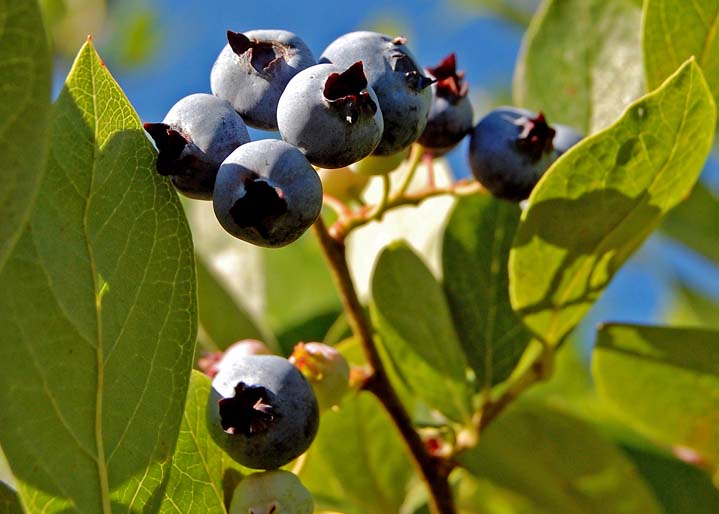
Colombia’s goldenberry symbolized the country’s push into high-value fruit exports. Now, it faces a turf war at home from a fruit with far greater global recognition: the blueberry. While blueberry cultivation has expanded rapidly across Colombia over the past decade, producers say the industry remains far from becoming a fully fledged export powerhouse.
Colombia currently has close to 1,000 hectares planted with blueberries, concentrated mainly in the Andean departments of Boyacá and Cundinamarca, which together account for almost the entire cultivated area. Smaller projects are emerging in Antioquia and other regions, bringing national production to an estimated 20,000 tonnes a year.
That marks a dramatic rise from just 40 hectares planted a decade ago. In the past two years alone, between 150 and 200 additional hectares have been planted, reflecting growing interest from investors and farmers seeking alternatives to traditional crops.
Yet despite this momentum, industry leaders warn that Colombia’s blueberry sector still lacks the scale, investment and coordination needed to compete seriously in international markets.
“Blueberries are one of the fastest-growing fruit crops in Colombia, but we are still very far from consolidating a true export agroindustry,” said Camilo Lozano, vice-president of Asocolblue, the national blueberry growers’ association, in an interview with La República.
Lozano argues that Colombia’s potential far exceeds its current footprint. “The country could easily reach 5,000, 6,000 or even 10,000 hectares,” he said. “But that won’t happen overnight. We need more investment, greater scale and the entry of larger producers.”
Peru offers a stark comparison. In 2012, Peruvian blueberry exports were worth just US$400,000. Today, they exceed US$3 billion, supported by more than 22,000 hectares of plantations. Colombia, Lozano notes, shares many of the same advantages that fuelled Peru’s rise: favourable soils, competitive labour costs, efficient logistics and the ability to produce year-round.
“These are the same conditions that made Colombia the world’s leading exporter of cut flowers,” he said.
Blueberries are particularly attractive because they are already deeply embedded in global consumer markets. In North America and Europe, they are a staple product, unlike many tropical fruits that require costly marketing campaigns to build demand.
“In the United States and Canada, consumers already know blueberries,” Lozano said. “You don’t have to explain what they are or how to eat them.”
At present, around 90 per cent of Colombia’s Arandano exports are destined for the United States, with Europe a distant second. Asia remains largely out of reach due to phytosanitary barriers and long shipping times, which can exceed 30 days by sea.
Even in established markets, Colombia struggles to meet minimum volume requirements. International buyers often request several containers per week, but domestic supply remains too fragmented to deliver consistently.
“Today, we get clients asking for five containers a week, and we can’t even fill one,” Lozano admitted. “Only two companies export blueberries by sea on a regular basis.”
The domestic market, however, tells a different story. According to industry estimates, formal blueberry sales in Colombia exceed 200 billion pesos (about US$50 million) annually. Imports — mainly from Peru and Chile — add another 50 billion pesos, highlighting the gap between local demand and national production.
That imbalance underscores both the opportunity and the challenge facing Colombian growers. While consumption is rising, domestic supply remains insufficient, and many producers lack the technical expertise and capital required to expand efficiently.
Asocolblue, which brings together 28 producers, has repeatedly warned that blueberries are not a crop for improvisation. Establishing a commercial plantation requires high upfront investment, technical knowledge, strict quality standards and long-term planning.
“This is not traditional agriculture,” Lozano said. “It’s an agro-industrial business.”
The association operates technical, export and marketing committees aimed at professionalising the sector and ensuring that growth does not come at the expense of productivity or sustainability.
For farmers who succeed, the rewards can be significant. Blueberries offer relatively stable international prices and allow producers to integrate into global supply chains, generating employment, foreign exchange and long-term income. “It allows the producer to make a qualitative leap — from farmer to agro-industrialist,” Lozano said. “It’s essentially an agricultural factory.”
For now, Colombia’s farmers across the Altiplanto Boyacense are enjoying their blueberry boom, but the story is more one of promise than parity with terrirorial rivals, such the uchuva and feijoa. Whether it can replicate the success of its flower industry — or Peru’s meteoric rise — will depend on how quickly investment, scale and coordination catch up with ambition.