
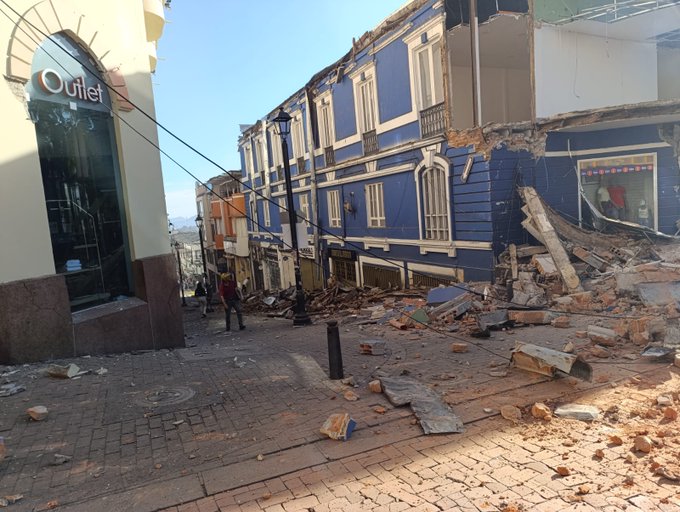
The death toll from Colombia’s devastating 7.4-magnitude earthquake rose to 202 on Wednesday, according to the latest report from the country’s Institute of Legal Medicine, as rescue crews continued searching collapsed buildings and authorities assessed the full scale of destruction three days after the earthquake struck.
The Institute said that, as of 7 a.m. Wednesday, it had received 202 bodies from Chocó, Caldas, Risaralda and Valle del Cauca. Of those victims, 121 had been identified, including five children.
The figures are expected to change as search-and-rescue operations continue and authorities reconcile reports from affected municipalities. An earlier consolidated assessment from Colombia’s mayors’ association, Asocapitales, reported 188 deaths and 1,677 injuries, as well as 243 completely collapsed structures and more than 1,500 damaged homes.
According to Consolidated Report No. 14, compiled from information provided by mayors’ offices, governors, the Colombian Geological Service (SGC), the National Unit for Disaster Risk Management (UNGRD) and emergency-response agencies, some of the worst-affected cities remain Cali, Pereira, Quibdó and Manizales.
Cali had reported 95 deaths and 997 injuries, while Pereira recorded 79 deaths and 278 injured people. Quibdó reported nine deaths and 116 injuries, while Manizales had five deaths and 112 injured. Authorities stressed that those figures were based on a Tuesday afternoon cutoff and could change as damage and humanitarian needs continued to be evaluated.
The earthquake struck western Colombia on Monday and was initially registered at a lower magnitude before the Colombian Geological Service upgraded it to 7.4. The epicenter was located in the department of Chocó, and the earthquake was strongly felt across large parts of western and central Colombia, including Cali, Pereira, Armenia and Manizales.
130 aftershocks recorded
The SGC has warned that aftershocks are expected to continue, describing them as a normal part of the seismic sequence following a major earthquake. Authorities have recorded approximately 130 aftershocks since Monday, adding another layer of danger for rescue workers operating around damaged and unstable structures.
The continuing tremors have complicated searches in several locations, where firefighters, police, military personnel, volunteers and specialized rescue teams are working to locate people who may remain trapped beneath rubble. As the search for survivors continues, and aftershocks continue – so does the race against time.
International rescue and humanitarian assistance is also beginning to arrive.
The United States said Wednesday that the Trump administration had mobilized technical urban search-and-rescue teams to support operations in Colombia. The U.S. State Department said teams had been mobilized from Fairfax County, Virginia, and Los Angeles County, California.
The United States has also pledged broader financial assistance as Colombia confronts the scale of the disaster. International organizations and governments have offered rescue personnel, medical assistance, logistical support and humanitarian supplies.
Mexico announced the arrival in Pereira on Wednesday of its first shipment of humanitarian assistance. The initial shipment contains 19.5 tonnes of food supplies and essential goods for families affected by the earthquake. Additional Mexican shipments are expected over the following days, bringing the country’s planned humanitarian contribution to 58.5 tonnes, according to Mexican authorities.
Colombia declares three days of national mourning
As the death toll passed 200, the Colombian government declared three days of national mourning in honor of the victims. Under Decree 1172 of August 11, the National Flag will fly at half-mast on public buildings and at Colombian embassies and consulates abroad. The measure was described as an expression of national solidarity with families who lost relatives in the disaster.
The mourning period comes as rescue workers continue their efforts in the most heavily damaged areas, while thousands of families confront destroyed homes, damaged infrastructure and uncertainty over missing relatives.
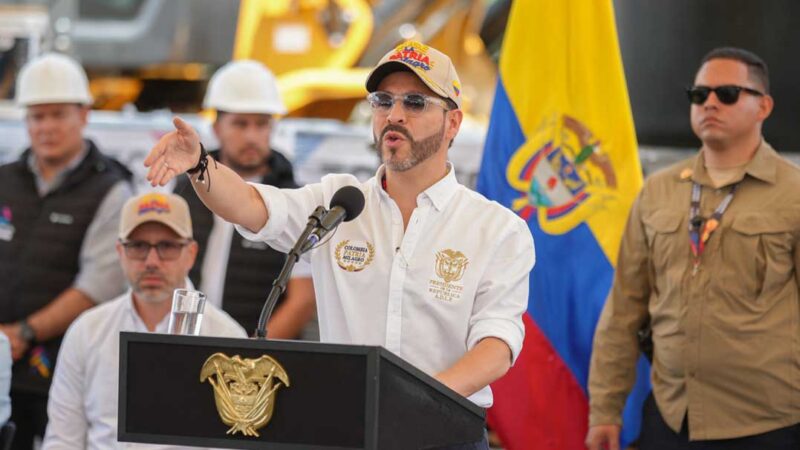
National Disaster declaration gives the administration of President Abelardo de la Espriella greater capacity to coordinate emergency resources, humanitarian assistance, reconstruction and recovery across the most affected territories of Antioquia, Caldas, Cauca, Chocó, Quindío, Cundinamarca, Risaralda, Huila, Valle del Cauca, Tolima, Putumayo and Norte de Santander,
For Colombia, the earthquake has become one of the country’s most devastating seismic disasters in decades. With rescue operations now entering their third day, emergency crews remain focused on the possibility of finding survivors while authorities confront the rapidly expanding humanitarian and reconstruction needs.