
Singapore has never been shy about scale. But this season, the city’s appetite for monumentality takes on a distinctly Latin American accent. For the first time, the work of Colombian master Fernando Botero makes his Singapore debut with the largest exhibition of his work ever showcased in Asia.
Spanning galleries, inter-active theatres and extensive public gardens, the landmark show presents more than 130 works, positioning the city-state as a hub for global Botero immersion. As the largest presentation of the Medellín-born artist (1932-2023), and timed to coincide with Singapore Art Week, Botero in Singapore unfolds across gallery walls, immersive media spaces and public gardens.
“My father loved Singapore,” remarked the artist’s son Fernando Botero Zea to The Strait Times, highligting that with this retrospective, the country now “has the highest concentration of Botero per capita”.
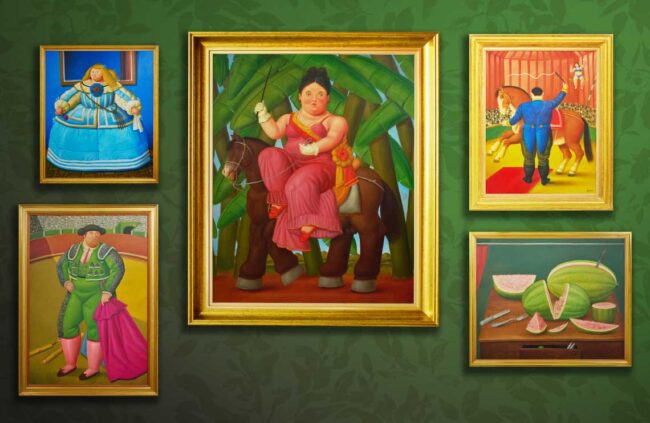
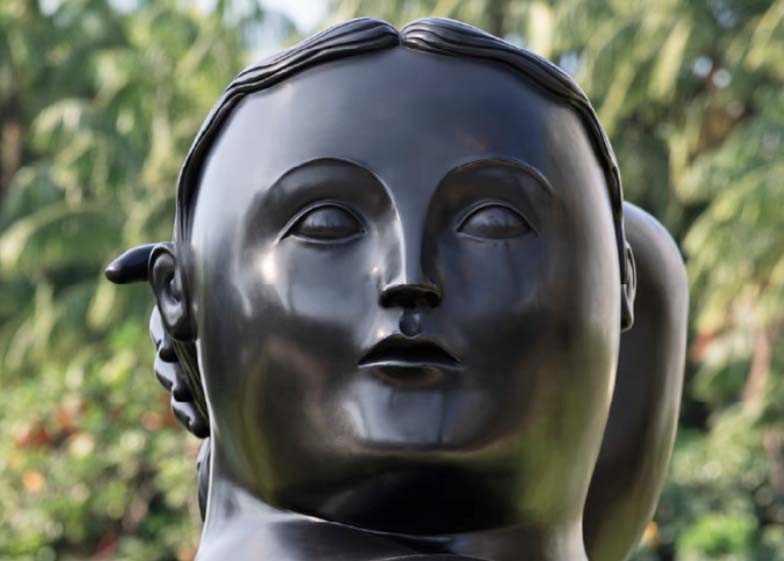
At the heart of the programme is Heart of Volume, a major gallery exhibition at IMBA Theatre, presenting more than 100 works drawn directly from the Botero family collection. Spanning seven decades, the exhibition traces the evolution of what the artist famously described not as exaggeration, but as “volume”: a formal strategy that lends weight, humour and authority to everyday scenes, portraits, still lifes and reimagined art-historical references.
Seen up close, the discipline behind Botero’s apparent abundance becomes clear. Small watercolours and intimate studies reveal a careful calibration of colour and balance, while larger canvases demonstrate his lifelong dialogue with European painting traditions—from Renaissance composition to modernist distortion—filtered through a distinctly Colombian sensibility. The effect is quietly didactic without ever feeling academic, a curatorial tone well suited to Singapore’s measured cultural landscape.
If Heart of Volume offers intimacy, Garden Grandeur delivers spectacle. Extending across the Silver Garden at Gardens by the Bay, ten monumental bronze sculptures bring Botero’s work into the rhythm of daily life. A towering Horse—more than three meters tall and weighing three tonnes – anchors the display, joined by familiar figures such as Adam and Eve, The Dancers and Woman on Horse. Installed against a backdrop of tropical greenery and glass conservatories, the sculptures feel less like foreign imports and more like temporary citizens of the city.
This democratic impulse was central to Botero’s thinking. As his son, Fernando Botero Zea, noted at the opening, the artist believed that public art should be touched, photographed and shared—an ethos that fits neatly with Singapore’s highly social public spaces. Here, Botero’s bronzes become meeting points and landmarks, their generous forms softening the city’s precision with a dose of playfulness.
The exhibition also introduces Life in Fullness, the world’s first immersive Botero experience: a 45-minute audiovisual journey narrated by his son, combining archival footage, animation and storytelling. It is a humanizing counterpoint to the grand scale elsewhere, framing Botero as father, provocateur and craftsman—an artist whose work often invites smiles, but is underpinned by a serious engagement with power, politics and art history.
Beyond the artworks themselves, Botero in Singapore signals a broader shift. Latin American artists have long been underrepresented in Southeast Asia’s major exhibition circuits, despite Singapore’s ambition to position itself as a global cultural hub. This collaboration—between IMBA, the Fernando Botero Foundation, and Colombia’s diplomatic mission—suggests a growing appetite for narratives that extend beyond the usual Euro-American axis.
There is also a certain symmetry at play. Botero’s art, with its emphasis on presence rather than speed, arrives in a city known for efficiency and control. His figures occupy space unapologetically; they slow the viewer down. In Singapore’s gardens and galleries, that insistence on taking up room feels less like excess and more like quiet persuasion.
As Singapore Art Week draws international collectors, curators and critics to one of the most affluent cities in Asia, Botero’s debut is both timely and long-overdue. It is not a retrospective weighed down by reverence, but a confident, outward-looking presentation that invites the public in – free of charge in the Gardens, and without intimidation indoors.
Botero’s Singapore moment is less about spectacle than about accessibility. His volumes, for all their heft, carry a lightness of spirit, and a persuasive contribution that art should always coexist alongside everyday life.